
Winter in Canada brings freezing temperatures, heavy snowfall, and plenty of reasons to stay indoors. But if you own an outdoor sauna, the colder months can actually be one of the best times to enjoy it.
There’s something especially satisfying about stepping into a warm sauna when everything outside is covered in snow. However, before winter settles in, a little preparation can help protect your sauna, maintain its performance, and keep it ready for regular use.
Here’s what you should know.
1. Give Your Sauna a Thorough Cleaning
Before temperatures drop, take some time to clean the interior and exterior of your sauna.
Wipe down the benches, walls, and floors using a soft cloth and sauna-safe cleaning products. Avoid harsh chemicals that could damage the wood or leave unpleasant residues when heated.
Outside, remove leaves, dirt, and debris that may have accumulated around the structure. Pay particular attention to the roof, doorways, and ventilation openings.
A clean sauna is easier to maintain throughout winter, especially when snow and ice make outdoor cleaning more challenging.
2. Inspect the Wood for Gaps and Damage
Wood naturally expands and contracts as temperatures and humidity change. This is especially important for outdoor saunas exposed to Ontario’s changing seasons.
Check the exterior for visible cracks, loose boards, or gaps that may allow excessive drafts or moisture inside. If you own a barrel sauna, inspect the staves and bands according to the manufacturer’s maintenance instructions.
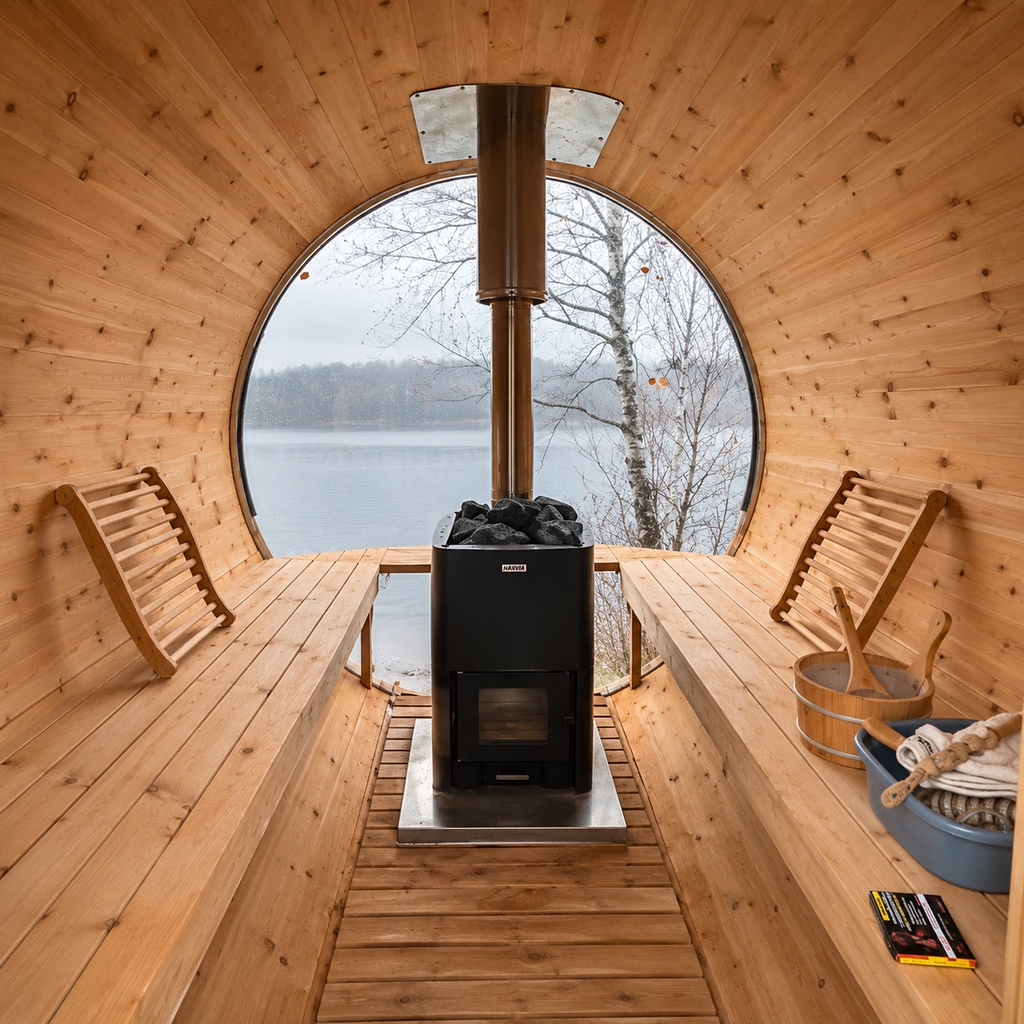
Red cedar and white cedar are popular sauna materials because of their natural durability, but they still benefit from regular inspection and proper care.
Addressing small issues before winter can help prevent more complicated repairs later.
3. Check Your Sauna Heater Before the Cold Arrives
Your heater works harder during winter, particularly when outdoor temperatures fall well below freezing.
For electric saunas, inspect the heater for visible damage and ensure the controls are functioning properly. Check that nothing is blocking the heater’s required clearances.
If you have a wood-burning sauna, inspect the stove, chimney, and flue for buildup or obstructions. Have the chimney cleaned as recommended by the manufacturer or a qualified professional.
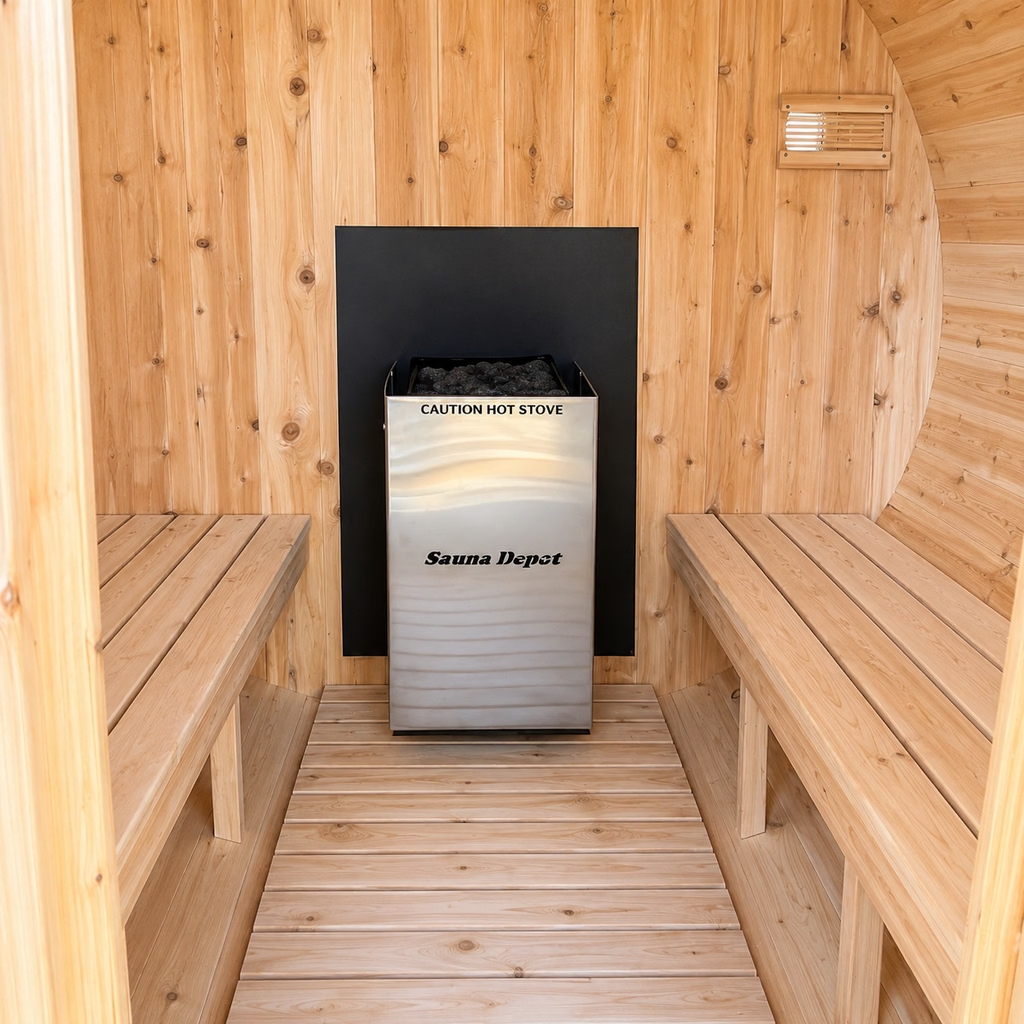
It’s also worth running a test heating session before the first major snowfall. This gives you time to identify any problems while outdoor conditions are still manageable.
4. Keep Snow and Ice Under Control
A snow-covered sauna can look beautiful, but excessive accumulation can create maintenance and safety concerns.
Keep the entrance and surrounding walkway clear of snow and ice. Remove heavy roof accumulation when necessary, following the manufacturer’s recommendations and using methods that won’t damage the roofing material.
Avoid chipping ice directly off wooden surfaces with sharp tools.
Most importantly, make sure the sauna door can open and close freely. You don’t want to discover that your door is frozen shut when you’re ready for a relaxing session.
5. Don’t Forget About Ventilation
It might seem tempting to close every opening to keep the heat inside, but proper ventilation remains essential during winter.
Your sauna needs airflow to support heater operation, maintain comfortable conditions, and allow moisture to escape after use.
Keep ventilation openings unobstructed and follow the manufacturer’s recommendations for airflow during heating and drying.
After each session, allow the sauna to dry properly. Leaving excess moisture trapped inside can encourage unwanted odors and mold growth over time.
6. Prepare for Longer Heating Times
Outdoor saunas may take longer to reach your preferred temperature during particularly cold weather.
Rather than immediately increasing the heater settings, allow additional preheating time and make sure the door stays closed while the sauna warms up.
Heating performance depends on several factors, including sauna size, insulation, heater capacity, and outdoor conditions.
If your sauna consistently struggles to reach its intended temperature, it may be worth having the heater and installation checked.
Make the Most of Your Sauna This Winter
Preparing your outdoor sauna for winter doesn’t have to be complicated. A thorough cleaning, routine inspection, proper ventilation, and a little extra attention to snow and moisture can make a noticeable difference.
With the right maintenance, your sauna can remain a comfortable part of your backyard throughout the colder months.
If you’re considering adding one to your property, Sauna Depot offers a selection of outdoor saunas, including barrel, cube, and traditional cabin designs suited to different backyard spaces.
After all, your backyard doesn’t have to close for the season just because winter has arrived.