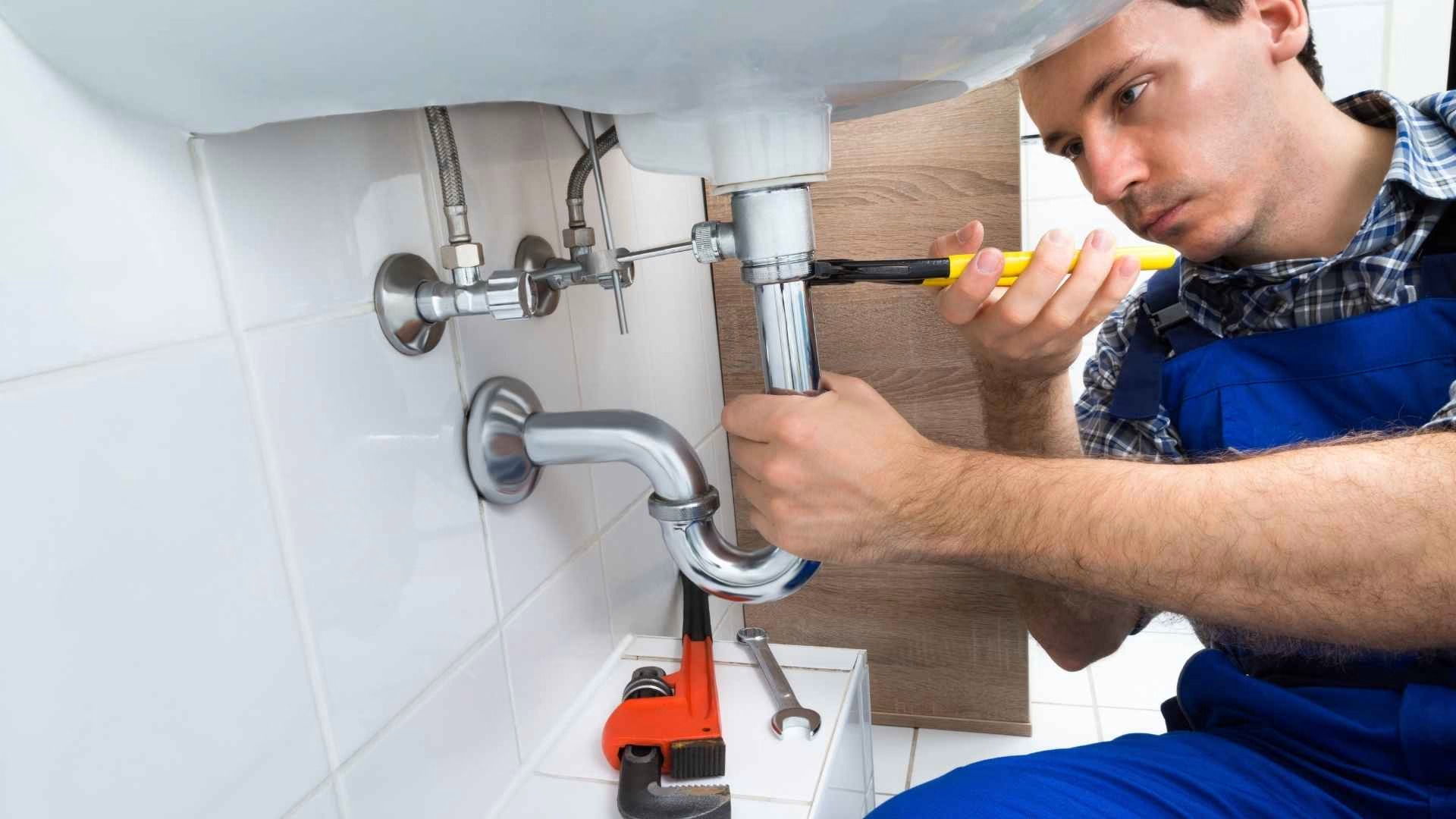
A pipe bursts under a kitchen sink at 2:14 a.m. Water is pooling toward the hallway. The homeowner searches “emergency plumber near me,” calls the first three results, and books whoever answers first. For the company that doesn’t pick up, that job, and that customer, is gone before sunrise.
This is the moment every 24-hour home service business is built around, and most handle it worse than they think. Here’s how the systems behind “we’re open 24/7” actually work, and where they break.
Why the 2 A.M. Call Matters More Than It Seems
Emergency calls aren’t spread evenly across the day. Industry data puts 65 to 75 percent of plumbing emergencies outside standard business hours, meaning most true emergencies hit when the office is empty. A burst pipe or a failing water heater rarely waits for 9 a.m.
The math on missing that call is blunt. Nearly 9 in 10 callers who reach voicemail hang up without leaving a message, and most who do leave one have already booked a competitor by the time anyone calls back. A single missed emergency call most weeks can add up to five figures a year in lost revenue for a small shop. The 2 a.m. call isn’t a minor inconvenience to route around. It’s often the highest-value call of the week.
The Three Ways Businesses Cover After Hours
Almost every “24/7” company falls into one of three setups, each with a different failure point.
The On-Call Rotation
The most common approach is forwarding the business line to a technician’s cell on a rotating schedule. It’s cheap and needs no new tools, but it puts everything on a person who’s asleep. A groggy answer, a tech who lets it ring because they’re already on a job, or a rotation nobody updated all quietly bleed jobs, usually without the owner ever knowing.
Traditional Live Answering Services
Human services solve “someone always picks up” but add new problems. Operators aren’t trained on plumbing, so they can’t tell a slow drain from a sewer backup, which means everything gets escalated or nothing does. Pricing is usually per-minute, so the nights a shop gets slammed are the nights the bill spikes hardest. And a live service can take a message, but it typically can’t check a calendar or book the job.
AI-Powered Answering and Triage
The newer approach is a voice AI trained on the trade, answering every call instantly, asking the right diagnostic questions, and separating a true emergency from something that can wait for a morning callback. Done well, it does what a good dispatcher would at 2 a.m., without ever getting tired, and at a fraction of the cost. Tools built for home services, like the plumbing-specific model from ServiceAgent, are built around this exact case: recognizing “water is coming through my ceiling” as different from “when can someone look at my faucet,” and routing each accordingly.
What Good Triage Actually Looks Like
The difference between a system that works at 2 a.m. and one that doesn’t comes down to how it sorts calls:
- True emergencies — active leaks, sewage backups, no water, flooding water heaters. Escalated to an on-call tech immediately, with the address and issue relayed before the phone rings on the tech’s end.
- Urgent but not immediate — a capped leaking valve, a noisy but working heater. A same-day or next-morning callback instead of waking anyone.
- Routine requests — fixture installs, quotes, maintenance questions. Booked straight into the calendar for business hours.
Getting this wrong is expensive either way. Escalate too aggressively and techs burn out on 3 a.m. wake-ups that could have waited. Escalate too conservatively and a real emergency sits in voicemail until morning, after the homeowner has already called someone else.
Building Your Own 24-Hour Playbook
A few questions separate a real system from a hopeful one:
1. Does every call get answered, every time, regardless of volume? A rotation or single line gets overwhelmed the moment a cold snap triples call volume.
2. Can whatever answers tell an emergency from a routine call? Generic scripts don’t hold up against trade-specific symptoms.
3. Does the call become a booked job, or just a note to act on later? A booked appointment is what actually converts.
4. What does it cost during the busiest week of the year, not the average one? Per-minute pricing looks fine until the exact week you need it most.
The Bottom Line
Emergency home service work runs on trust built in a single phone call, often taken half-asleep by whoever answers. Businesses that treat their after-hours line as an afterthought quietly lose the most valuable calls they get all week. The ones that treat it as a real system, whether a disciplined rotation, a trained live service, or a purpose-built AI receptionist, are the ones still getting the call at 2 a.m. next year, too.