Renting on a month-to-month basis can put you in a special status: a “Tenant at Will,” which many people do not understand.
Knowing how being a tenant at will in Georgia affects both landlords & tenants when renting by the month is very important for understanding their flexible but often misunderstood status.
Regardless of whether your rental agreement has ended, because it was an expiring contract, or there was no original contract in place (a rental agreement), you are subject to different Rights & Obligations than you were before.
What is a Tenant-at-Will in Georgia and How Does It Work?
In Georgia, a “tenant at will” refers to an individual who rents residential space from a landlord with their approval but does not have a written lease outlining the length of the rental period.
Many tenants will begin renting after an original lease has expired, and they continue to pay rent monthly. Others may begin renting by entering into a rental arrangement without any documentation stating how long the rental will last.
Regardless of whether there is a written agreement, the tenancy is legally established and carries both obligations and rights for each party.
How the Arrangement Works
- Rent & Other Obligations Remain in Place: While the terms of your rental property may change, you will remain responsible for timely payment of rent, compliance with the basic rules of the property, and any applicable utility bills. Ideally, these terms should be put in writing to avoid future misunderstandings.
- Both Sides Have Flexibility: Both you and your landlord can end the tenancy-at-will arrangement at any time; however, you must provide appropriate legal notice. Since there is no requirement for a fixed-term lease, either party may end the arrangement at any time.
- Different Notice Timeframes Exist: In accordance with Georgia state law, landlords are required to notify their tenants-at-will in writing of the termination 60 days prior to the termination of the tenancy (O.C.G.A. § 44–7–7). Conversely, tenants-at-will only require 30 days’ written notice to landlords of their intention to vacate the premises (O.C.G.A. § 44–7–7).
- Tenants-at-Will Cannot Be Evicted Without Proper Legal Action: Similar to tenants under a lease, tenants-at-will also have protections against eviction from their rental property. Your landlord is prohibited from physically removing your personal items and/or locking you out of your rental property without first going through the proper eviction process via the court system.
Understanding what is a tenant-at-will in Georgia helps both landlords and tenants. It helps both set clear expectations, preserve their interests, and exist with little to no disappointments.
Key Considerations Before Signing a Tenant-at-Will Agreement
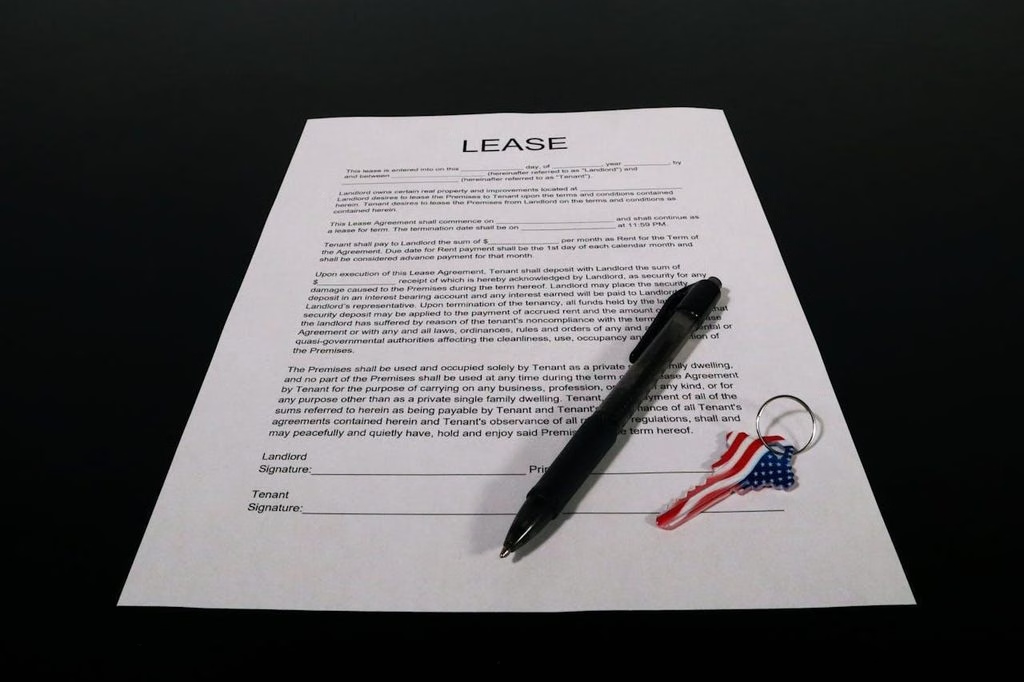
Flexibility comes with some risk, as well; therefore, you need to carefully assess those risks prior to entering into a tenancy-at-will arrangement. Before signing the contract, determine if an open-ended arrangement fits your goals.
The following are several points that you should review before entering into a tenancy-at-will arrangement.
Get the Rent and Payment Terms in Writing
Regardless of whether or not you have entered into a written rental agreement, document your monthly rent amount, when payments are expected to be made (due date), and acceptable method(s) of payment.
If the terms of your verbal agreement are unclear, you may experience future disagreements. Documenting the above will help eliminate any ambiguity regarding the amount owed, when payments are due, and the methods that are accepted for making those payments.
Understand the Notice Requirements
Georgia law states that your landlord has to give you at least sixty (60) days’ written notice prior to ending the tenancy. However, in order for you to terminate your tenancy, you only have to provide thirty (30) days’ written notice. The time difference allows you to make future plans accordingly.
Regardless of whether or not you have received a verbal “heads up,” the only method by which a tenant may be able to prove they were given notice is through the use of written notice.
Clarify Maintenance and Repair Duties
You should determine how you will split maintenance & repair duties regarding lawn care, small repairs, and emergencies before signing your lease agreement. If your lease does not specify how maintenance & repair responsibilities will be shared, it could lead to disputes over what was agreed upon.
According to Georgia Law, landlords must keep the rental property safe and habitable, and that includes installing modern home improvements. However, it does not necessarily mean that all maintenance & repairs will be handled by the landlord. Determine these issues early so you do not encounter problems later.
Protect Your Security Deposit
Regardless of whether you are renting with an at-will tenancy, your security deposit is still covered under Georgia state law. Upon moving out, your landlord has 30 days to either return your security deposit or provide you with an itemized list of all deductions they have made for damages that exceed normal wear and tear. To protect yourself, ensure that you receive confirmation of both the amount of your security deposit and the name and address of the bank holding it.
Weigh the Risk of Sudden Changes
Flexibility in a rental agreement can cut both ways. The landlord can decide at any time to end the agreement or increase your rent. If you require long-term housing stability, then the uncertainty of possibly having to move or pay an increased rent could cause stress. Do you think you would be able to deal with the possible need for you to move, or possibly pay an increased rent, on relatively short notice?
Document All Agreed-Upon Rules
In addition to renting space from each other, consider writing down agreements regarding pets, parking, guests visiting your home, quiet hours, etc. Without a written agreement, the parties involved may have very different ideas as to what is acceptable.
Having some form of documentation that outlines these “rules” will help prevent disputes. Writing out expectations can also aid in maintaining your living environment and creating less conflict when interacting with your landlord.
Tenant-at-Will Agreement: Tips for Landlords and Tenants
A tenant-at-will agreement can be ended by either party with proper notice, having an understanding of what is expected from each party will help avoid miscommunication.
Follow these tips to create a reasonable, open-ended agreement that will protect the rights of both the landlord and the tenant.
Put Every Detail in a Simple, Signed Document
Even though a formal lease does not exist, you need to draft a simple one-page agreement for rent, due date, utilities, and house rules. Once both parties have signed this document, and each party keeps a copy, it provides the necessary documentation to settle any future claims of dispute and/or serve as evidence of the agreed-upon terms if the case goes to court.
Always Use Written Notices for Terminations
A tenant should never assume that they will receive proper notice to vacate. In addition to providing notice (60 days for landlords and 30 days for tenants), a written document should be delivered by hand. A copy of the letter, along with the exact date it was mailed, should also be kept. Written proof of delivery will help protect against potential claims of non-compliance.
Conduct a Joint Move-In Inspection
Complete a walk-through inspection of the property prior to the tenant’s initial entry into the apartment/rental house. Take photographs as well as note all existing damages. Both parties must then sign the inspection report.
For tenants, this can be one of their most important steps; it allows them to prove they were not responsible for any damage when they moved out. This allows them to recover some, if not all, of their security deposit according to Georgia law.
Clarify Who Pays for What
Define how yard care, small repairs such as changing a light bulb, and pest control will be handled by signing an agreement that specifies who is responsible for each. In general, state laws require landlords to keep rental properties habitable; however, it is reasonable for tenants to take some responsibility for their own minor maintenance needs, as long as these are defined up front.
Keep Communication Open and Professional
Communicating with each other professionally can also promote a mutually respectful tenant-at-will relationship. As a landlord, do not wait until a problem develops before communicating with your tenant about a needed repair or an anticipated rent delay.
Likewise, as a tenant, communicate with your landlord immediately when issues arise. The best way to avoid problems arising from miscommunication is to resolve them early. Even better, resolving miscommunications early can create conditions for developing a strong, long-term lease.
Conclusion
Flexibility does not have to mean sacrificing legal protection for a tenant at will. The key is to know the “rules.” Clearly document your rental agreement, including rent, notice requirements, and each party’s responsibilities for the upkeep/maintenance of the premises, from the start.
In Georgia, landlords are required to provide 60 days written notice prior to termination, while tenants are required to provide 30 days written notice. If both parties communicate openly and fulfill their respective responsibilities, this type of relationship can be mutually beneficial.