When pool owners start thinking about heating costs and efficiency, one question keeps coming up: does the air around your pool matter as much as the water itself? The answer might surprise you — both play a role, but in very different ways. Understanding how each one influences your heating system can help you make smarter decisions, lower your energy bills, and keep your pool comfortable all season long.
The Basics: Two Temperatures, Two Roles
Your pool exists at the intersection of two thermal environments. There’s the water temperature — what you feel when you jump in — and the ambient temperature, meaning the air surrounding the pool. These two factors are constantly interacting, and your heating system is caught in the middle, working harder or easier depending on the balance between them.
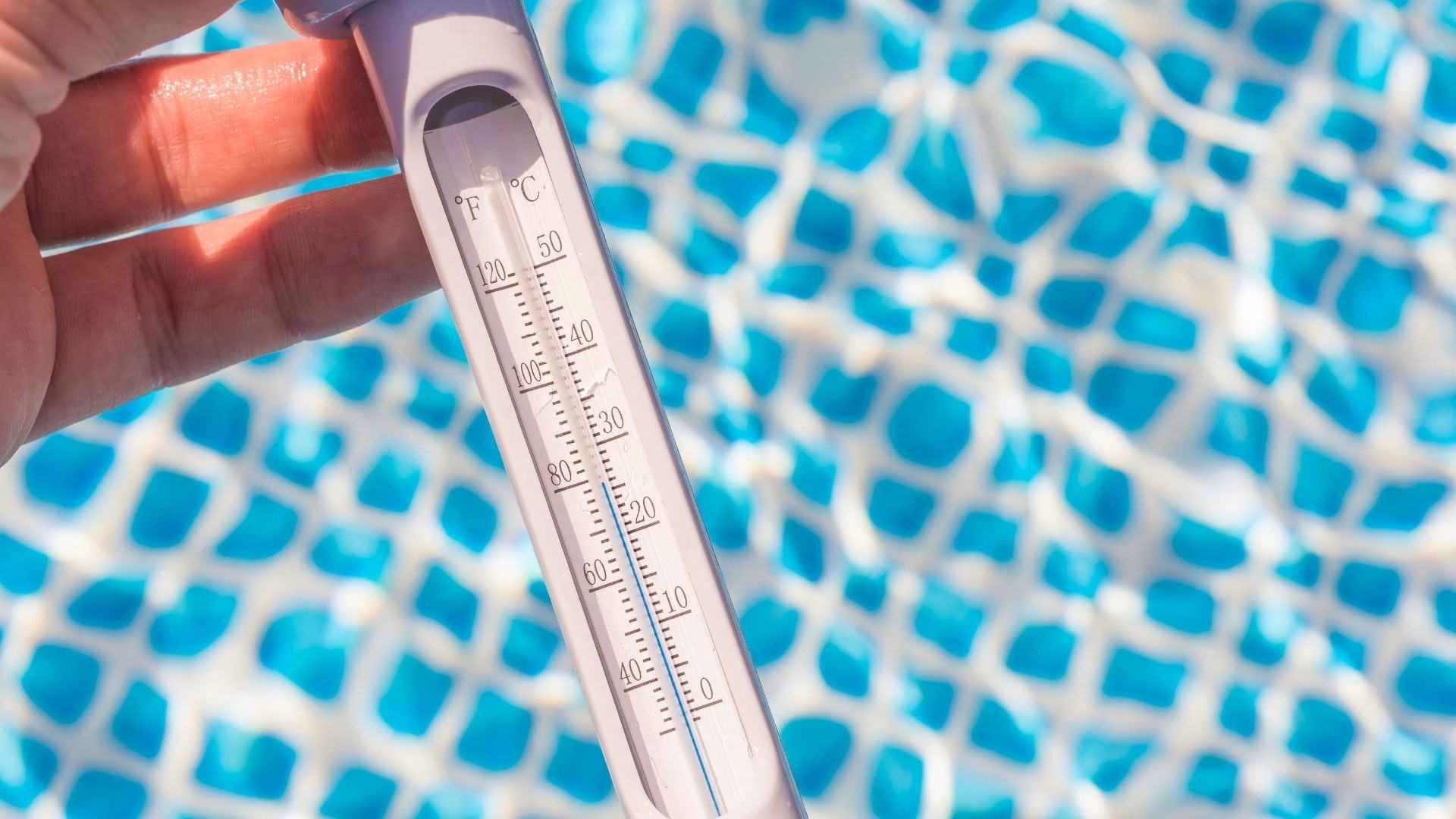
Water temperature is the goal. It’s what you’re trying to maintain at a comfortable level, usually somewhere between 78°F and 82°F for recreational swimming. Ambient temperature, on the other hand, is the external condition your system has to work against — or with.
How Water Temperature Affects Heating Demand
Water has a high specific heat capacity, meaning it takes a lot of energy to raise its temperature even by a few degrees. The colder your pool water is at the start, the more energy your heater must expend to bring it up to a comfortable range.
This is why the starting temperature of your water matters enormously. If your pool drops to 60°F overnight, you’re fighting a significant thermal deficit. The heater runs longer, consumes more energy, and puts more wear on its components. Maintaining a consistent temperature — rather than letting it swing wildly and reheating from scratch — is almost always more efficient.
Pool volume also plays into this equation. A large pool holds more thermal mass, meaning it changes temperature more slowly but also requires more energy to heat in the first place.
How Ambient Temperature Affects Pool Heater Performance
Here’s where many pool owners underestimate the science. The air around your pool doesn’t just sit there passively — it actively pulls heat away from the water surface through evaporation and convection. On a cold day, even a well-heated pool loses warmth rapidly to the surrounding environment.
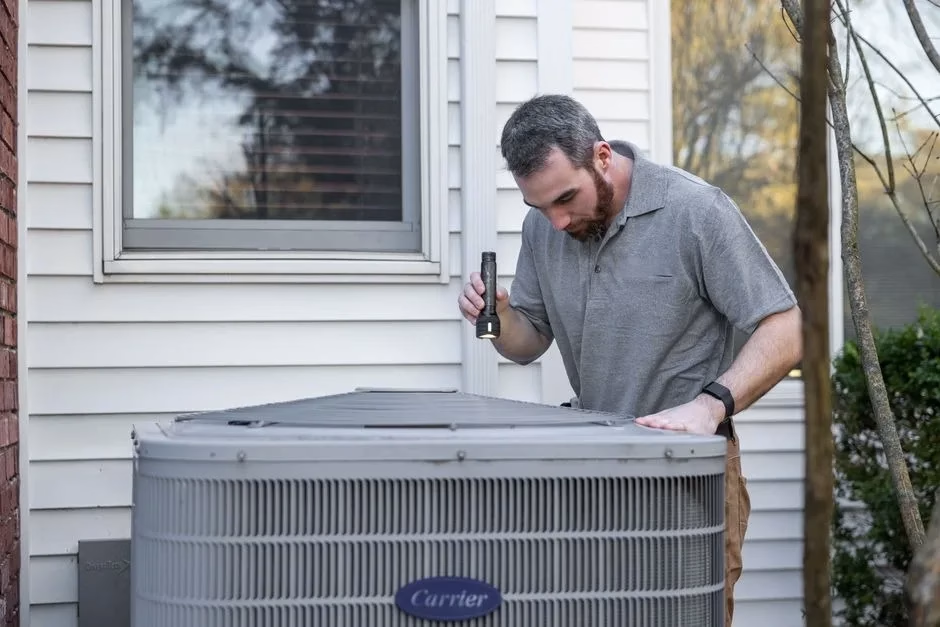
Heat pumps, in particular, are highly sensitive to ambient conditions. They work by extracting heat from the surrounding air and transferring it to the water. When outdoor temperatures drop — typically below 50°F — heat pump efficiency falls sharply, and some units struggle to function altogether.
This is why ambient temperature affects pool heater performance in ways that go beyond what you might expect. On a 40°F night, your heater isn’t just fighting the cold water — it’s operating in an environment where its own mechanical efficiency is compromised.
Gas heaters are less affected by air temperature in terms of operational efficiency, but they still face increased heat loss from the pool surface when ambient temperatures drop, meaning they run longer cycles to compensate.
Evaporation: The Hidden Drain
One of the biggest but least visible factors in pool heat loss is evaporation. When water evaporates from the pool surface, it carries thermal energy with it. Wind accelerates this process dramatically.
On a warm, windy day, your pool can lose a surprising amount of heat — even when the air temperature seems mild. This is why ambient conditions like wind speed and relative humidity matter just as much as the raw air temperature reading.
A pool in a sheltered backyard in a humid climate will retain heat far better than one exposed to dry desert winds, even if both locations share the same ambient temperature.
Which Factor Matters More?
The honest answer is that ambient temperature has the edge in most real-world scenarios — not because water temperature is unimportant, but because ambient conditions directly dictate how hard your heater has to work to achieve and maintain any given water temperature.
Think of it this way: you can control your target water temperature by adjusting your thermostat. You can’t control the weather. A poorly insulated pool on a cold, windy night will bleed heat faster than any heater can efficiently replace it.
That said, water temperature goals still drive energy consumption. Setting your thermostat to 85°F instead of 78°F could easily double your heating costs, regardless of ambient conditions.
Practical Tips to Work With Both
- Use a pool cover: A quality thermal cover can cut heat loss by up to 70%, directly countering ambient temperature losses through evaporation.
- Heat consistently: Rather than letting the pool cool overnight and reheating each morning, maintain a stable temperature to avoid large energy expenditures.
- Position windbreaks: Fencing, hedges, or screens that reduce wind exposure can noticeably reduce evaporative heat loss.
- Know your heater’s limits: If you rely on a heat pump, understand the minimum ambient temperature at which it operates efficiently and have a backup strategy for cold snaps.
- Time your heating smartly: Running your heater during warmer midday hours can improve efficiency, especially for heat pump systems.
Conclusion
Both ambient temperature and water temperature shape your pool heating experience, but they operate through different mechanisms. Water temperature defines your goal; ambient temperature defines the resistance you face in reaching it. By understanding how each factor works — and how they interact — you can optimize your heating strategy, reduce energy waste, and enjoy a warmer pool without an outsized utility bill.