Blog Home Ideas TheHomeTrotters: Practical Ways to Transform Any Space

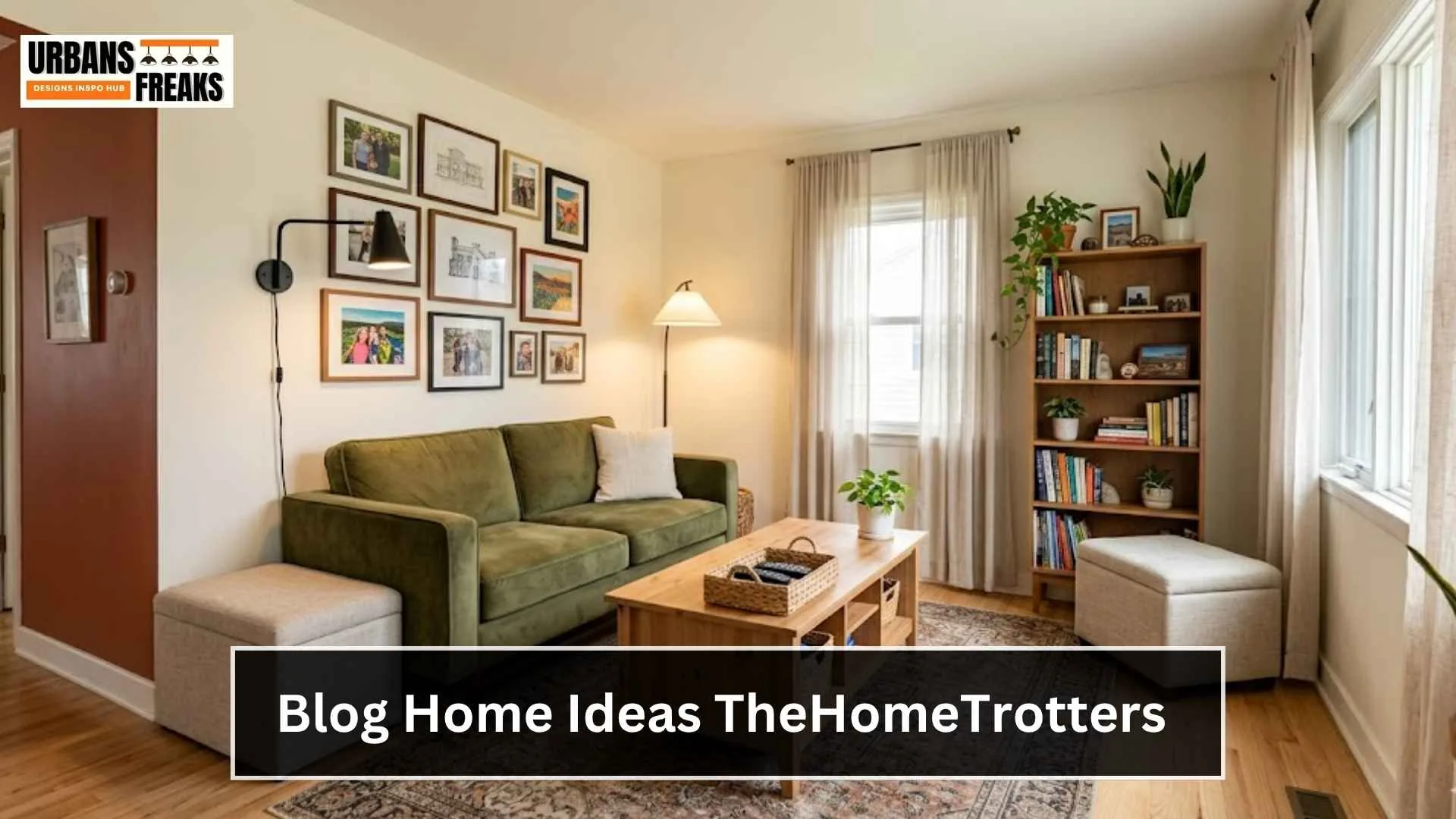
I have spent years walking through homes at every stage of a project — from bare concrete to the final layer of soft furnishings — and one thing I have learned is this: most people make their home harder to live in before they make it better. They jump to buying things before they understand what the space actually needs.
That is exactly the problem that platforms like TheHomeTrotters set out to fix. The blog home ideas TheHomeTrotters publishes are not pulled from luxury showrooms or unreachable budgets. They are grounded in how real people actually live — in apartments, in starter homes, in family houses where the couch has to do five different jobs. Over at UrbanSFreaks, we believe the same thing: good design should be accessible, not aspirational in a way that leaves people behind.
This guide pulls the best of those ideas together, adds my own professional perspective, and gives you a room-by-room picture of how to actually improve your home — without wasting money or making changes you will regret.
What Makes TheHomeTrotters Blog Different From Generic Design Content
Most home design content online lives in one of two extremes: luxury portfolios that cost $80,000 to replicate, or recycled tip lists that have been copy-pasted so many times they carry no real meaning. Neither actually helps someone sitting in a living room that does not feel right, trying to figure out where to begin.
TheHomeTrotters built its reputation by doing something harder and narrower — every idea on the platform comes with a realistic cost estimate, an honest skill rating, and a time commitment that reflects what the project actually involves.
That specificity is rare in the home design space, and it is exactly why the audience keeps growing. From my perspective as an architect and lecturer, that kind of grounded, practical guidance matters far more than beautiful photography alone.

Understanding Your Home Layout Before Making Any Changes
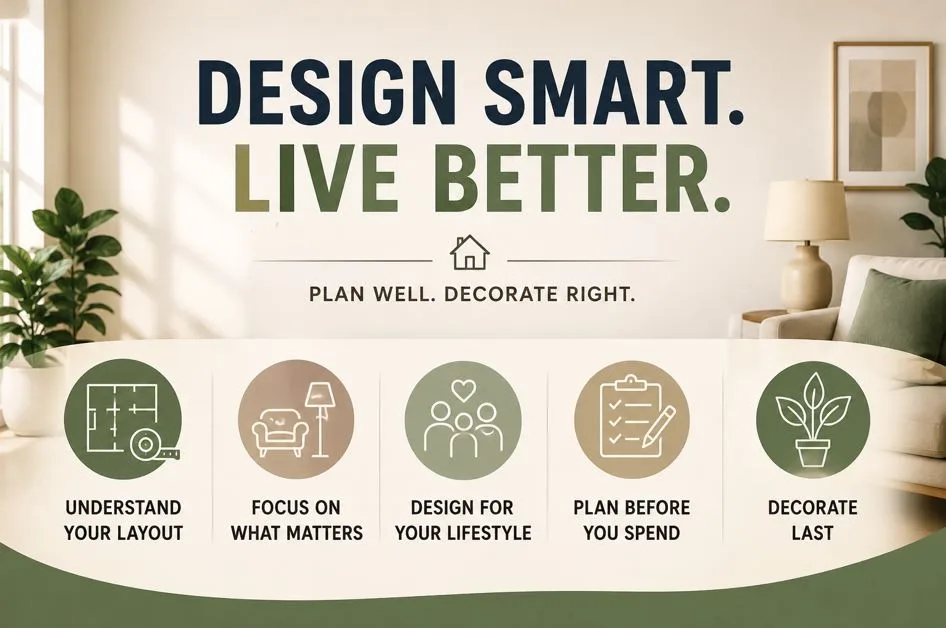
Before you touch a single wall or order a single piece of furniture, the most important step is understanding your space. Every home has a different flow, different light patterns, and different proportions — and the same idea that works beautifully in one layout can look completely wrong in another. I have watched clients spend thousands on furniture that physically fits a room but kills its flow because no one stopped to think about how people actually move through it.
A 2026 survey by the American Institute of Architects found that 71% of residential renovation mistakes trace back to insufficient planning at the start. Measure the room. Sketch the layout. Observe where natural light enters and at what time. Ask which areas feel uncomfortable and why. That analysis costs nothing and prevents the most expensive errors.
Identify Which Spaces Need the Most Attention
Start with the room that bothers you most every single morning — not the guest room nobody uses or the formal dining room that sees two dinners a year. The room that quietly drains your energy before the day begins. Finish it completely before moving anywhere else. Momentum is the actual resource you are managing, not budget, not time.
Match Your Approach to Your Lifestyle
A family with young children needs different solutions than a remote-working professional or a retired couple. Before following any design trend, ask whether it fits how you actually live. Multi-function furniture, open shelving, and concealed storage spaces all perform differently depending on who is using the home and how.
Plan Before You Spend
A realistic starting sequence: Weeks one and two, declutter only — remove everything that does not belong, cost is zero. Weeks three and four, fix the lighting. Month two, address color on one wall or room. Month three onward, layer in accessories and plants last. Décor is always the final layer, never the first.
How to Choose the Right Colors for Each Room?
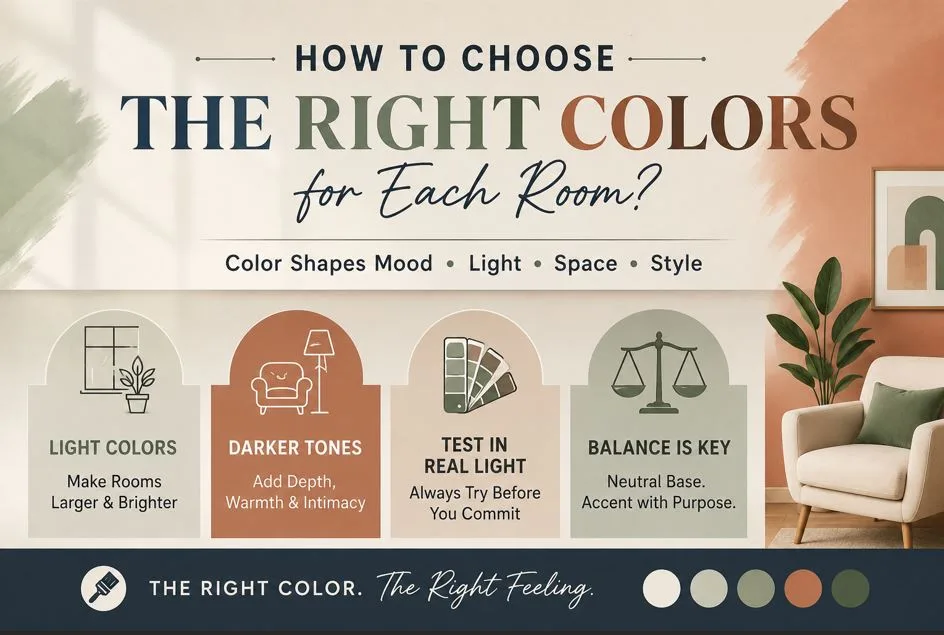
Color affects mood, light, perceived room size, and the emotional tone of a space. It is the most powerful tool in home designing and the one that costs the least to use.
Here is how I think about it practically:
- Light colors — whites, creamy shades, and pastel tones — make rooms read as larger and brighter. They reflect natural light rather than absorbing it, which is especially valuable in smaller apartments or north-facing rooms.
- Darker tones — forest greens, deep terracottas, rich burgundies — create depth and warmth. They make large, cold rooms feel intentional and intimate.
The mistake I see most often is choosing a color in isolation. A paint chip under a store’s fluorescent lights looks nothing like that same color on a north-facing wall at 4pm in winter. Always test a large sample on the actual wall in your actual lighting before committing.
One principle from the blog home ideas TheHomeTrotters consistently covers: balance is the goal. A plain, neutral wall becomes the background that lets an accent piece, a painting, or a textile do its job. Saturating a room with too many strong colors competes for attention rather than creating harmony.
Furniture Full of Style and Function
In twenty years of designing and advising on residential spaces, I have never seen good design come from starting with furniture. I have seen it come from understanding how a room is used — and then finding pieces that serve that use beautifully.
Multi-function furniture is not a compromise. It is smart design. Storage beds eliminate the need for a separate chest of drawers. Foldable tables expand when needed and disappear when they are not. Modular sofas adapt to changing living arrangements over years, not seasons.
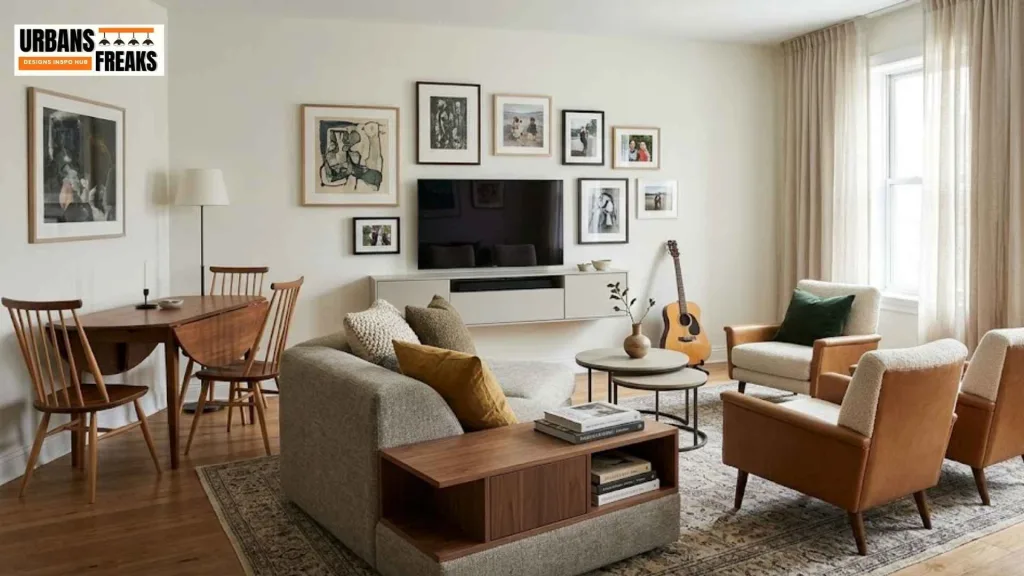
Multi-Function Furniture Is Smart Design, Not Compromise
Storage beds eliminate the need for a separate chest of drawers. Foldable tables expand when needed and disappear when not. Modular sofas adapt to changing living arrangements over years, not seasons. These are intelligent responses to how modern homes actually function, not budget concessions.
Match Scale to the Room
An oversized sofa in a small room does not feel luxurious — it feels trapped. A delicate chair in a large open-plan space disappears and unbalances the room. Mark out furniture footprints on the floor with tape before purchasing. Confirm sightlines and movement paths stay clear.
Pull Seating Away From the Walls
Furniture pushed against every wall makes a room feel like a waiting area. Create a conversation zone — seating facing each other, anchored by a rug — and the room immediately reads as designed rather than just furnished. This costs nothing and is one of the highest-impact spatial changes available.
Use Cushions, Carpet, and Curtains to Layer Character
Decorative textiles shift the tone of a room completely — from cold to warm, from sparse to layered — without touching a wall or replacing furniture. Mix soft materials with natural textures like wood or metal. Paintings and wall art introduce personality and scale to otherwise flat vertical surfaces.
Incorporating oversized modern abstract paintings on an expansive wall is an exceptional way to inject contemporary movement and rich color tones without adding structural clutter.
Invest in Fewer, Better Pieces
One sofa you use and love every day beats three discounted pieces that fail within two years. When budget is tight, secondhand sourcing is the better option — older furniture was often built with denser materials and better joinery than mass-produced equivalents at the same price point today.
Lighting That Transforms the Whole Feel of a Home
I say this to every client I work with: if your room does not feel right and you cannot identify why, it is almost always the lighting.
A single overhead light in the center of a ceiling creates a flat, shadowless environment that drains the life out of even well-furnished spaces. Layered lighting — a combination of ceiling lights, floor lamps, and wall lights — creates depth, highlights points of interest, and controls the mood of a room.
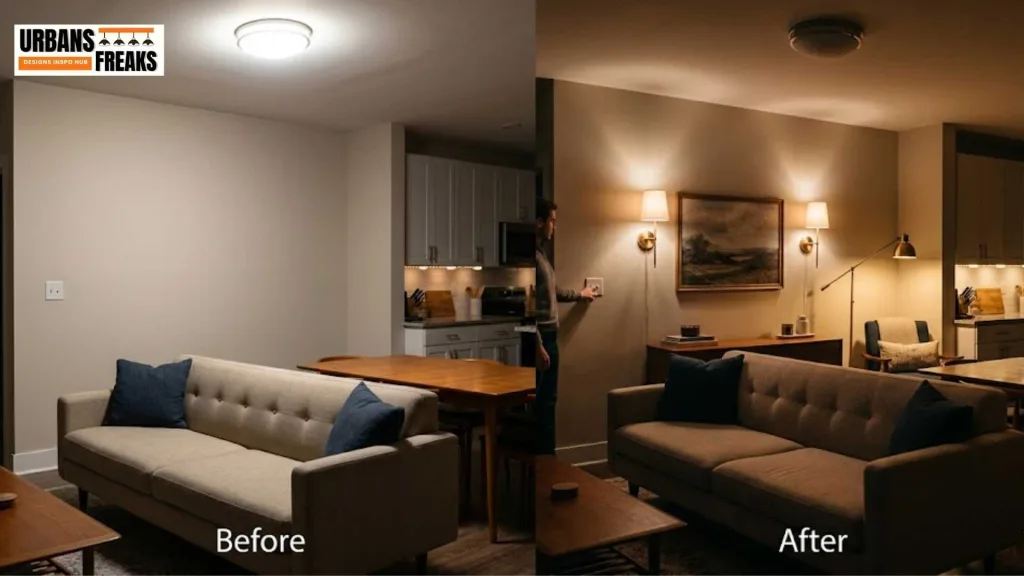
The practical breakdown:
| Lighting Type | Best Use | Typical Cost |
| Ceiling lights | General ambient light | $30–$150 |
| Floor lamps | Dark corners, reading areas | $40–$120 |
| Wall lights / sconces | Accent, flanking artwork | $25–$100 |
| Under-cabinet strips | Kitchen task lighting | $20–$60 |
| Dimmer switches | Mood control, any room | $15–$25 |
Warm lighting builds coziness and works beautifully in living rooms and bedrooms. Brighter, cooler lighting is right for kitchens and work areas where accuracy matters.
One of the most underrated upgrades in any room: a dimmer switch on the overhead light. It costs under $20, installs in thirty minutes, and gives you complete control over the atmosphere of a room across different times of day.
Room-by-Room Home Decor Ideas That Actually Work
Not every room deserves equal attention. Start with the spaces you use most and feel least comfortable in — kitchens, bathrooms, and living areas deliver the highest impact per dollar spent.
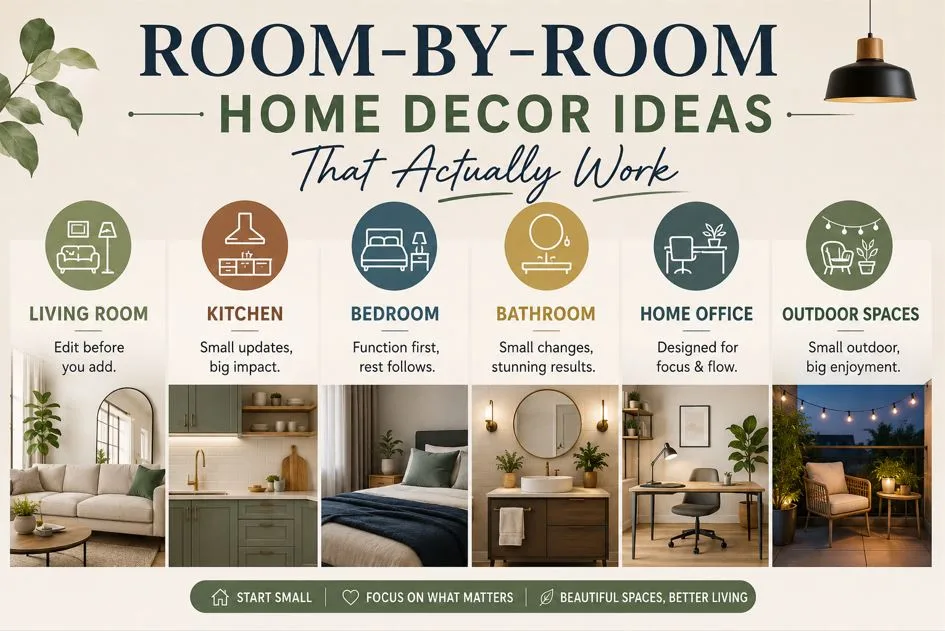
Living Room: Edit Before You Add
The living room gets first attention because it is the most visible — but it is also where the most money gets wasted. Rearrange before buying anything. Create a natural conversation area. Layer the lighting. Remove anything without visual purpose. A floor lamp in a dark corner, a mirror opposite a window, and one curved accent piece — a round ottoman or arched mirror — will move the needle more than most furniture purchases.
Kitchen: High-Impact Updates Without Full Renovation
Full kitchen renovations averaged $28,000–$85,000 in 2026 according to HomeAdvisor data. Most kitchens do not need that. Swap cabinet hardware first — $30 to $80, one afternoon, immediate upgrade.
Add under-cabinet LED lighting next. Introduce open shelving in one section. Replace an outdated faucet with brushed brass or matte black. These four updates combined rarely exceed $400 and photograph like a near-complete renovation.
| Kitchen Update | 2026 Cost | Time | Skill Level |
| Cabinet hardware swap | $30–$80 | 1–2 hrs | Beginner |
| Under-cabinet LED lighting | $20–$65 | 1–2 hrs | Beginner |
| Peel-and-stick backsplash | $50–$160 | 3–4 hrs | Beginner |
| Faucet replacement | $85–$260 | 30–60 min | Beginner |
| Cabinet painting | $110–$320 | 1–2 weekends | Intermediate |
Bedroom: Function Before Aesthetics
You spend roughly a third of your life in the bedroom. A 2026 sleep environment study in the Journal of Clinical Sleep Medicine confirmed that blackout curtains and dimmer lighting produce measurable improvements in sleep quality.
These two changes cost under $100 combined and should happen before any aesthetic layer. Soft, neutral palettes in sage green, dusty blue, or warm white follow. One low-maintenance indoor plant finishes the layer without adding maintenance burden.
Bathroom: Small Room, Outsized Impact
Bathrooms punch above their weight on budget renovations because the room is small — a $40 change covers more visual ground than the same $40 anywhere else. Replace the builder-grade mirror with an arch, round, or vintage-framed option available secondhand for $30–$80.
Coordinate towels in a single color family. Add a humidity-tolerant plant. A rainfall showerhead installs in under an hour and costs $45–$95. These four changes together photograph like a $2,000 renovation.
Home Office: Designed for Focus
Remote and hybrid work remains the dominant model in 2026, with 58% of knowledge workers spending at least three days per week at home according to Stanford Work From Home Research.
The home office needs to support actual focus, not just look tidy. Place the desk near a window for natural light. Add a task lamp. Keep the space genuinely minimal — clutter reduces cognitive performance more in a work environment than in any other room.
Outdoor Spaces: The Most Overlooked Room
Even small balconies and terraces can function as a genuine living extension with the right approach. Weather-resistant seating, soft outdoor lighting on a timer, and two or three containerized plants transform a neglected outdoor area into a space people actually use. In urban homes and apartments, this is especially high-value.
Bringing Nature Indoors: Biophilic Design in Practice
The push toward biophilic design — incorporating natural elements into interior spaces — is one of the most well-supported trends in residential design right now. Research from the Harvard T.H. Chan School of Public Health has linked nature-connected interior environments to measurable improvements in wellbeing and cognitive function.
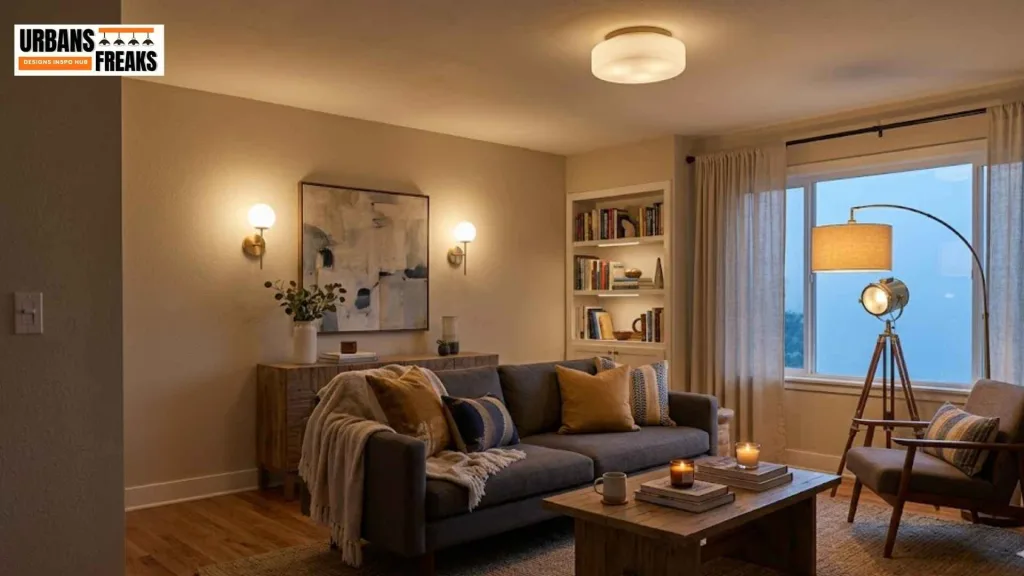
In practical terms, this does not mean turning your apartment into a greenhouse. It means:
- Indoor plants on shelves, windowsills, or a dedicated corner — even one or two make a difference
- Wooden furniture and natural textures — rattan, stone, untreated timber — that age well and bring warmth that synthetic materials cannot replicate
- Natural lighting maximized — sheer curtains instead of heavy ones, mirrors placed opposite windows, lighter wall colors that bounce light around the room
Natural textures also layer beautifully with softer furnishings like cushions and carpet, which is something TheHomeTrotters covers well — the combination of hard natural materials with soft textiles creates the visual balance that makes a room feel complete rather than half-finished.
Smart Storage and Organization as a Design Tool
An organized home is not just easier to live in — it looks better. Even a beautifully decorated room falls apart visually when clutter overtakes it.
The storage solutions worth prioritizing:
- Concealed storage wherever possible — drawers inside ottomans, beds with built-in storage, cabinets that keep surfaces clear
- Baskets and bins that are both functional and visible — they add texture while keeping items accessible
- Wall-mounted shelves that use vertical space and keep floor area open
- Hooks near entries — one of the simplest, cheapest, most effective storage ideas that almost every home underuses
The goal is not minimalism for its own sake. It is intentional organization — keeping what adds value, storing what you need access to, and removing what neither of those descriptions fits.
Home Design Styles Worth Understanding in 2026
Design trends are not instructions. They are signals about what the broader culture is finding beautiful right now — useful as input, not as a checklist.
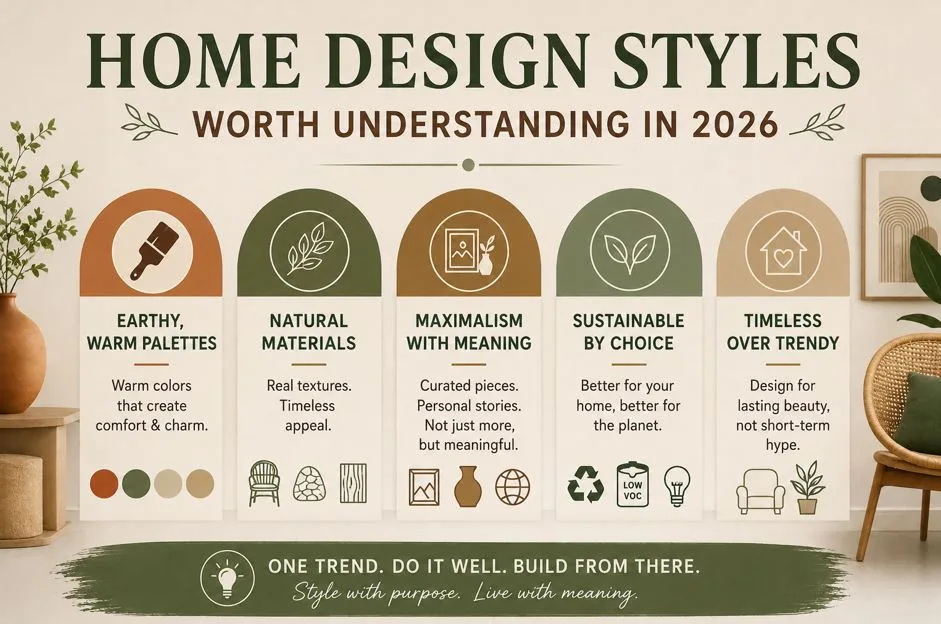
The trends that the blog home ideas TheHomeTrotters has consistently identified as genuinely worth acting on right now:
- Earthy, warm palettes replacing cool grays — terracotta, forest green, warm cream. Low cost to implement. A single accent wall is enough.
- Natural materials — rattan, stone, reclaimed wood. These age well and retain their appeal longer than trend-driven synthetic finishes.
- Maximalism done with intention — not every surface covered, but curated collections that tell something about who lives there. The New York Times noted this shift well: it is not about excess, it is about meaning.
- Sustainable choices baked in — secondhand sourcing, low-VOC paints, LED lighting. These are not add-ons to good design; they are increasingly the default for homeowners thinking long-term.
One thing I always advise clients: pick one trend, do it well, and build from there. Chasing all of them simultaneously is how you end up with a space that feels chaotic and unfinished.
Sustainable Home Design: The Practical Case in 2026
Sustainability in home design is not a moral stance — it is good economics and usually better aesthetics. Older, secondhand furniture was often built with denser materials and better joinery than new mass-produced equivalents at the same price. LED lighting uses at least 75% less energy than incandescent bulbs and lasts decades longer. Low-VOC paints are now available at the same price as standard paints, with no aesthetic tradeoff and a genuinely healthier indoor air quality result.
These choices cost the same or less upfront. They last longer. And they tend to look better — which is the reason they keep showing up across the most thoughtful budget-conscious design ideas circulating on platforms like Pinterest and TheHomeTrotters.
| Sustainable Swap | 2026 Upfront Cost | Long-Term Saving | Design Impact |
| LED lighting | Same as standard | High — 75% less energy | Neutral |
| Secondhand furniture | Low to medium | High | High |
| Low-VOC paint | Same as standard | Health benefit | Same finish quality |
| Smart thermostat | $80–$150 | Medium | Low |
| Reclaimed wood accents | Medium | Medium | High |
Common Decorating Mistakes to Avoid
After years of working with homeowners and design students, the mistakes I see most often are not about taste. They are about process.
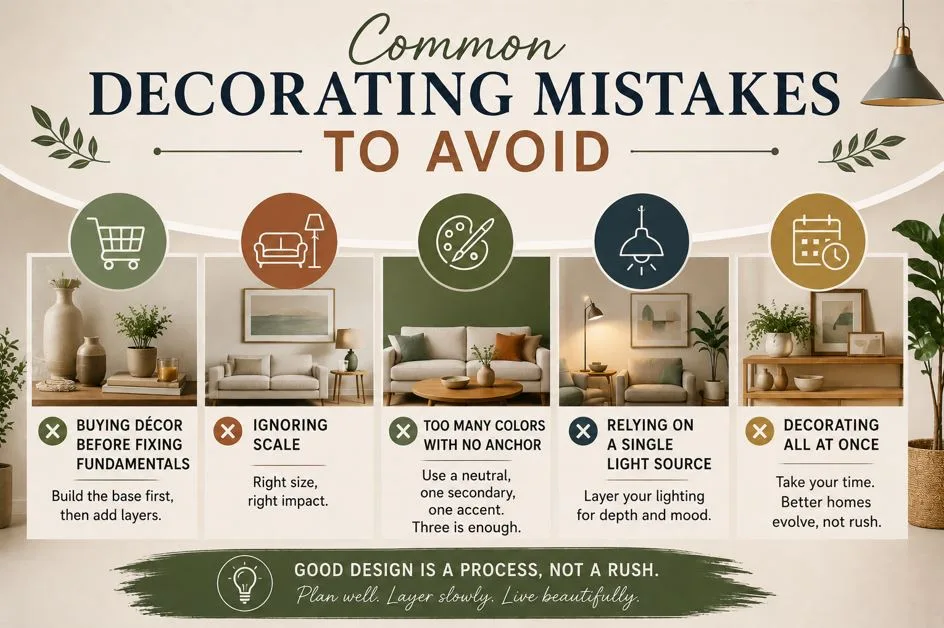
- Buying décor before fixing fundamentals. Accessories should be the last layer, not the first.
- Ignoring scale. A beautiful piece in the wrong size will make a room worse, not better.
- Too many colors with no anchor. Choose a dominant neutral, one secondary color, and one accent. Three is enough.
- Relying on a single light source. One ceiling light does not design a room — it just illuminates it flatly.
- Decorating all at once. A home that comes together gradually over time almost always looks more personal and considered than one decorated in a single weekend shopping trip.
Conclusion
Your home does not need to be perfect to feel like yours. It needs to work for how you actually live — your routines, your light, your family. The best home is not the most expensive one. It is the one where every decision, however small, genuinely serves the life being lived inside it.
Start with the room that needs it most. Fix the lighting. Let color do its work. Organize with intention. For more practical ideas, explore the Home Decor section at UrbanSFreaks.