
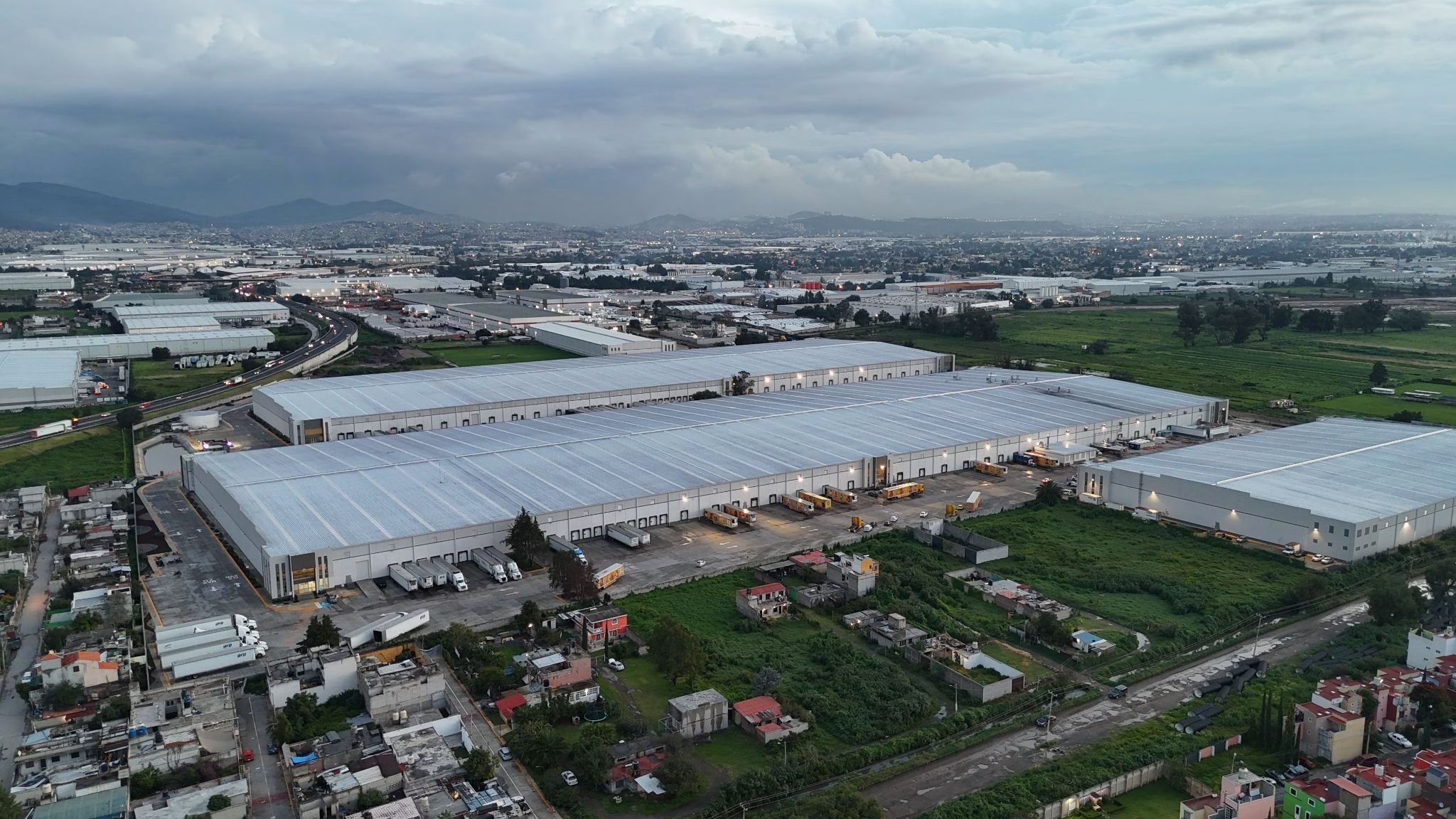
Angle day. High square-footage rates force logistics teams to rethink how physical space gets utilized.
Traditional wide aisles and single-tier storage shelving no longer make financial sense. Smart operators turn to high-density storage layouts to pack maximum inventory into smaller footprints.
Capitalizing on Vertical Overhead Space
Building upward remains the fastest method for expanding warehouse storage capacity without leasing extra real estate footprint. Industrial facilities install towering rack frameworks that extend toward ceiling rafters, transforming empty upper space into organized storage positions. Deploying specialized reach trucks allows facility workers to access upper rack levels safely.
High ceilings offer room for automated inventory machinery that optimizes stock movements across shifts. Evaluating verticalstorageusa.com or similar options helps fulfillment teams compare modern automated machinery designed for tight footprints. Investing in these specialized lifting systems creates an efficient workflow throughout daily fulfillment routines.
Engineers calculate load capacities carefully when designing high-bay racking systems to prevent structural stress. Heavy goods occupy bottom shelves, leaving lighter items for upper positions. Strategic weight placement keeps tall storage frameworks completely stable under daily operational demands.
Implementing Automated Lift Modules
Vertical lift modules enclose inventory inside high towers, delivering individual storage trays directly to an operator at waist height. Industrial market reports indicate these automated systems complete picking tasks 70% faster than manual searching methods and push order accuracy up to 99%. Cutting out unnecessary walking distance improves daily throughput metrics across fulfillment facilities.
Enclosed lifting towers shield delicate merchandise from ambient dust, debris, and unauthorized handling on the floor. Integrated computer software maintains accurate inventory counts across all internal trays without manual audits. Operators process incoming inventory shipments and outgoing customer packages with minimal physical strain.
Vertical storage trays adjust their spacing automatically based on the precise dimensions of stored goods. Sensors scan each tray height before storing it, preventing wasted vertical clearance between shelf levels. Maximum density gets achieved without requiring human intervention or manual shelf height adjustments.
Transitioning to Narrow Aisle Corridors
Standard forklift corridors consume thousands of square feet of usable warehouse floor area. Very narrow aisle configurations shrink corridor widths down to six feet, doubling the number of available storage racks on site. Specialized turret trucks guided by floor wires navigate these tight paths with total precision and stability.
Shrinking corridor width offers clear operational advantages for compact facilities:
- Floor space utilization increases significantly without expanding outer facility walls.
- Pallet rack capacity expands dramatically across every available square yard.
- Dedicated wire guidance systems lower collision risks against structural storage frames.
Wire guidance systems maintain straight travel paths automatically, preventing vehicle drift against surrounding racks. Drivers concentrate on lifting tasks rather than steering vehicles
Integrating Heavy-Duty Mezzanine Platforms
Steel mezzanine structures create brand new floor space directly above main packing and sorting areas. These elevated platforms support light assembly tasks, returns processing, or extra shelving rows. Fulfillment centers gain thousands of extra working square feet without altering external building walls.
Modular mezzanine layouts allow quick assembly on site without halting ongoing ground floor operations. Heavy-duty access staircases and vertical freight lifts connect upper levels to ground floors. Operational capacity expands upward whenever inventory demands increase.
Engineers design mezzanine platforms with heavy load ratings to accommodate active machinery and dense inventory storage. Protective perimeter railings and safety gates safeguard workers during loading operations. Overhead spaces turn into full working floors with minimal capital expenditure.
Adopting Dynamic Adjustable Shelving
Fixed shelving creates dead space whenever product dimensions vary throughout seasonal cycles. Dynamic shelf setups adjust height positions to match exact package dimensions, eliminating empty vertical gaps. Gravity flow tracks push items forward automatically as front items get picked.
Dynamic storage setups improve inventory management across multiple operational zones:
- Gravity flow tracks support efficient first-in, first-out stock rotation without manual rearrangement.
- Adjustable shelf heights eliminate empty clearance space above stored cartons.
- Mobile shelving blocks slide together on floor tracks to eliminate unnecessary open corridors.
Mobile shelving tracks eliminate multiple open corridors, keeping only a single active aisle open at any given moment. Operators open specific aisles using mechanical handles or electronic push-button controls. Storage density jumps without slowing down access to high-demand merchandise.
Dynamic carton flow beds accommodate various box sizes across different picking lanes. Rollers glide products down gentle slopes, keeping picking faces fully stocked at all times. Pickers collect merchandise quickly without reaching deep into dark shelf corners.

Streamlining Micro-Fulfillment Strategy
Last-mile fulfillment hubs operating near city centers require rapid order turnaround times to satisfy customer expectations. Micro-fulfillment automation packs thousands of SKUs into compact urban facilities located near local customer bases. Rapid retrieval routines make same-day delivery promises achievable for urban consumers.
Automated shuttles travel through compact storage grids to retrieve order bins instantly. Smart order management software groups incoming orders to minimize shuttle travel distances inside the grid. Small urban facilities process order volumes previously handled only by massive suburban distribution centers.
Micro-fulfillment centers utilize modular grid structures that fit neatly inside existing commercial buildings or former storefronts. Compact robotic arms pick items directly from storage bins to assemble customer orders.
Optimizing Inventory Density Management
Smart warehouse management software determines optimal storage locations for every item based on picking velocity. Fast-moving SKUs sit close to packing stations, whereas slow-moving items occupy higher vertical shelf positions. Data-driven slotting strategies eliminate redundant worker movement across every shift.
Real-time tracking prevents overstocking and keeps shelf space organized across all storage zones. Clean, well-labeled storage bays minimize missing items and accelerate restocking tasks. Facility managers retain full visibility over every square inch of available floor space.
Modern urban storage hubs prove that space limitations prompt clever engineering solutions across logistics operations. Strategic technology adoption transforms tight city facilities into high-volume fulfillment powerhouses.
Adopting high-density storage methods keeps urban fulfillment centers competitive in fast-paced markets. Smart vertical storage strategies prepare growing businesses for ongoing expansion within compact commercial footprints.