
When you move into an older house, the first few days are often spent trying to figure out what all those strange things are. A hidden valve, a brown stain on the floor in the utility room, the basement shower with the stiff metal lever that nobody turned on during the open house. Don’t worry about buying a replacement washer or putting away your last box yet. Take a look around the plumbing first. You might find problems that were masked by an empty home, shut doors, or a very clean bathroom.
The First 7 Days: Learn the Controls
Go find the main water shutoff valve. It could be next to the water meter, close to the water heater, or maybe it’s covered over by a half-peeled off label in the basement. Test it just enough to see if it works. Don’t try to force it, because it might break. You want all the members of your household to know where the main shutoff is. It will come in handy when a supply line breaks behind the washing machine.
Turn on the water in every fixture. Yes, the ones you don’t use much either. Fill a glass at the kitchen sink, then turn on the infrequently used tub spout. Flush every toilet multiple times. An empty home has many traps that have dried out, and drain pipes can take a while to get moving again after sitting idle.
Also, check the following while you’re testing:
- Laundry hookups for rusty valves, wet drywall, and loose drain hoses
- Unused basement shower for a sewer smell at the drain grate
- Sink cabinets for swollen particleboard under the trap
- Toilet bases for rocking, broken caulk, or a little bit of water at the edge
A slow drain that eventually clears is still a drain that doesn’t flow as fast as it should – www.nytimes.com/wirecutter is worth a skim. If water stays behind the stopper for a few minutes, it could mean a blockage is further down the line. And if a nearby bathtub gurgles, it might indicate an issue with venting or a shared drain line.
Check for Issues Before You Start Remodeling
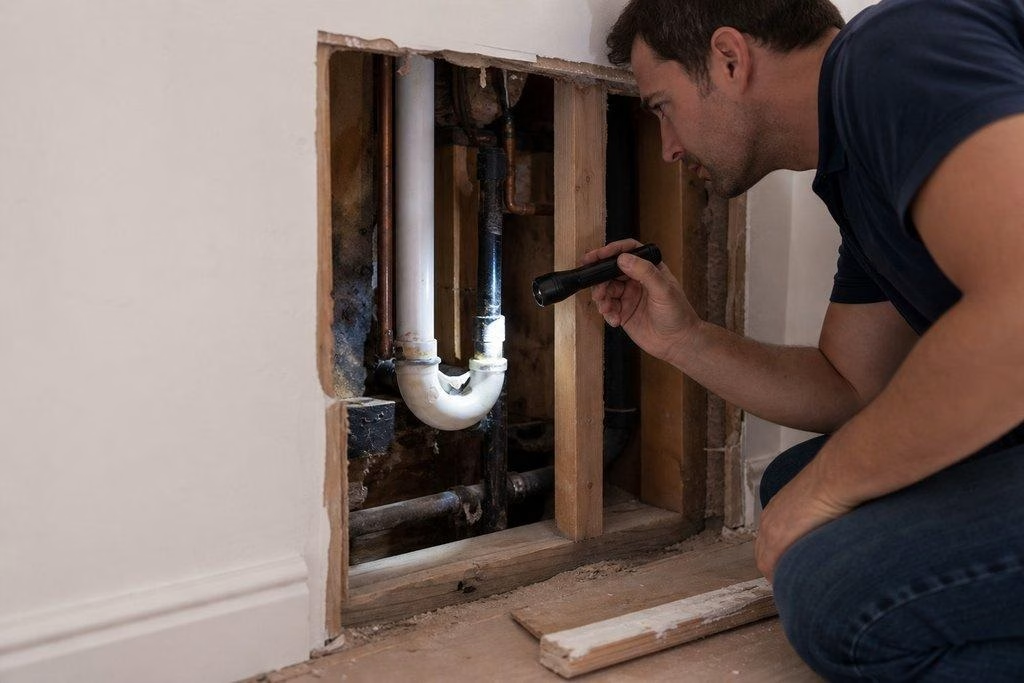
Installing a new floor, painting a wall, or receiving a delivery can all cause a small leak to become a big problem. Inspect behind the fridge, around the water heater, and under the bathroom sink before you hire a contractor to close up the wall or put in new cabinetry. An old stain on a concrete basement floor could be a stain. But it’s worth seeing if it gets darker when the dishwasher runs.
A discoloration at the tap should be evaluated. Sometimes the water looks cloudy for a short time after being stagnant in pipes, and running a few fixtures will clear it up. But if it remains discolored, smells metallic, or leaves residue at the bottom of a white basin, it should be looked into. Record which taps are affected, and whether it affects the hot and cold differently.
There are other things an expert would look at, too. Things like how much room there is for appliances to flex without pinching or kinking a hose, whether a drain pipe is securely held in place, or if a new installation’s drain pipe layout is compliant with local regulations. All of this should be checked before you build a laundry closet around the hooks and shelves.
What Can a Professional Tell You?
Homeowners looking for quality plumbing services in North Minneapolis benefit from having a reliable plumbing services for North Minneapolis residents. Even if you never need to call for help again, it can be valuable. The service report might identify where the main shutoff valve is, mention supply lines that are getting old, detail what they found in the drains, or list what work they did on a toilet, a faucet, or a pipe joint.
If a shower in the basement has backed up, a plumber can tell you if it is just that line that is clogged, or if there is something bigger going on in the whole drain system. If the toilet wobbles when you sit on it, it might be the bolts holding it in place, the seal, the subfloor, or the flange underneath. These are different issues, and you don’t want to tear everything apart just to guess.
Ask for a description of their findings. If they send you a picture of a corroded fitting or write down where the drain is suspect, you’ll have something to refer back to when you do plan to fix it later.
Keep the service documents along with your appliance manuals and your warranty information. Save them with the key marked “side door” in the kitchen drawer. Write down the date you got a drain snaked, which bath had low pressure, and where the shutoff valve is. Once you’re ready to start a new project, re-test the basement shower and laundry hookups to see how they’re doing.