Luxury homes often feel spacious because every element has a clear purpose. Their best design ideas don’t depend on enormous rooms or expensive finishes. They rely on proportion, visual continuity, tailored storage, and carefully controlled light.
Those same principles can make a studio, apartment, or compact house feel calmer and more generous. The goal isn’t to imitate a mansion. It’s to borrow the decisions that make well-designed interiors work.
Choose fewer pieces, but give them more presence
Small rooms are often filled with undersized furniture because people assume tiny pieces save space. The result can feel scattered. Luxury interiors usually take the opposite approach: fewer objects, stronger shapes, and enough open floor around them to let the room breathe.
In a compact living room, one properly scaled sofa may work better than a small loveseat, two chairs, and several side tables. A substantial coffee table with drawers can replace multiple storage baskets. One large artwork can also create a cleaner focal point than a collection of small frames.
Measure circulation paths before buying anything. You should be able to move naturally between the doorway, seating, and windows without turning sideways. When a piece interrupts that path, the room feels cramped regardless of its actual dimensions.
Build storage into the architecture
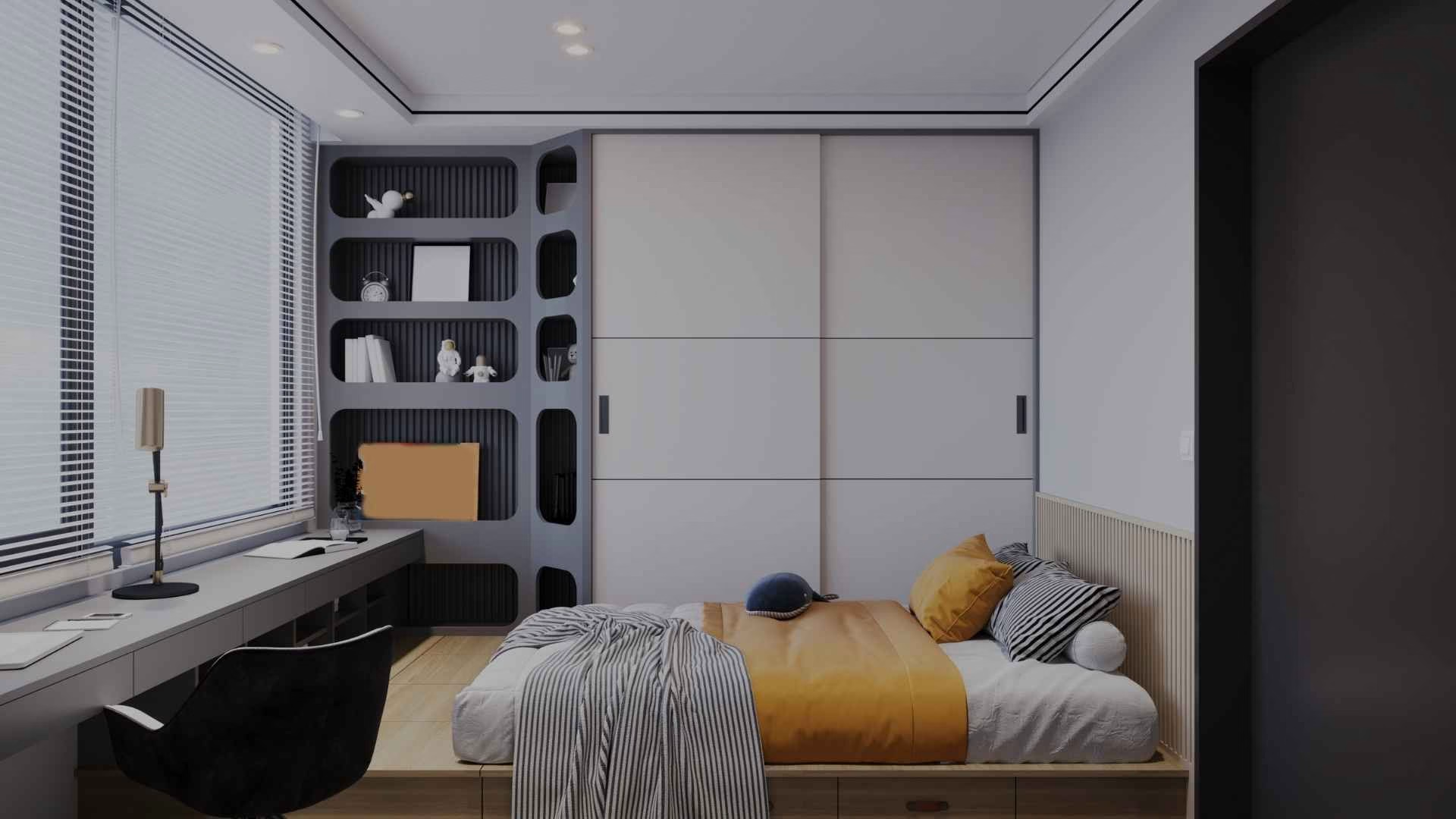
Luxury homes rarely rely on rows of freestanding cabinets. Storage is often integrated into walls, alcoves, window seats, and built-in joinery. This reduces visual clutter because the storage reads as part of the room rather than another object competing for attention.
Renters can apply the same idea without permanent construction. Choose bookcases that nearly reach the ceiling, wardrobes that match the wall colour, or modular shelving sized to fit an entire recess. A low media unit that runs most of the wall will usually look more intentional than several mismatched cabinets.
This principle is especially useful when comparing compact layouts in midtown Tucson apartments, where closets, wall lengths, and furniture placement can matter as much as the listed floor area. A simple floor plan may offer more usable space when storage and circulation are well resolved.
Treat lighting as a layered design feature
High-end interiors rarely depend on one bright ceiling fixture. Designers combine general lighting with task lights and softer accent sources. This creates depth, separates activity zones, and prevents the room from feeling flat.
Start with the places where you actually need light. Add a reading lamp beside the sofa, under-cabinet lighting in the kitchen, and a small lamp near a darker corner. Wall-mounted or plug-in sconces are useful in tight bedrooms because they free bedside surfaces.
Mirrors can also redirect existing light and make darker areas feel brighter. The Rocky Mountain College of Art and Design explains how mirrors reflect and distribute light rather than producing additional light themselves. Place one where it reflects a window, attractive lamp, or open part of the room. Avoid positioning it opposite clutter, since the reflection will double the visual noise.
Use one continuous material story
Luxury rooms often feel cohesive because finishes repeat from one area to another. In a small home, too many contrasting woods, metals, colours, and patterns can divide the space into even smaller visual sections.
Choose a limited material palette and repeat it with restraint. For example, warm oak might appear in a dining table, picture frames, and a narrow shelf. A black metal finish could connect lighting, cabinet handles, and chair legs. The pieces don’t need to match exactly, but they should appear related.
The same approach works with colour. Carrying one wall colour through adjoining spaces can create continuity, while changes in texture provide enough variety. Curtains close to the wall colour, for instance, soften a window without breaking the room into another block.
Give ordinary features a custom fit
Much of what makes a luxury interior look polished comes from alignment. Curtains reach the floor, furniture fits the wall, rugs relate to the seating area, and artwork follows the proportions of the surface behind it.
You can create that effect by paying attention to dimensions rather than price. Hang curtains near the ceiling and extend the rod beyond the window frame. Choose a rug large enough for at least the front legs of the main seating to rest on it. Centre artwork with the furniture beneath it, not automatically with the entire wall.
Small gaps often reveal an improvised layout. A narrow shelving unit beside a wardrobe, a fitted tray over an ottoman, or a bench cut to the width of an entry wall can make an awkward area feel deliberate.
Design for calm, not maximum capacity
A compact home doesn’t need to hold every possible piece of furniture. Luxury design often succeeds because it leaves room around important objects and allows some surfaces to remain empty.
Before adding storage or décor, decide what the room must support every day. Keep the pieces that serve those activities, then remove anything that only fills an available corner. The most useful lesson from luxury homes is not to spend more. It’s to make each design decision feel intentional.