Roof pitch is one of the most consequential variables in any roofing project, yet property owners rarely factor it into early budget planning. The angle of a roof affects which materials are code-compliant, how many labor hours a crew requires, and how well the finished system sheds water over decades. In El Dorado Hills, where hillside lots routinely push roof geometry into steeper territory, pitch quietly drives the bottom line on nearly every estimate. Roof Geeks serves homes and commercial buildings throughout El Dorado Hills and the wider Sacramento metropolitan area.
Understanding Roof Pitch and Why It Drives Every Other Variable
Roof pitch is the rise of a roof over its horizontal run, written as a ratio. A 4:12 pitch rises 4 inches vertically for every 12 horizontal inches of run. Contractors classify every roof into one of three categories: low-slope (0:12 to 3:12), conventional slope (4:12 to 9:12), and steep slope (10:12 and above). Each category triggers different product approvals, installation protocols, and crew requirements, all of which feed directly into the final price.
Why El Dorado Hills Roofs Skew Steeper Than Surrounding Markets
Hillside lot grading along Green Valley Road and Bass Lake Road forces steeper roof geometries across El Dorado Hills, particularly in neighborhoods like Serrano and the custom estates near the 95762 corridor. That regional pitch distribution sits measurably higher than flatter suburban markets like Elk Grove or Rancho Cordova. Many El Dorado Hills HOAs also restrict material type and color, which narrows the menu before pitch is even discussed.
How Pitch Drives Material Quantities, Labor Hours, and Unit Costs
Pitch and cost are linked through the slope factor multiplier, which converts a building’s flat footprint into actual roof surface area. A 4:12 pitch carries a multiplier of approximately 1.054, meaning a 2,000-square-foot footprint yields roughly 2,108 square feet of actual roof surface. A 12:12 pitch carries a multiplier of 1.414, producing approximately 2,828 square feet from the same footprint. That difference applies across every layer of the assembly, including sheathing, underlayment, starter strips, field shingles, and ridge cap material.
Matching Materials to Pitch: What Each Product Requires
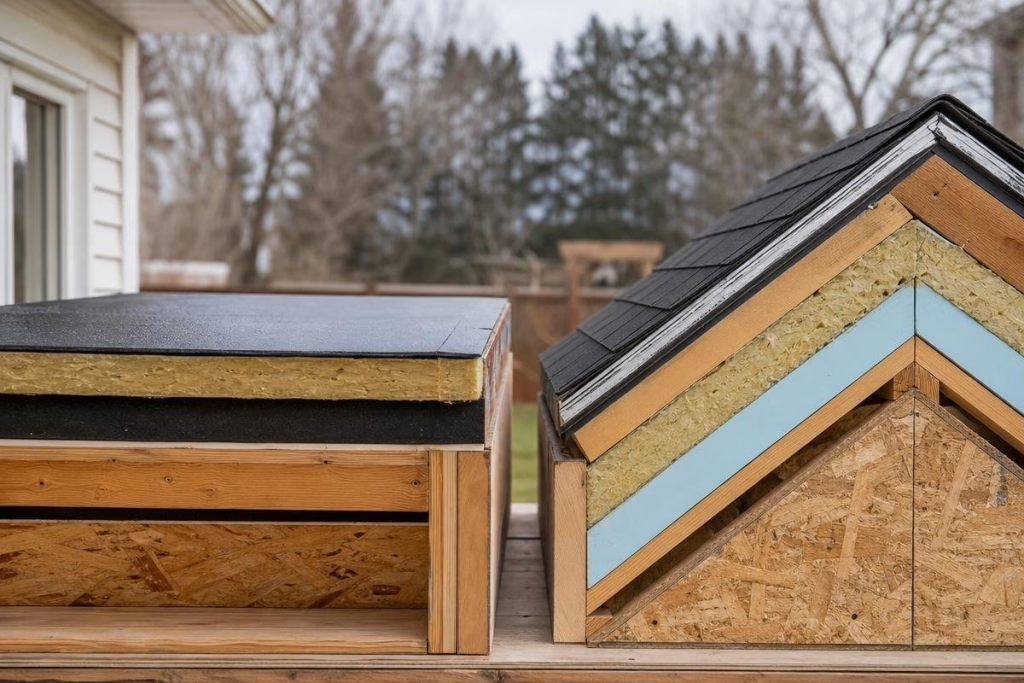
Each product carries manufacturer-specified pitch minimums that determine whether the installation will perform as warranted.
- Asphalt shingles: Most residential roofs in El Dorado Hills and Cameron Park fall in the 5:12 to 8:12 range, making asphalt a cost-effective default for that housing stock.
- Metal: Carries a Class A fire rating, a documented factor in material selection for properties in Shingle Springs and Auburn, where wildfire risk influences what insurers accept and local codes permit.
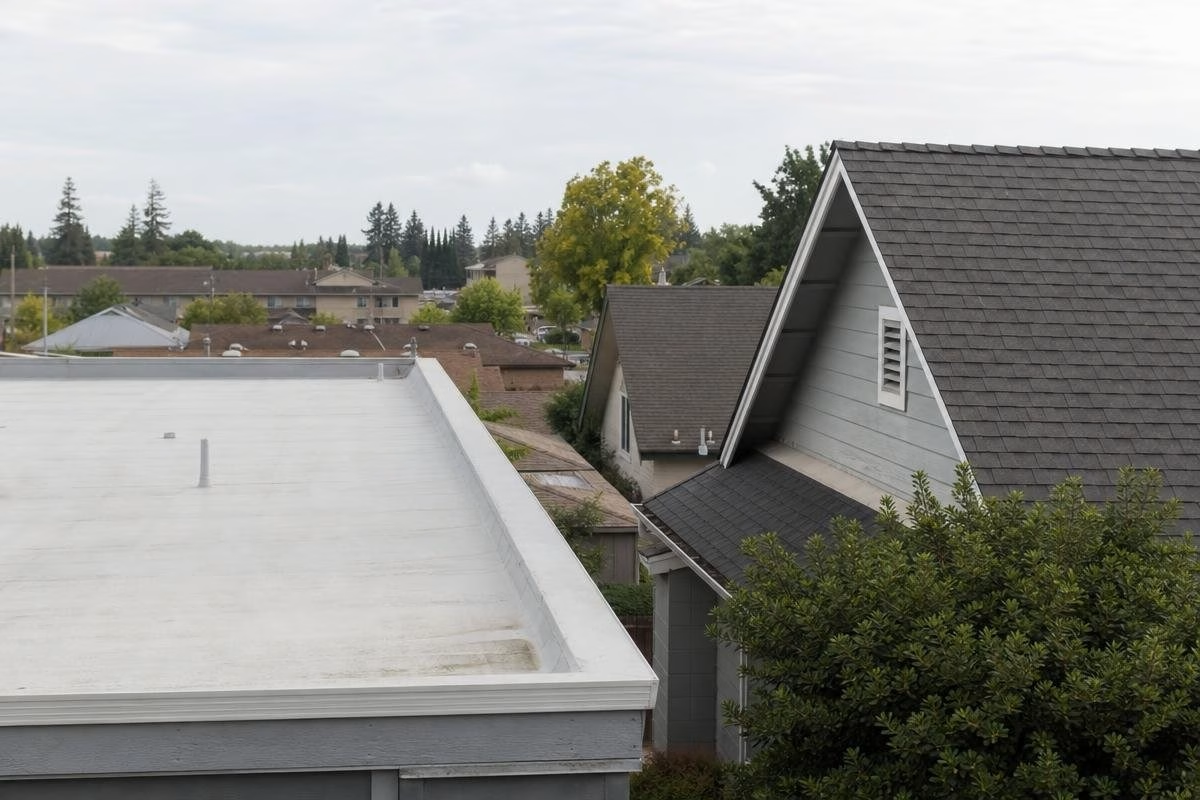
- Tile: Thermal mass moderates attic temperature swings during the region’s triple-digit summer afternoons, though concrete tile dead weight runs approximately 850 to 1,100 pounds per square, requiring verified rafter and sheathing load capacity before installation on steep slopes. Roof Geeks’ flat roofing services cover the low-slope end of this range for properties where steep tile loads are not structurally viable.
Frequently Asked Questions
What does roof pitch mean and how is it measured?
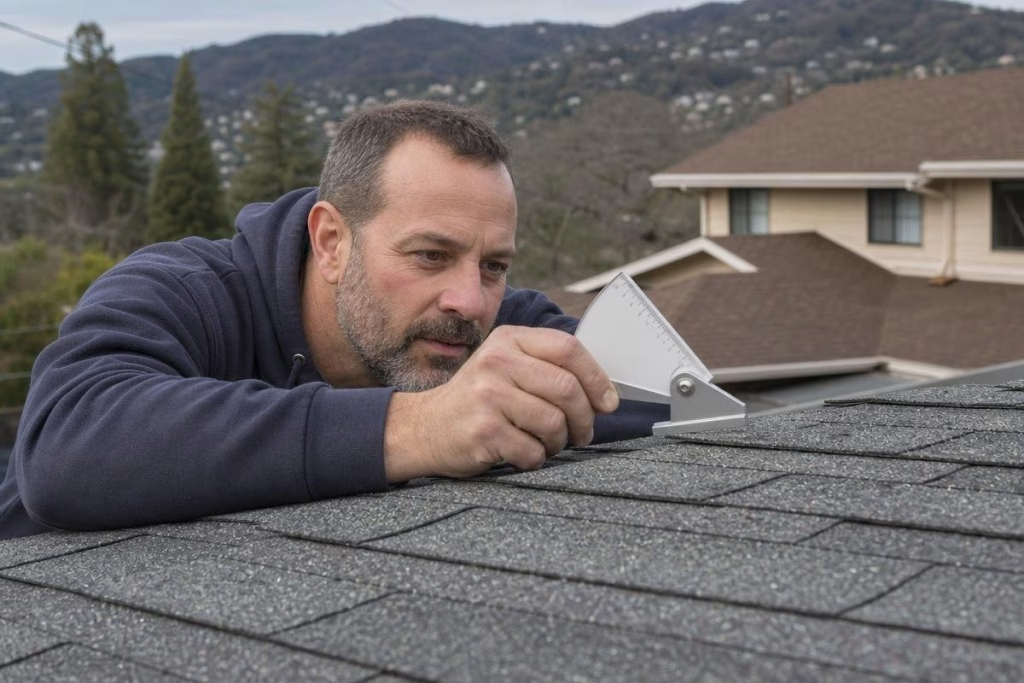
Roof pitch is the rise of a roof over its horizontal run, expressed as a ratio. A 4:12 pitch rises 4 inches vertically for every 12 horizontal inches of run. It is confirmed using a level and tape measure on the roof surface, or measured directly off the rafters during a deck inspection. Without a confirmed pitch, material quantities, labor multipliers, and approved product categories cannot be accurately determined, which is why quotes from different contractors are often not directly comparable.
How does roof pitch affect the total cost of a roofing project?
Pitch and cost are linked through the slope factor multiplier, which converts a building’s flat footprint into actual roof surface area. A steeper pitch means more material across every layer of the assembly and more labor hours, since crews on steep slopes work tied off on roof jacks rather than walking freely across the surface. Both factors compound on top of each other as pitch increases, which is why two homes with identical footprints can have substantially different roofing costs.
At what pitch do asphalt shingles stop being a viable option?
Asphalt shingles are manufacturer-specified for pitches of 2:12 and above with double-layer underlayment, and 4:12 and above with standard single-layer underlayment. Below 2:12, shingles fall outside manufacturer specifications entirely and will not carry warranted performance. Low-slope systems instead require different product categories such as modified bitumen, TPO membranes, or built-up roofing.
Why does El Dorado Hills have steeper roofs than most Sacramento suburbs?
Hillside lot grading along Green Valley Road and Bass Lake Road forces steeper roof geometries across El Dorado Hills, particularly in neighborhoods like Serrano and the custom estates near the 95762 corridor. That regional pitch distribution sits measurably higher than flatter suburban markets like Elk Grove or Rancho Cordova. Many El Dorado Hills HOAs also restrict material type and color, which further narrows product selection on top of pitch-driven constraints.
Does roof pitch affect which materials a property owner can choose?
Every roofing material carries manufacturer-specified pitch minimums. Metal has the broadest range, with standing seam panels viable as low as 1:12. Asphalt shingles require at least 2:12 with modified installation. Concrete and clay tile are appropriate at 4:12 and above, though most manufacturers allow 3:12 with a secondary waterproofing layer. Staying within those minimums is required for the manufacturer warranty to remain valid.
About Roof Geeks
Roof Geeks is a licensed roofing contractor serving residential and commercial properties throughout the El Dorado Hills area and the wider Sacramento metropolitan region. The company installs and repairs asphalt shingle, metal, tile, and flat roofing systems across the El Dorado Hills to South Lake Tahoe corridor, working to manufacturer-specified installation standards on every project and backing that work with the inspection and substrate verification that keep manufacturer warranties valid. Their office is located at 4261 Sunset Lane, Suite 201, Shingle Springs, CA 95682.
Business Name: Roof Geeks
Address: 4261 Sunset Lane, Suite 201, Shingle Springs, CA 95682
Phone Number: (916) 888-7663