Lynnewood Hall: America’s Last Gilded Age Palace

Some houses are just houses. Lynnewood Hall is a legend. It sits in Elkins Park, Pennsylvania. This 110-room Neoclassical Revival mansion is one of the greatest surviving Gilded Age estates in America. It was built for tycoon Peter A. B. Widener between 1897 and 1899. It once held paintings by Rembrandt, Raphael, and Monet. After decades of neglect, it is finally being saved.
The mansion covers 100,000 square feet on a 480-acre estate. It has 55 bedrooms, 20 bathrooms, a ballroom for 1,000 guests, a private art gallery, wine cellars, a bakery, and an indoor pool. Nothing here was ever ordinary. In June 2023, the Lynnewood Hall Preservation Foundation (LHPF) bought it for $9 million. As of 2026, active restoration is underway.
Lynnewood Hall: Quick Overview
| Feature | Details |
| Location | 920 Spring Avenue, Elkins Park, Pennsylvania |
| Original Build Cost | $8 Million (approx. $296 million today) |
| Sale Price (2023) | $9 Million |
| Year Built | 1897–1899 |
| Square Footage | 100,000 sq ft |
| Lot Size | 480 acres |
| Bedrooms | 55 |
| Bathrooms | 20 |
| Special Features | Ballroom, Art Gallery, Indoor Pool, Wine Cellar, Bakery |
| Architectural Style | Neoclassical Revival / Beaux-Arts |
Lynnewood Hall, Elkins Park PA Location
Lynnewood Hall sits at 920 Spring Avenue in Elkins Park, Montgomery County, just north of Philadelphia. The area is quiet and green, shielded by tall trees and a long private driveway. About 480 acres of the original 800-acre estate remain today. The property was listed on the National Register of Historic Places in 2025.
My Visit to Lynnewood Hall
I first heard about Lynnewood Hall through clients at Urbansfreaks.com who kept asking about Gilded Age mansions. I drove out to Elkins Park to see it myself. The long tree-lined approach set the tone immediately.
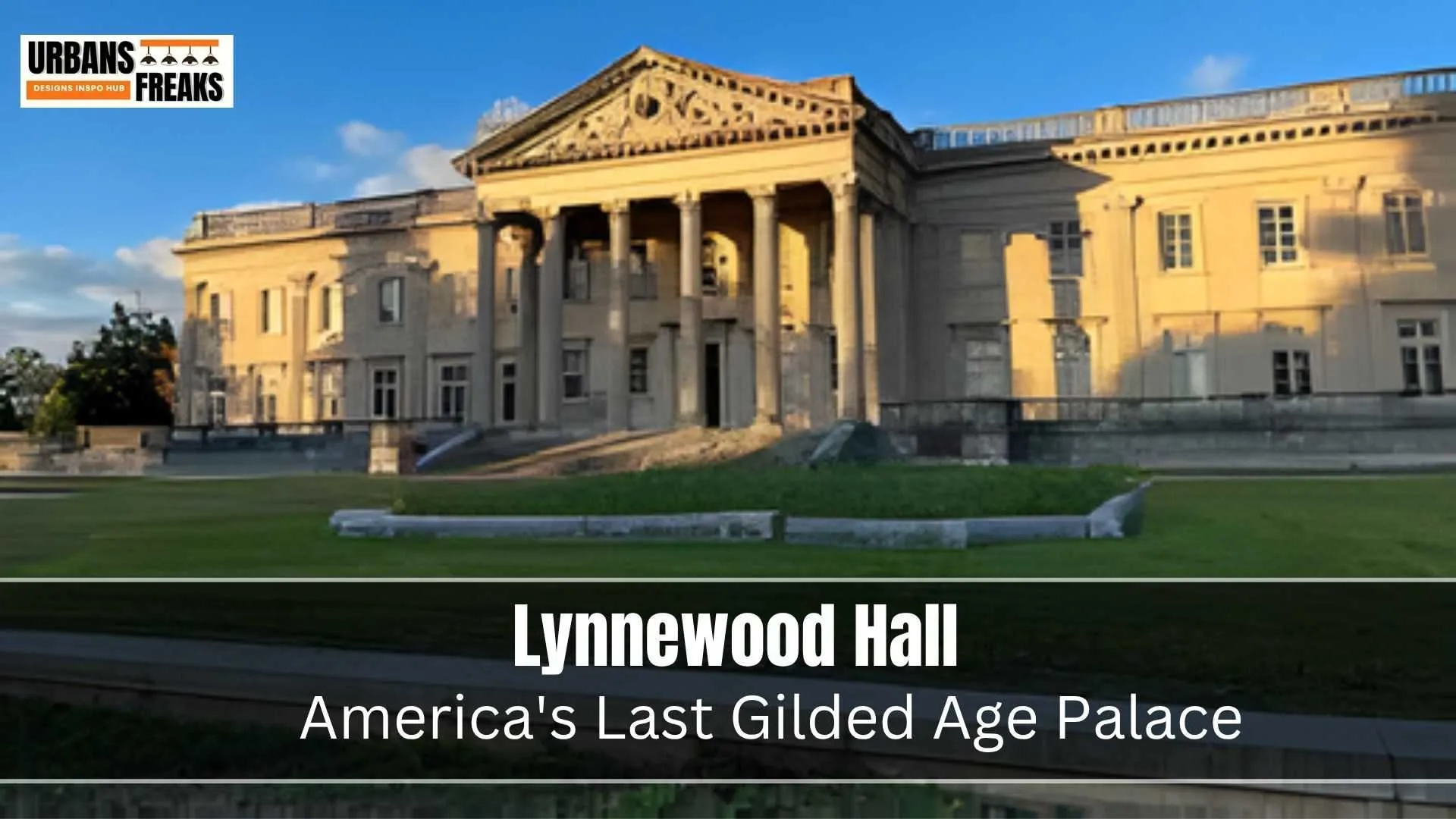
Arriving at the front, the giant Corinthian columns stretch three full stories above you. The Indiana limestone glows golden in the afternoon sun exactly as seen in our photos. The formal lawn and stone-edged reflecting pools give it a palace-like presence. Standing at the base of those steps, I understood why people call this America’s Versailles.
The Interior Architecture
Lynnewood Hall’s exterior is pure Beaux-Arts brilliance. The T-shaped building measures 325 feet by 215 feet, built entirely from Indiana limestone. Massive Corinthian columns frame the central portico.
A classical triangular pediment with carved stone reliefs crowns the top. Elegant balustrades run the full roofline. In our aerial photograph, the mansion sits symmetrically in a sea of green surrounded by dense woodland. Two rectangular stone-edged reflecting pools sit on the front lawn, clearly visible in both our property images.
Lynnewood Hall Floor Plan: Entering the Home
Stepping inside means stepping back in time. The main foyer is enormous, with ceilings soaring above 20 feet. Original moldings are gilded with real gold where they survive. Floors were laid with imported marble.
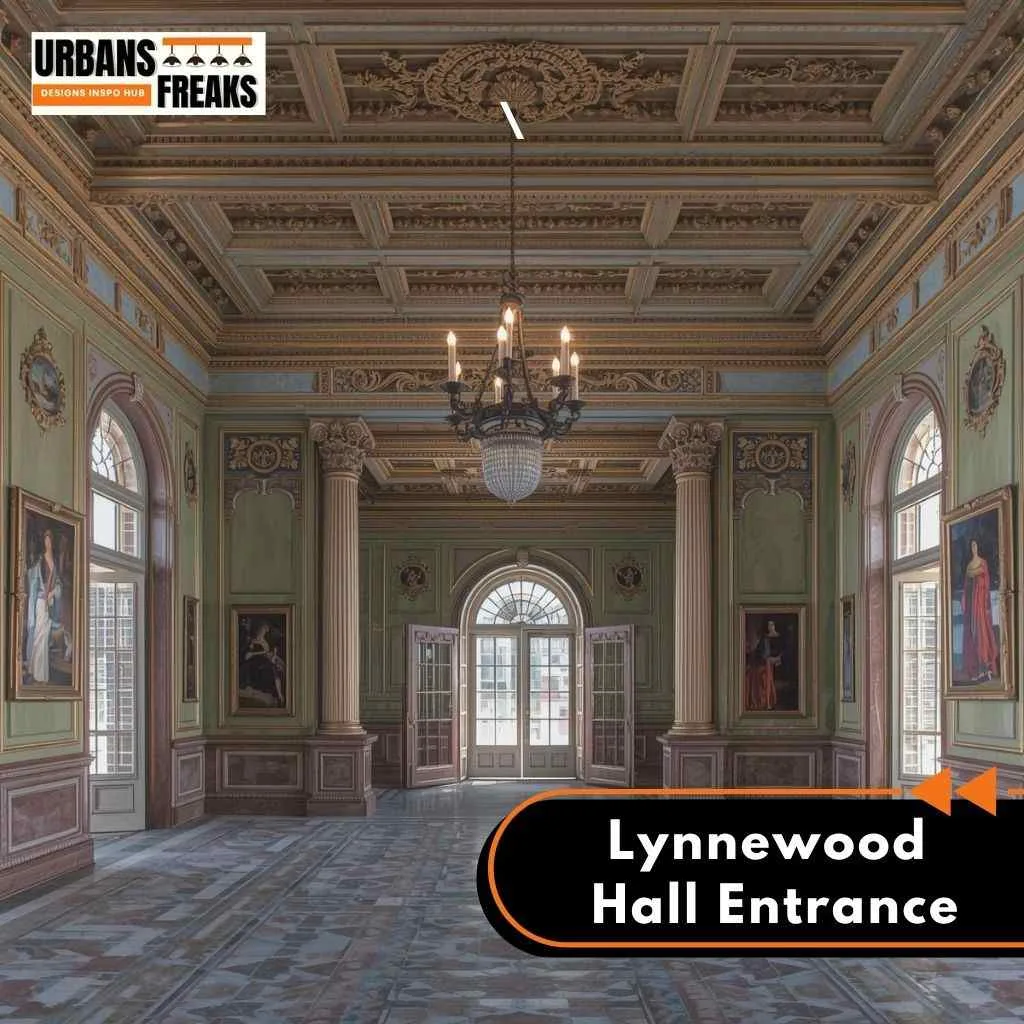
The floor plan served two purposes: family living and art display. The ground floor had reception rooms, a dining hall, a library, and a ballroom. Upper floors held bedrooms, dressing rooms, and a multi-room art gallery. A separate wing was dedicated entirely to the Widener art collection.
Living Room & Dining Area
The great hall had soaring ceilings and carved walnut paneling imported from London. Walls were hung with European masterpieces. Furniture came from Louis XV’s palace. Persian rugs covered the floors.
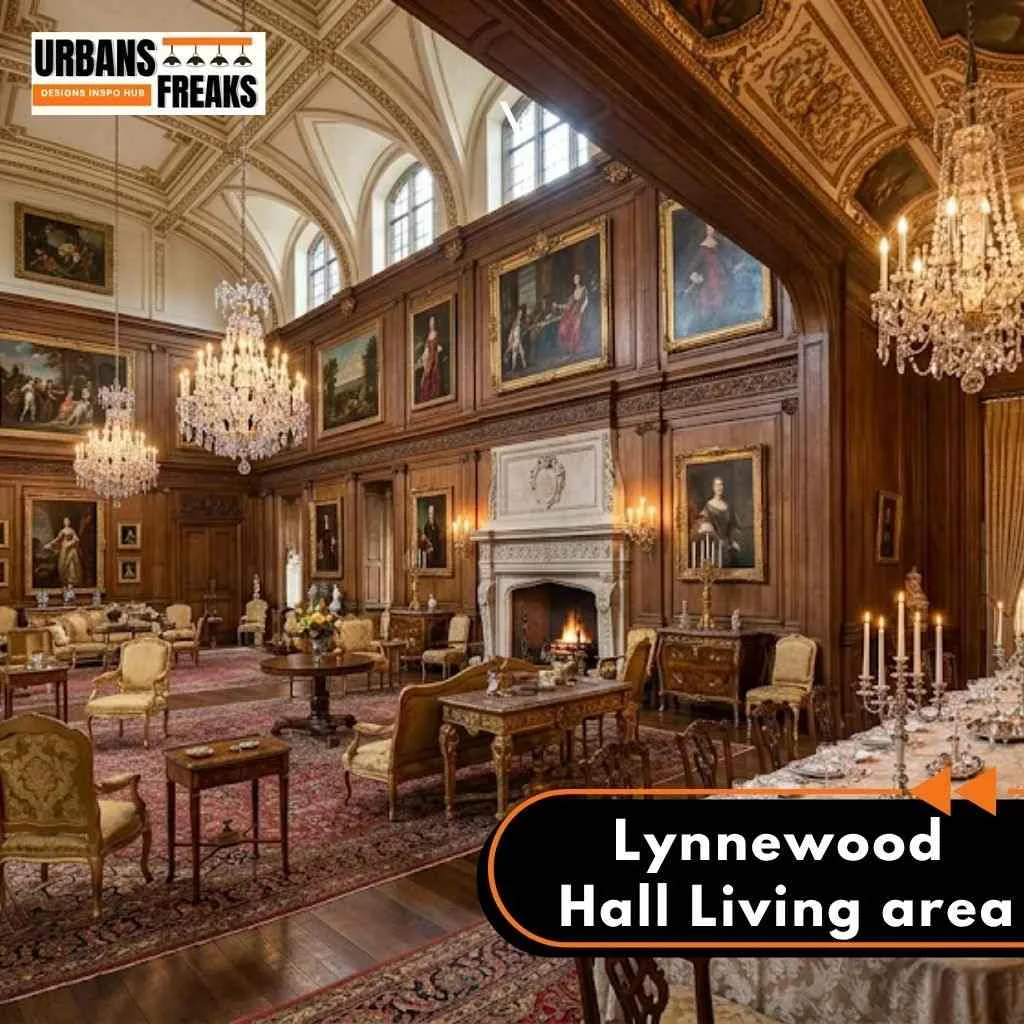
The formal dining room could seat dozens of guests. It had ornate plasterwork ceilings, gilded moldings, a massive fireplace, and crystal chandeliers. Over 37 domestic staff kept the household running. The dining spaces are connected directly to the kitchen and bakery below.
Kitchen
The kitchen was a full commercial operation. The estate had its own bakery, wine cellars, and large kitchen facilities on the lower floor.
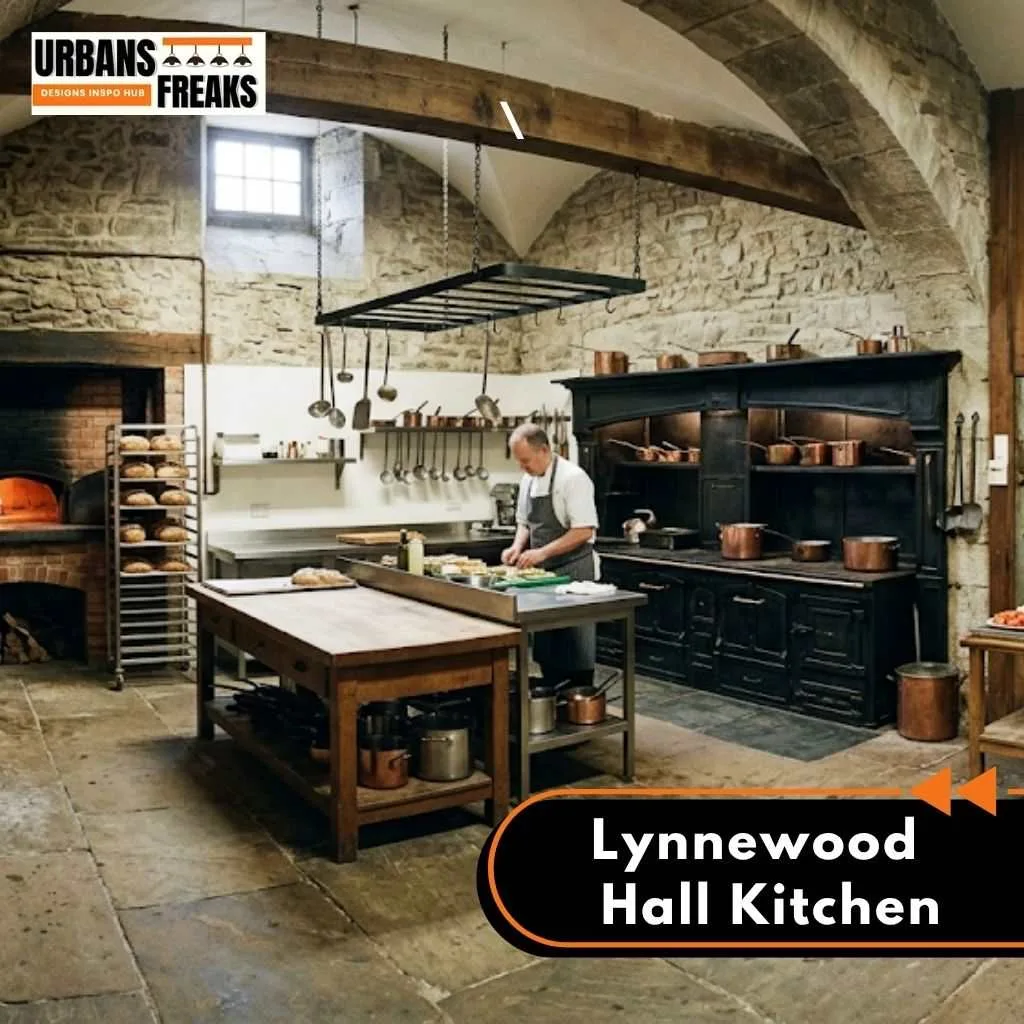
Dumbwaiters connected the kitchen to the upper dining rooms. Much of the original kitchen was stripped out by the Faith Theological Seminary in the 1950s. The LHPF plans to restore these spaces for future public events.
Master Bedroom Suite
Among the 55 bedrooms, Peter Widener’s master suite stood apart. It had a large sleeping chamber, an elaborate dressing room, and a private sitting room.
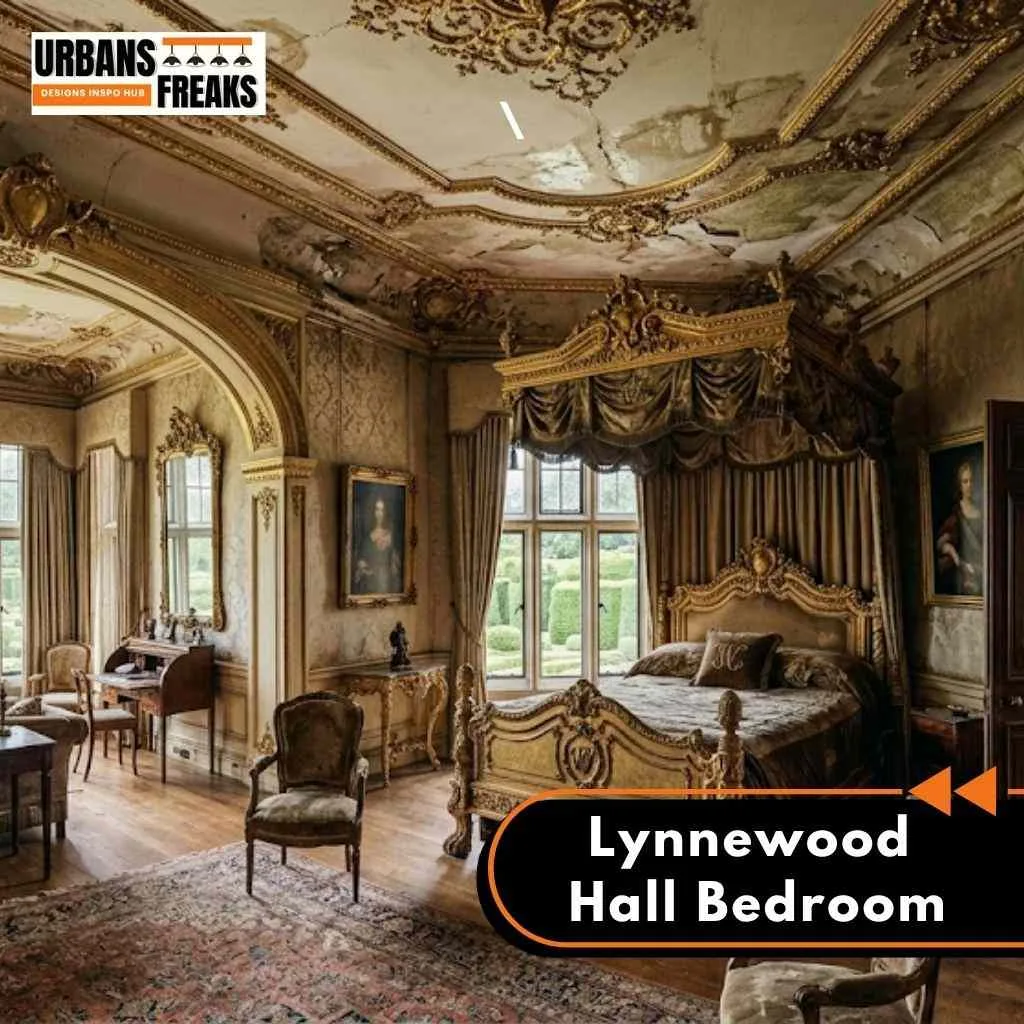
Ceilings were gilded and ornately plastered. Windows looked out across the formal gardens. Today, many ceilings show water damage from decades of abandonment. But the bones of these rooms remain magnificent.
Bathroom
Lynnewood Hall’s 20 bathrooms were the height of luxury for their era. Alabaster sinks were custom-fitted throughout. Bathrooms featured marble tile, porcelain fixtures, and elegant vanities.
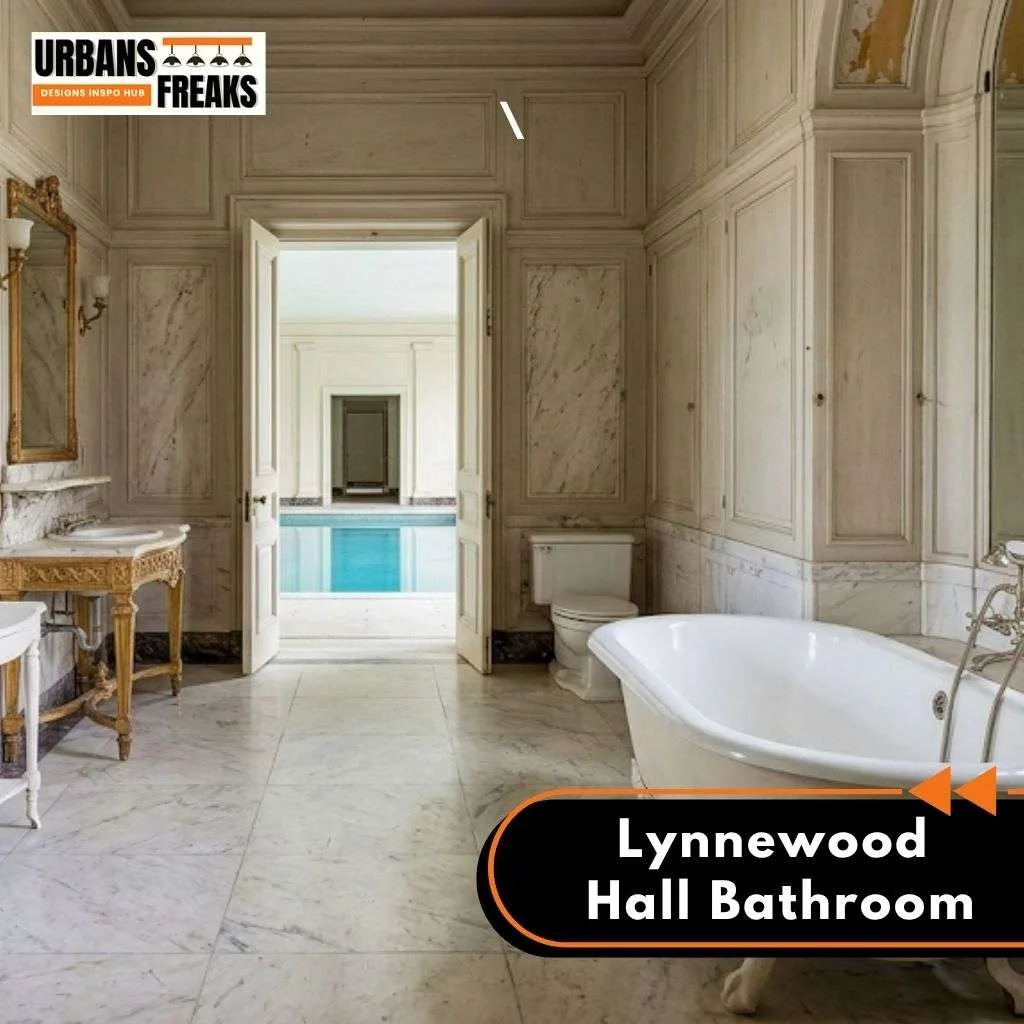
The master bathroom had a large soaking tub and a full vanity suite. A sauna sat in the basement. An enclosed indoor swimming pool completed the picture, remarkable for a home built in 1899.
Outdoor Living Spaces
The grounds were as impressive as the house itself. The formal front garden had symmetrical stone-edged reflecting pools, manicured lawns, and clipped hedges. Our drone photograph clearly shows both pool basins still intact on the front lawn.
The rear grounds originally had formal gardens designed by landscape architect Jacques Greber. The 16,000 sq ft Lynnewood Lodge, the original carriage house and stables, still stands on the property today.
🏰 Which Room Matches Your Personality?
Discover which space in this celebrity mansion suits you best!
Ready to find out which luxurious room matches your vibe? Answer 5 quick questions!
What is Lynnewood Hall Home History?
Lynnewood Hall was built between 1897 and 1899. Peter Widener lived there until his death in 1915. His son Joseph inherited it and continued filling it with art. In 1942, over 2,000 pieces were donated to the National Gallery of Art in Washington, D.C.
The estate was sold in 1944 for $190,000 to the Faith Theological Seminary. After 40 years as a school, much of the interior was stripped and sold off. In 1996, it passed to the First Korean Church of New York. It sat vacant and deteriorating until the LHPF purchase in 2023.
Lynnewood Hall Titanic
Lynnewood Hall has a heartbreaking Titanic connection. Peter Widener’s son, George Dunton Widener, and George’s son, Harry, both boarded the RMS Titanic in April 1912.
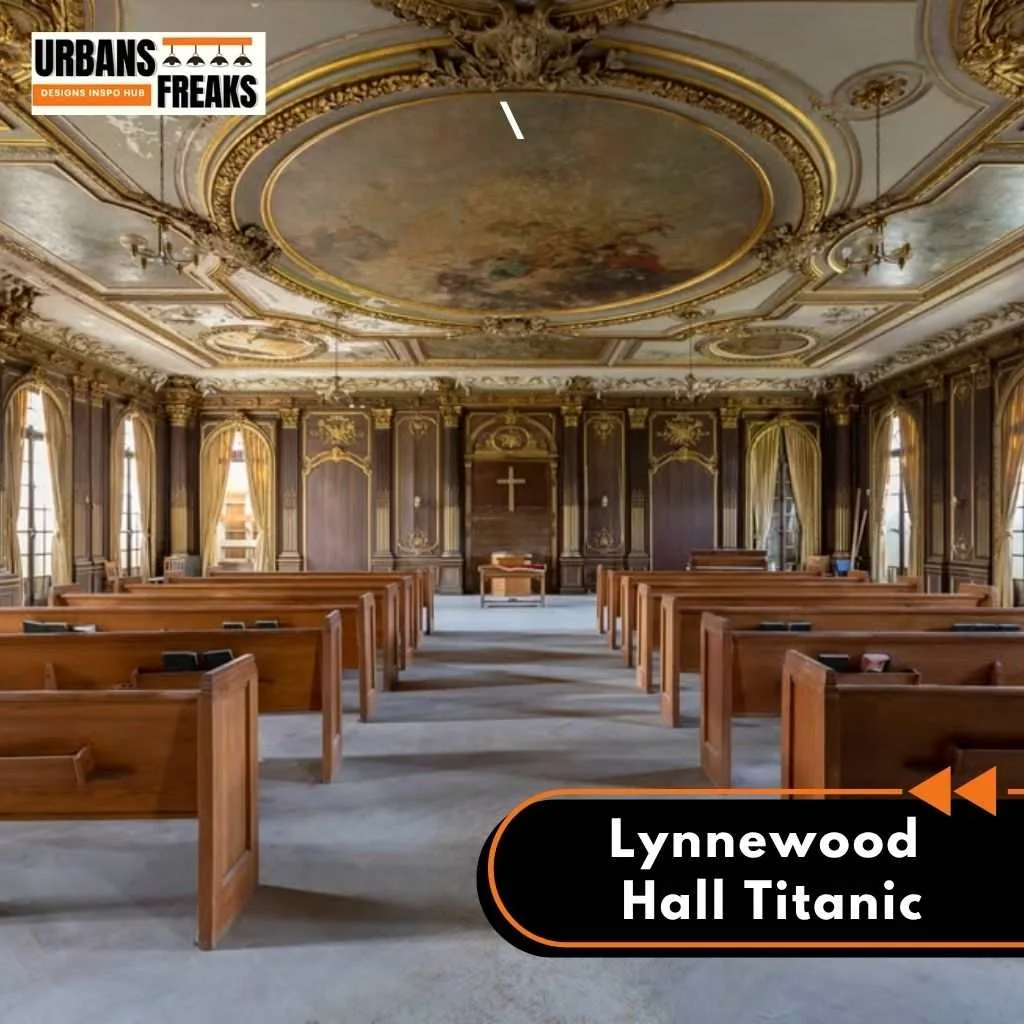
Both perished when the ship sank. George’s wife, Eleanor, survived and later funded the Harry Elkins Widener Memorial Library at Harvard in Harry’s memory. Because of the tragedy, the estate passed to the surviving son, Joseph, who became its sole caretaker for decades.
Lynnewood Hall Preservation Foundation
The LHPF was formed in July 2022 with one mission: to save Lynnewood Hall. Executive Director Edward Thome has called it “the last American Versailles.” The sale closed on June 27, 2023.
Emergency work began immediately, tackling water damage, vandalism, and asbestos. The foundation runs the Friends of Lynnewood Hall membership program.
How Much is Lynnewood Hall Worth?
Peter Widener spent $8 million building it in 1899, over $296 million in today’s money. The seminary bought it in 1952 for just $192,000. It was listed for $20 million in 2014, cut to $17.5 million in 2017, and reduced to $11 million in 2019.
The LHPF finally bought it for $9 million in 2023. A restoration architect estimated full restoration would cost around $50 million. Property ownership and value tell very different stories across America, while Lynnewood Hall represents one extreme, the understated case of Tim Walz’s Unowned Home is a reminder that not every public figure’s relationship with property follows the expected path. As of 2026, that restoration work is actively moving forward.
IS Lynnewood Hall for Sale?
NO, Lynnewood Hall is no longer for sale. After years on and off the market, the LHPF purchased it in 2023. The only way to experience it in the future will be through the planned public museum. The estate will open to visitors once restoration is complete.
Lynnewood Hall in Its Prime
In its prime, Lynnewood Hall was among the most spectacular homes in the world. Thirty-seven staff members maintained the interior. Sixty more tended the grounds. The art gallery was open by appointment from June to October. The ballroom hosted 1,000 guests.
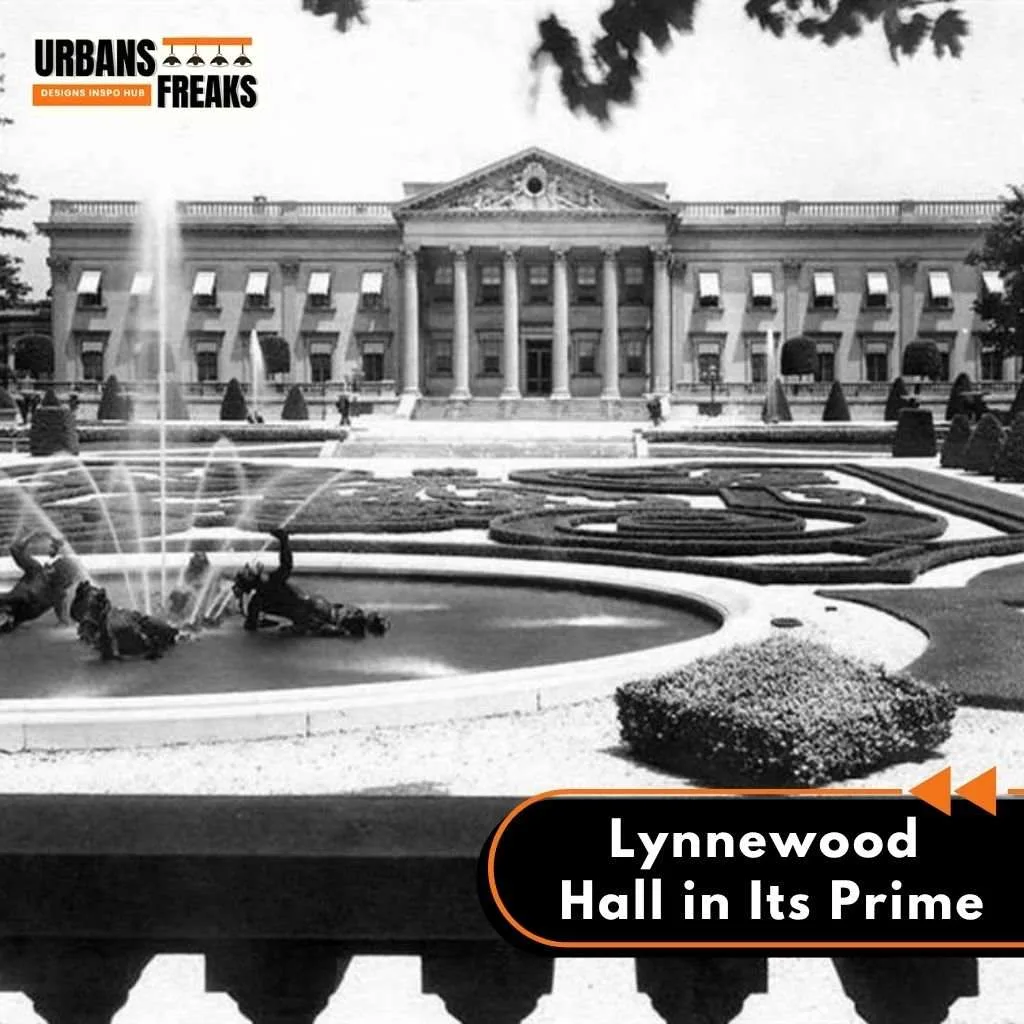
Rooms were dressed with Louis XV furniture and Persian rugs. Much like the craftsman precision and legacy of the Gamble House, every detail at Lynnewood Hall was a deliberate statement of taste, wealth, and architectural vision. It was Gilded Age luxury at its absolute peak.
Final Thoughts
Lynnewood Hall is extraordinary. Even stripped of its art and furnishings, the mansion communicates power and ambition. The columned facade still dominates the landscape. The scale still takes your breath away. Peter Widener did not build a house; he built a monument. The Titanic connection, the priceless art, the decades of decay, and now the restoration make every chapter of this story compelling.
At Urbansfreaks.com, many of our clients dream of Neoclassical grandeur exactly like this. The columned portico, formal gardens, and palatial scale are requests we receive every week. Lynnewood Hall proves that great architecture never truly dies. It is America’s last great Gilded Age palace, and its best chapter may still be ahead.