
Whole House Fan Installation: The Complete Guide

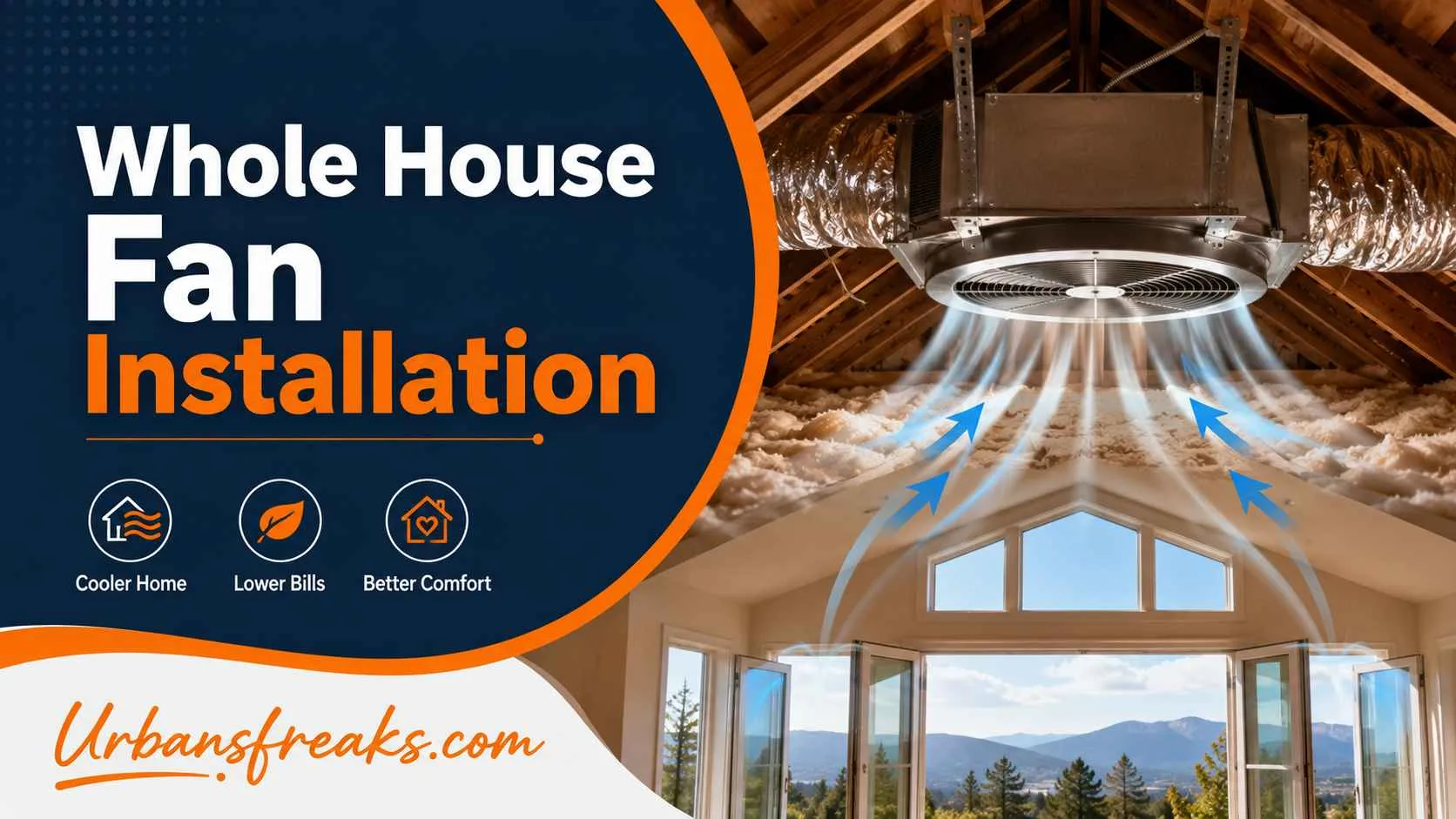
If your home feels hot and stuffy during summer, whole house fan installation can provide quick relief by drawing in cooler outdoor air and pushing hot air through the attic.
I’m Todd Lynch from Urbansfreaks, and in this guide, I’ll explain how whole house fans work, what installation costs, whether DIY installation is practical, and how to find professional help near you.
What Is a Whole House Fan?
A Whole House Fan Installation sits in your attic, usually above a central hallway. When you turn it on, it draws air in from open windows. That air moves through your living space and pushes hot attic air out through vents. The whole cycle takes just a few minutes to replace all the air in your home.
This is different from an air conditioner. A whole house fan does not cool the air. It simply swaps hot indoor air for cooler outdoor air. It works best in the evening or early morning, when the air outside is cooler than the air inside.

Why Homeowners Want This Upgrade
People searching for whole house fan installation near me usually want lower energy bills. A whole house fan uses far less electricity than central air. It also cools your attic, which reduces strain on your AC system during the day.
Other reasons homeowners choose this upgrade:
Fresh air moves through the whole house, not just one room. Indoor air quality improves because stale air gets replaced often. The fan runs quietly compared to older models. It adds value to a home in warm, dry climates.

Whole House Fan Installation Cost
Whole house fan installation cost varies by home size, fan type, and labor rates in your area. On average, homeowners pay between $900 and $2,500 for the fan unit and professional installation. The fan itself usually costs $300 to $900. Labor adds another $400 to $1,600, depending on attic access and wiring work.
If you’re checking whole house fan installation cost near me, get at least two or three local quotes. Prices shift based on attic layout, electrical panel distance, and whether new ductwork is needed.
Cost by City
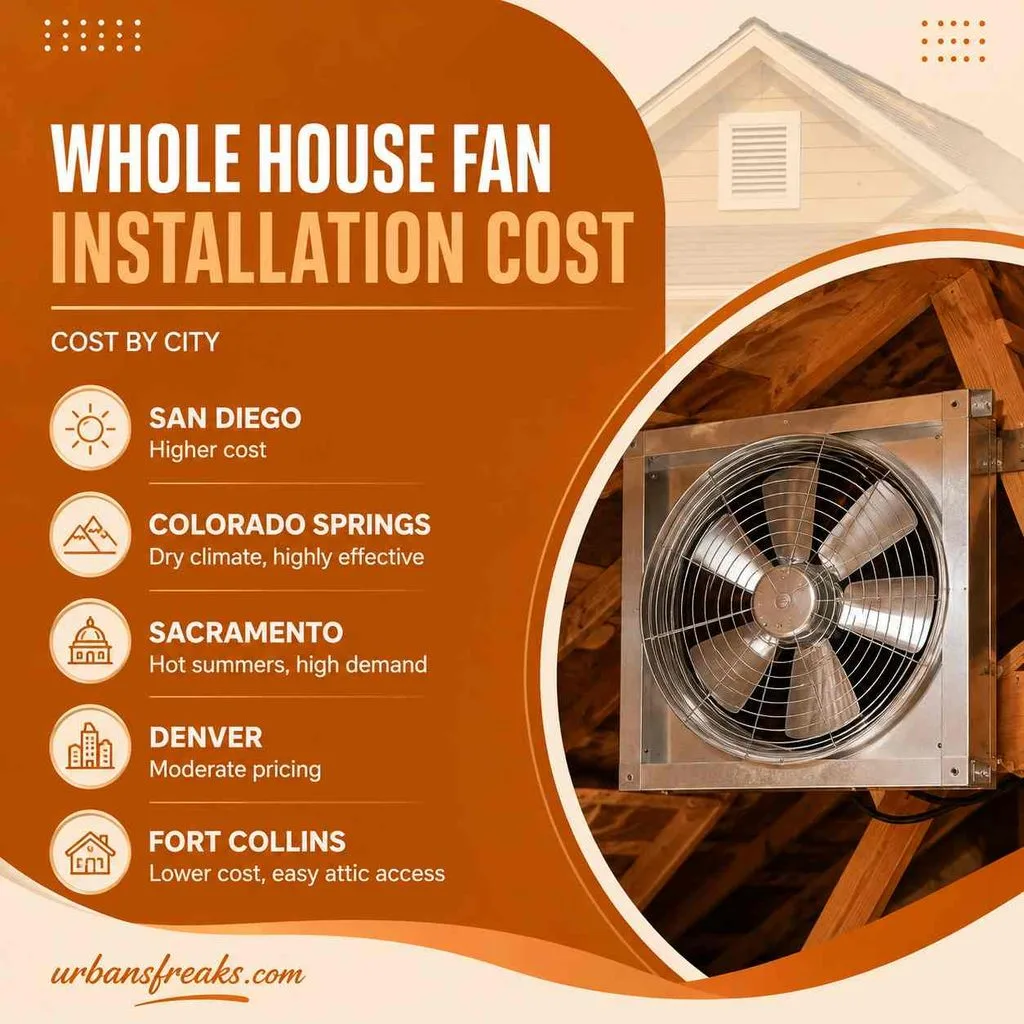
Prices differ across regions. Here’s a general breakdown for a few popular search areas.
- Whole house fan installation San Diego cost tends to run higher than the national average, often between $1,200 and $2,800, due to labor rates and older home wiring in many neighborhoods.
- Whole house fan installation Colorado Springs pricing usually falls between $900 and $2,200. Dry climates like this one make whole house fans especially effective.
- Whole house fan installation Sacramento costs often land between $1,000 and $2,500, since hot summers make these fans popular and installers are easy to find.
- Whole house fan installation Denver pricing is similar, typically $900 to $2,300, with slightly lower labor costs than coastal cities.
- Whole house fan installation Fort Collins tends to be on the lower end, around $850 to $2,000, since many homes here have simple attic access.

DIY Installation: What to Know
Whole house fan installation DIY projects are common among handy homeowners. If you’re comfortable with basic electrical work and attic access, you can save on labor costs.
Here’s the general process:
First, choose the right fan size for your square footage. Second, find the best spot in the attic, usually a central hallway ceiling. Third, cut the opening and mount the fan frame. Fourth, run electrical wiring to a switch. Fifth, install the fan unit and secure it. Sixth, add or check attic vents so hot air has somewhere to escape.

Lowe’s has a step-by-step guide that walks through the tools and process in detail: How to Install a Whole House Fan. QuietCool also breaks down fan types and sizing on their site: QuietCool Whole House Fans.
If you prefer watching before doing, this video walks through a real install: Whole House Fan Installation Video. There’s also a live demo available here: Amazon Live Install Demo.
Reddit’s DIY community also has a helpful thread showing real install photos and energy savings: Reddit DIY Install Thread. If you’re combining your fan with solar power, this forum thread is worth a look: DIY Solar Forum Discussion.
Common DIY Mistakes to Avoid
Don’t skip attic ventilation checks. Without enough vent space, the fan can’t push air out properly. Don’t oversize the fan for your home. A fan that’s too powerful can pull attic insulation dust into living spaces. Don’t ignore the electrical code. Always shut off power before wiring, and use a licensed electrician if you’re unsure.

DIY vs. Professional Whole House Fan Installation
DIY installation saves money but takes time and comfort with tools. Professional installation costs more but comes with a warranty and correct sizing from the start.
If your attic is easy to access and you have basic electrical skills, DIY is a solid option. If your attic is tight, your wiring is old, or you’re not confident working with electricity, hire a licensed installer.

How to Choose the Right Fan Size
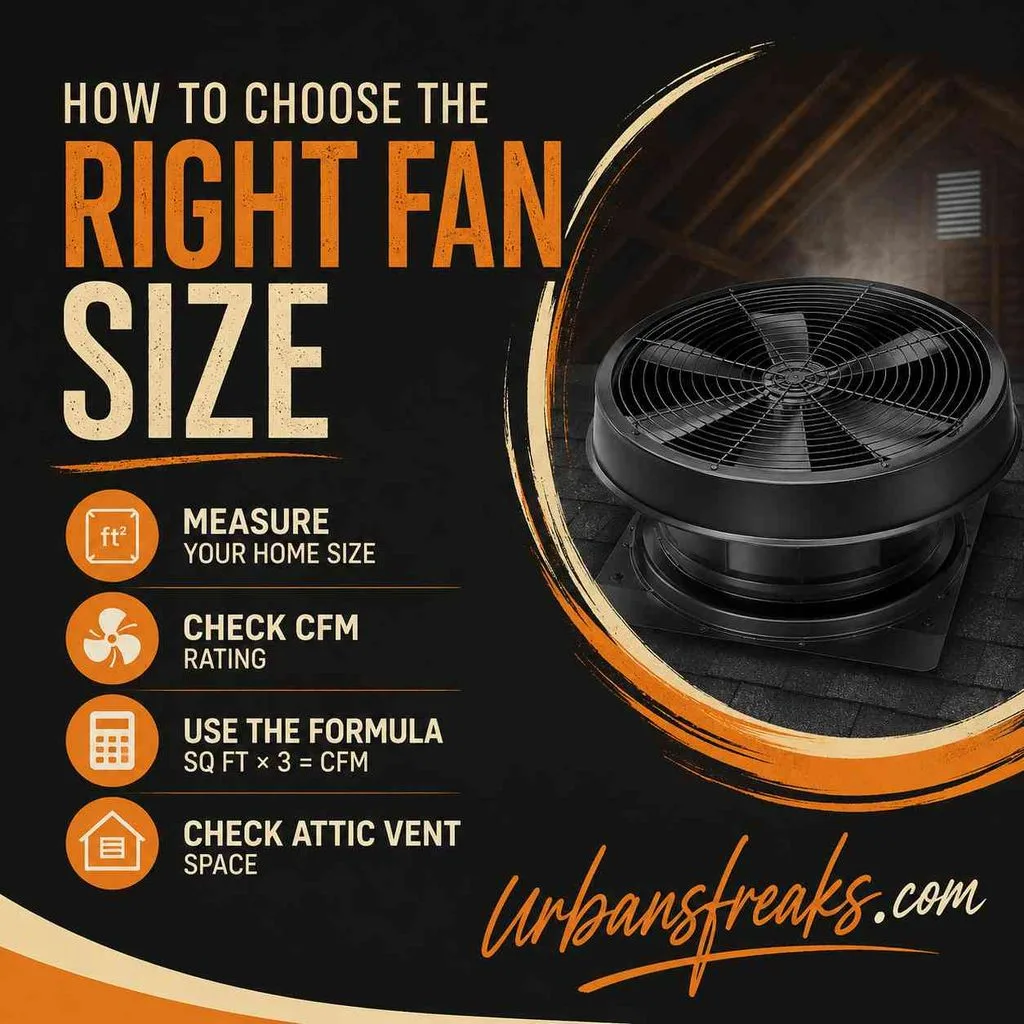
Picking the correct fan size matters more than most homeowners realize. A fan that’s too small won’t move enough air to cool your home. A fan that’s too big can create noise and pull too much air through small vents.
Start by measuring your home’s total square footage. Most fans are rated by cubic feet per minute, or CFM. A simple rule is to multiply your square footage by 3 to get a rough CFM target. A 1,800 square foot home would need a fan rated around 5,400 CFM. Always check your attic vent space too, since the fan needs enough open area to push air out.
Whole House Fan Maintenance Tips
Regular maintenance keeps your fan running well for years. Clean the fan blades and housing twice a year to remove dust buildup. Check the shutter or damper for smooth movement, since a stuck shutter blocks airflow.
Inspect the attic insulation around the fan each season. Insulation can shift over time and block part of the fan opening. Listen for unusual noises too. A rattling or grinding sound usually means the motor needs attention or the blades need tightening.

Whole House Fan vs. Air Conditioning
Many homeowners wonder if a whole house fan can replace air conditioning entirely. The honest answer is that it depends on your climate. In dry regions with cool evenings, a whole house fan can handle most of your cooling needs.
In humid climates, or areas where nighttime temperatures stay high, air conditioning still plays a bigger role. Many homeowners use both together. They run the whole house fan in the evening and overnight, then switch to AC during peak afternoon heat. This combination cuts energy costs while keeping the home comfortable all day.

Frequently Asked Questions
Does a whole house fan work in humid climates?
It works best in dry climates with cool nights. In humid areas, it still helps but won’t replace air conditioning completely.
How long does installation take?
A professional install usually takes half a day. DIY installs can take a full day or longer, depending on attic access and wiring.
Will a whole house fan increase my home’s value?
In warm, dry regions, it can be an attractive feature for buyers looking to save on energy costs.
Do I need to open windows when running the fan?
Yes. The fan needs open windows to pull fresh air in. Running it with windows closed can create pressure problems.
Final Thoughts
A whole house fan is one of the most affordable ways to cool your home in summer. Whether you go the DIY route or hire a pro, the investment pays off through lower energy bills and better airflow. Compare local pricing, check your attic setup, and choose the option that fits your comfort with tools and budget.
If you’re ready to move forward, start by measuring your home’s square footage and checking your attic’s vent space. That’s the first step toward a cooler, more energy-efficient home.