Gamble House Pasadena: A Complete Tour of America’s Arts & Crafts Masterpiece

Some houses are just buildings. The Gamble House is an experience. Built in 1908, this Pasadena home is the finest example of American Arts and Crafts architecture. Architects Charles and Henry Greene designed every inch of it from carved teak walls to Tiffany-stained glass. It was built for David and Mary Gamble of the Procter & Gamble Company.
In 2026, this National Historic Landmark still draws thousands of visitors each year. All the original furniture remains inside. Walking through its rooms feels like stepping into a living work of art.
Gamble House Pasadena: Quick Overview
| Feature | Details |
| Location | 4 Westmoreland Place, Pasadena, California |
| Year Built | 1908–1909 |
| Architect | Charles and Henry Greene |
| Square Footage | 8,100 sq ft |
| Lot Size | ~2 acres |
| Bedrooms | 6 |
| Bathrooms | 4+ |
| Style | American Arts and Crafts |
| Special Features | Tiffany stained glass, sleeping porches, 17 wood types |
| Status | National Historic Landmark |
Gamble House Location
The Gamble House sits at 4 Westmoreland Place in Pasadena, California just off Orange Grove Avenue’s historic “Millionaire Row.” The Rose Bowl and Norton Simon Museum are both nearby. The street is quiet and tree-lined. You would not expect something so grand to be hidden here.
Pasadena was a popular winter retreat for wealthy Midwestern families in the early 1900s. The Gambles, Huntingtons, and Wrigleys all built grand estates here. The Gamble House has stood on its grassy knoll for over 115 years.
Inside the Gamble House, Pasadena: Highlights from My Personal Tour
I booked a guided tour on a Saturday afternoon and arrived early to walk the grounds. The moment I turned onto Westmoreland Place, the house stopped me. Wide roofs, layered shingles, and exposed wooden beams, unlike anything I had seen.
My guide was a passionate architectural historian who walked our group through every room. The 90-minute tour flew by. Every angle offered something new. It is one of those rare places where the creators still feel present.
Gamble House, Greene and Greene: The Exterior Architecture
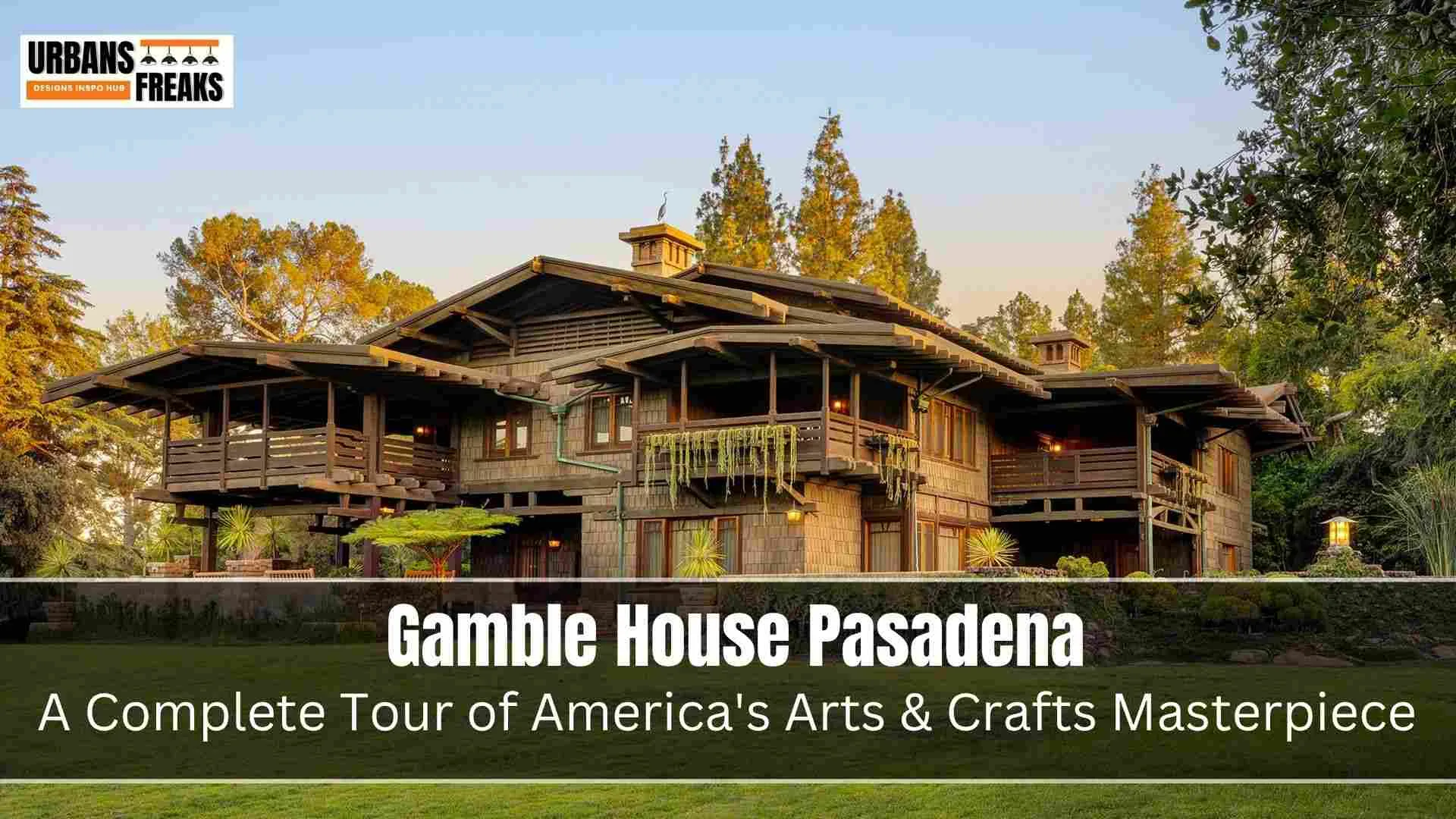
As shown in the image, the exterior blends natural materials with careful craft. Overlapping wooden shingles cover the facade, insulating the house so well it needs no air conditioning today. Wide, sloping roofs create deep shaded porches on every level.
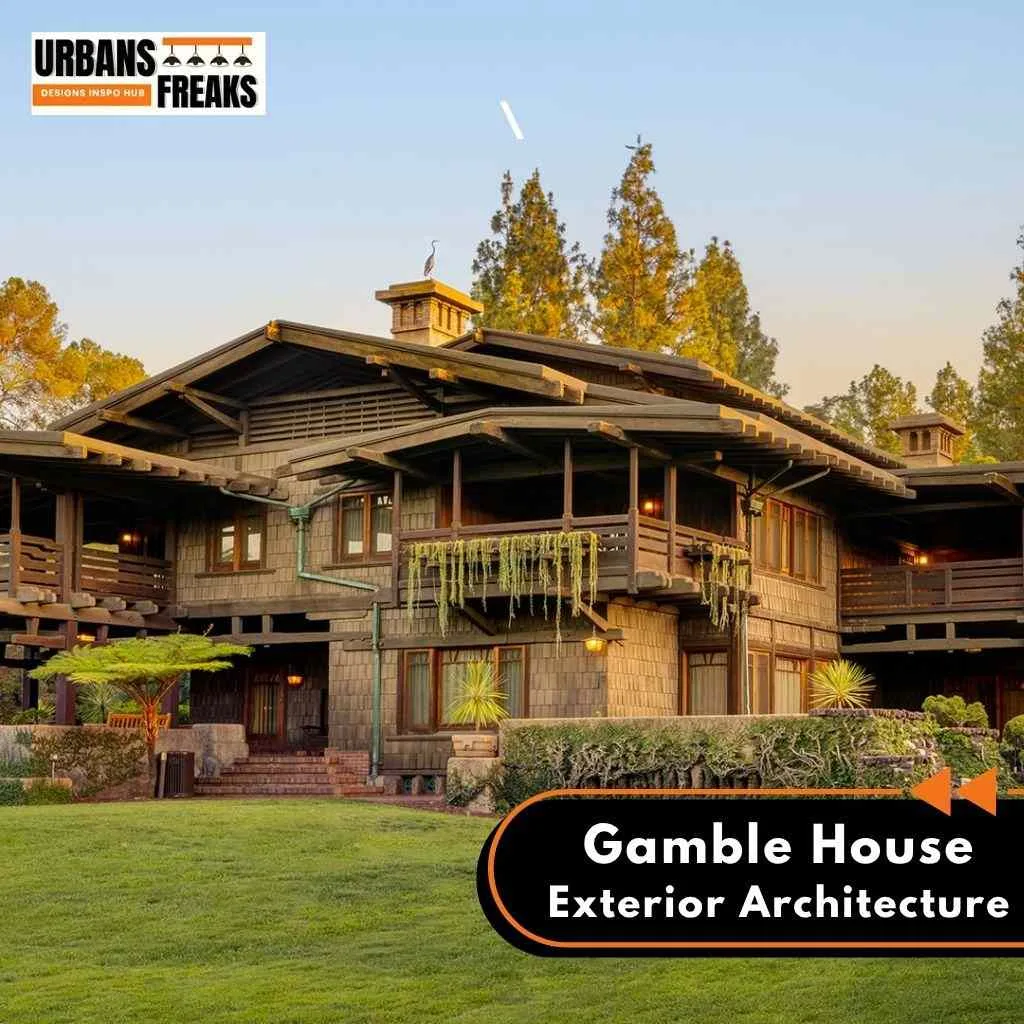
Clinker bricks and boulders form the terraces. Three large sleeping porches extend from the second floor. The front door is a triple-panel entry with art glass in a Japanese black pine design. The Asian influence begins at the very first step.
Front Entrance & Curb Appeal
The front entrance is one of the most photographed doorways in American architecture. The triple door has Tiffany-style art glass. Handmade brick terraces flank the walkway.
Inside, teak panels line the entrance hall. One panel hides a spring-latch door to the kitchen. Another opens to a coat closet. You cannot tell them apart. Beauty and function are the same thing here.
Gamble House Staircase
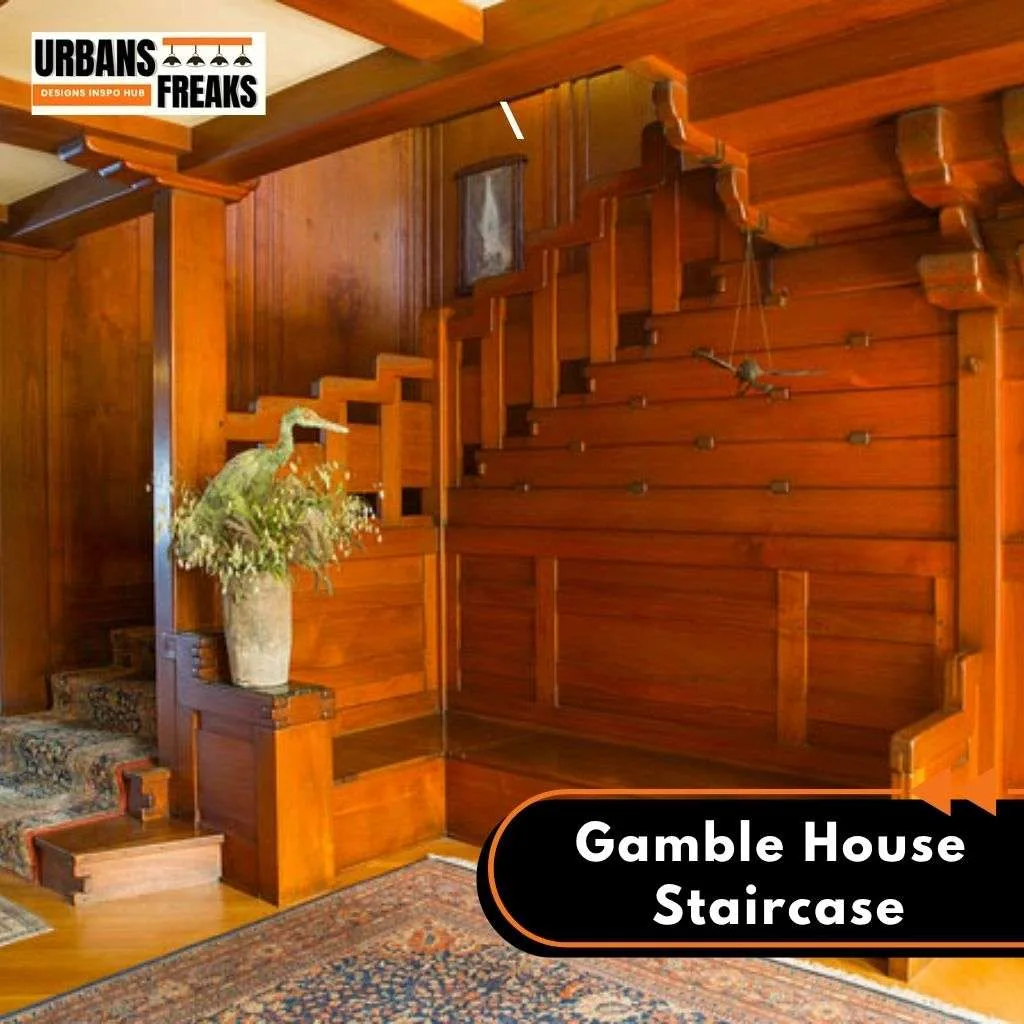
The staircase rises in precise right angles. The carved handrail is a work of art. Small custom stork-shaped lanterns glow softly from the walls as you climb. Replicas sell for thousands of dollars today. A ventilation opening at the top connects to the upstairs bedrooms, letting cool air flow naturally through the house.
Living Room & Main Living Spaces
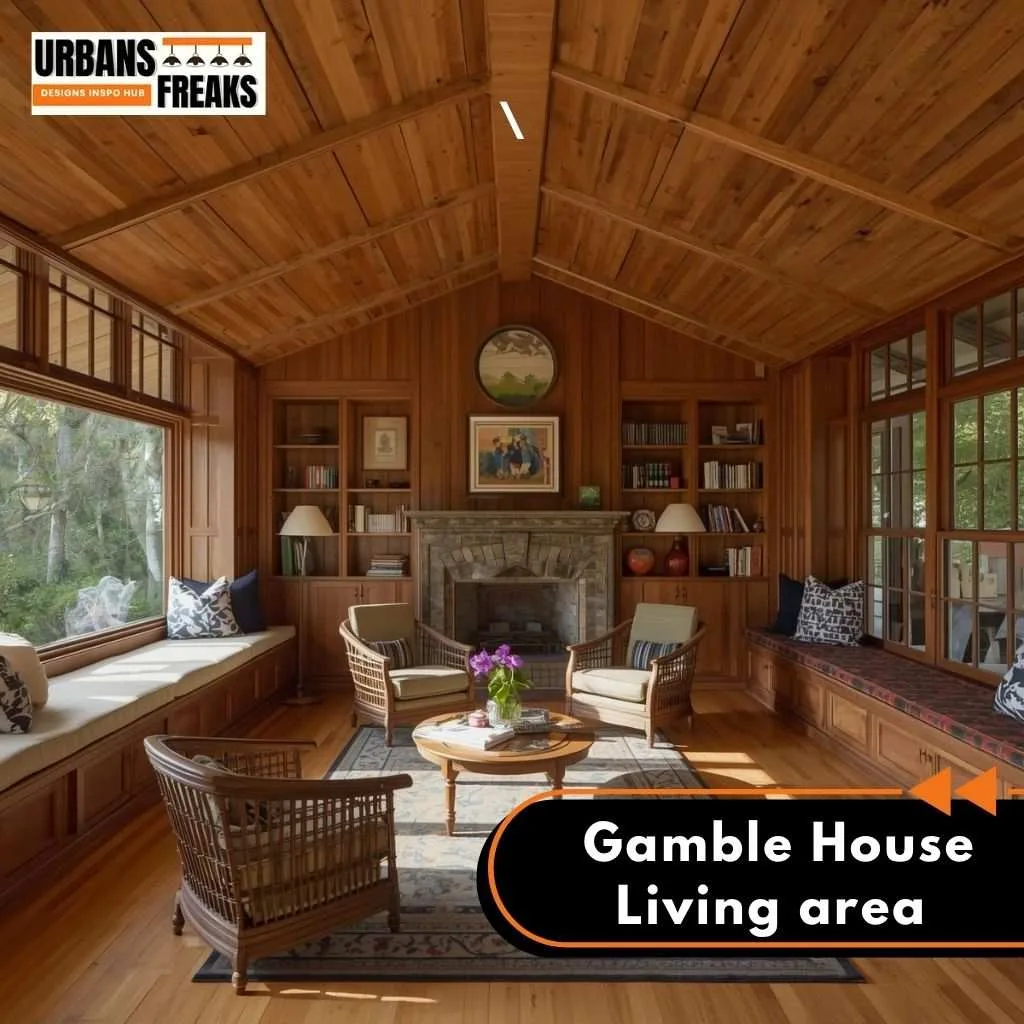
The living room is warm and calm. Low ceilings draw the eye toward large windows and the garden beyond. Teak and mahogany panels line every wall using the scarf technique, wedged together, no screws.
This has helped the house survive several earthquakes. Built-in window seats offer hidden storage. Original Tiffany lamps sit exactly where the Greenes placed them. Natural light filters through art glass windows and casts soft patterns on the hardwood floors. If you love spaces like this, Urbansfreaks.com features some of the most beautifully crafted homes you will find anywhere.
Dining Area
The dining room is stunning. Carved wood details and Tiffany-stained glass windows fill the room with colored light. A long original table sits at the center with chairs that the Greene brothers designed. Everything was part of the original plan, even the carpet and ceiling fixtures.
Gamble House Floor Plan: The Kitchen
The kitchen sits on the main floor. Staff accessed it through the hidden panel in the entrance hall. In 1908, it was remarkably organized. Maple cabinetry lines the walls. There is a pantry and a cold room for food storage.
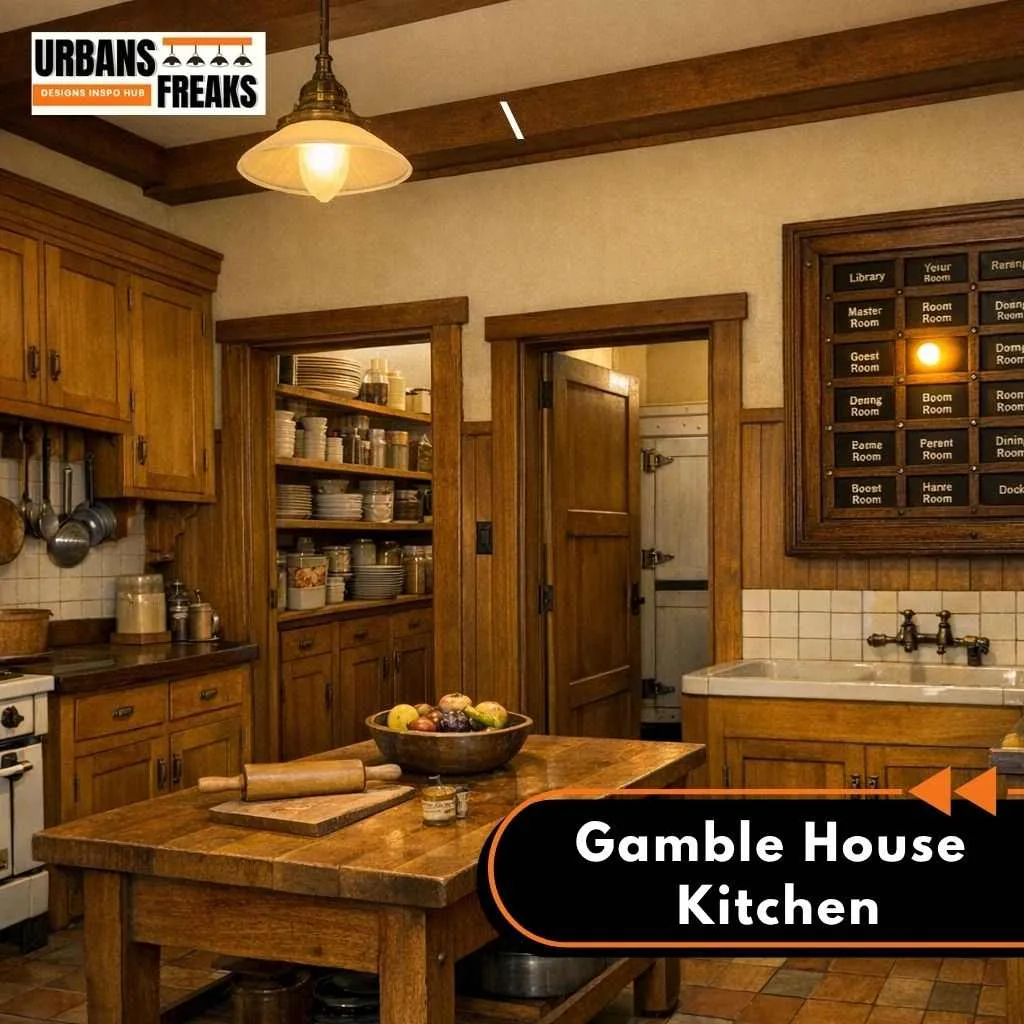
The Annunciator system is connected to every room. When a family member pressed a button, a light glowed in the kitchen. Staff knew exactly which room needed attention. It was cutting-edge technology in 1908 and remains largely intact today.
Master Bedroom Suite
The second floor is the family’s private space. The upstairs hallway is wide and bright, with large windows looking over the front lawn. A built-in bench with hidden storage sits beneath them.The master bedroom is the largest on the floor. Separate his-and-her beds are inlaid with mother-of-pearl and exotic hardwoods. A sitting area with a fireplace anchors one end.
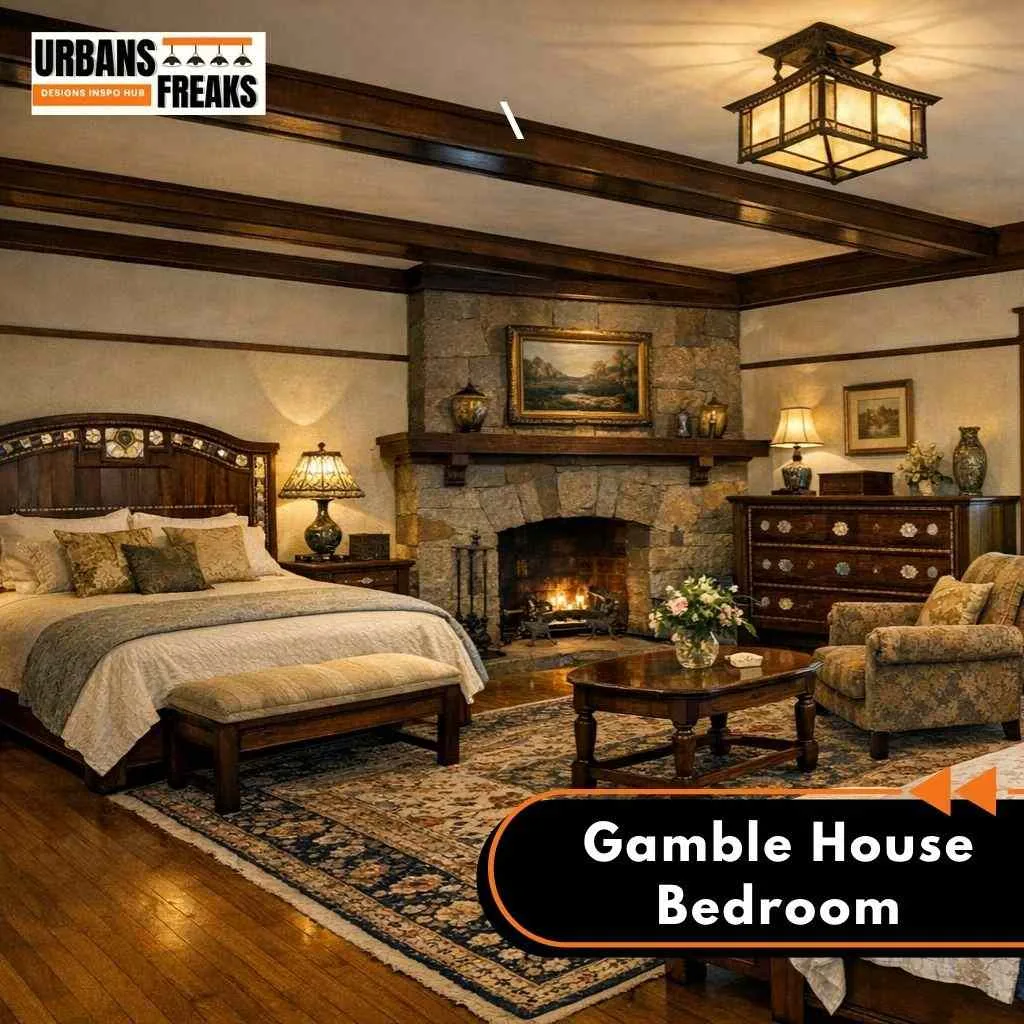
Original walnut dressers inlaid with semiprecious stones line the walls. A corner door opens to a sleeping porch. Mary Gamble was said to love sleeping there.Other rooms include Clarence’s room with a fireplace, the Boys’ Room with original Stickley furniture, and Aunt Julia’s wicker-furnished room. All original furniture remains exactly as the family left it.
Bathroom
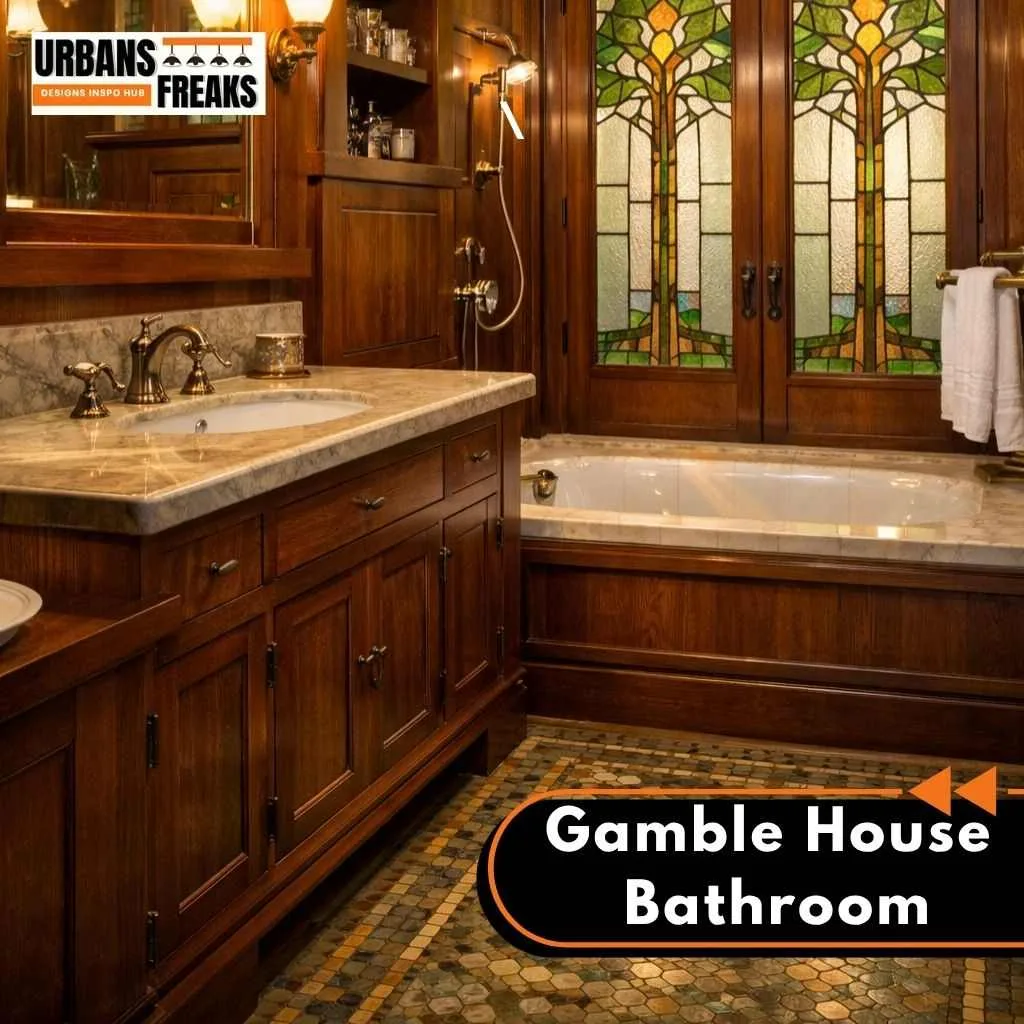
The Gamble House has four bathrooms. Each reflects the same quality found throughout the home. The most notable is on the second floor, it features stained glass doors. Vanities are built-in and blend with the wood paneling. Fixtures were custom-made for the house. Even in the most functional rooms, the Greenes left their mark.
Outdoor Living Spaces
The rear terrace features patterned brick paving, a curvilinear pond, and garden walls of clinker bricks and boulders. Paths of water-worn stones wind across the lawns, evoking a natural streambed.
Three sleeping porches extend from the second-floor bedrooms, one with a direct view of the Rose Bowl. In 2026, the Gamble House Conservancy offers separate guided garden tours. For more homes with remarkable outdoor living and interior design, browse our House Tour collection.
🏡 What’s Your Dream Celebrity House Style?
Discover your perfect luxury home vibe!
Ready to find out which celebrity house style matches your personality? Answer 5 quick questions!
Gamble House Tickets
In 2026, tickets are available at gamblehouse.org. The standard 1-hour guided interior tour covers the rooms, woodwork, stained glass, and history. A separate exterior and garden tour is also offered. The house is open Tuesdays and Thursdays through Sundays. Book in advance; weekend tours sell out fast.
Special events include holiday open houses, sound bath evenings, and ikebana workshops. A small on-site bookstore specializes in architecture and design.
Gamble House Pasadena History
Charles and Henry Greene designed the house in 1908. The Hall Brothers, Peter and John Hall, Swedish emigrants, built it by hand, including all the furniture and custom fittings. The Gamble family lived here until 1966, then deeded it to the City of Pasadena and USC’s School of Architecture.
The house appeared in the 1985 film Back to the Future as Doc Brown’s home. Today it is a public museum run by the Gamble House Conservancy. For those fascinated by homes with equally compelling histories, the Buckner Mansion stands as another property where the story behind the walls is just as captivating as the architecture itself.
How Much Is the Gamble House Worth?
The Gamble House is owned by the City of Pasadena and is not for sale. Its cultural value is priceless. Historic estates nearby sell for over $10 million today. But no money could recreate what was built here.
The Conservancy continues raising funds for its ongoing preservation. It is a reminder that some of America’s most significant properties exist outside private ownership entirely, much like Amityville Horror House, which sparked its own national conversation about what it means for a public figure to have no personal property to call their own.
Final Thought
The Gamble House is proof of what is possible when talented people pursue perfection. Every room tells a story. Every detail has a purpose. It was built to be lived in, and it still feels alive.
Mary Gamble’s sleeping porch. The Annunciator system. Clarence’s room with its swords. These details make the house human and unforgettable.
I left feeling genuinely moved. Great design is about harmony, beauty, and function, nature, and craft as one. If you are ever in Pasadena, make the time to visit.
Many clients at Urbansfreaks.com ask for homes inspired by the Gamble House’s warm wood interiors, handcrafted built-ins, and seamless indoor-outdoor living. The Arts and Crafts spirit is very much alive.