The Henry House: A Civil War Home That Changed American History

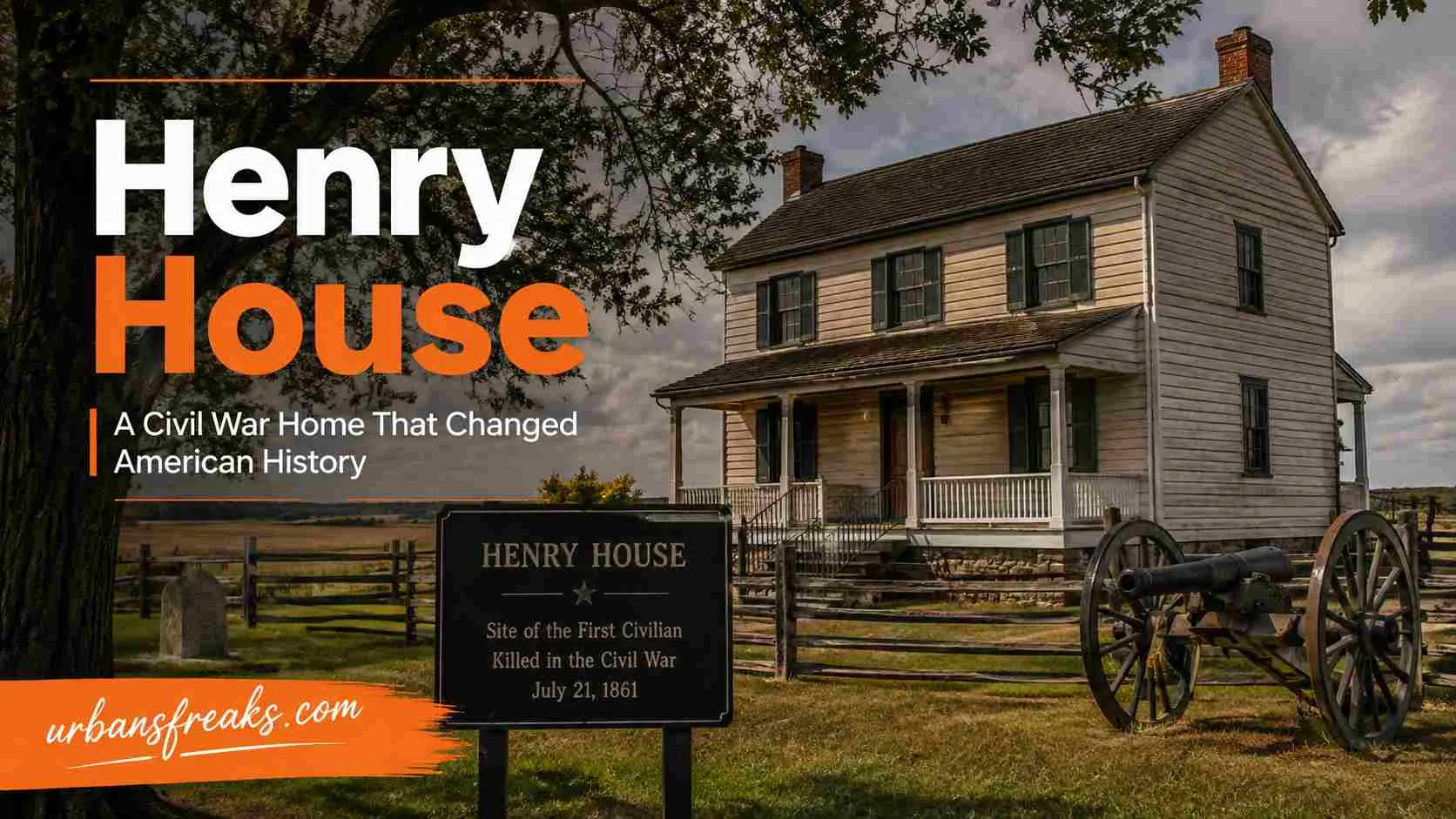
The Henry House stands on Henry Hill inside Manassas National Battlefield Park in Virginia, preserving a powerful chapter of American Civil War history. During the First Battle of Bull Run in 1861, elderly widow Judith Carter Henry was killed inside her home.
Today, the reconstructed house and surrounding battlefield help visitors understand the human cost and history of that defining conflict.
Property Snapshot
| Feature | Details |
|---|---|
| Location | Manassas, Virginia |
| Original Name | Spring Hill Farm |
| Owner in 1861 | Judith Carter Henry |
| Land Size | 137 acres, inherited in 1825 |
| Foundation | Fieldstone |
| Construction | Wood frame |
| Original Layout | Two rooms downstairs, two rooms upstairs |
| Rebuilt | 1870, with a room added in 1883–1884 |
| Managed By | National Park Service, Manassas National Battlefield Park |
| National Register Status | Contributing property since October 1966 |
| Status Today | Museum house with exhibits, open daily each summer |
Henry House Location
Henry House sits on Henry Hill, a rise of open ground inside Manassas National Battlefield Park, near Bull Run in Virginia. The location is not a private neighborhood. It is a federally protected historic site, open to the public and run by the National Park Service.
Visiting the Henry House Today
As Todd Lynch from Urbansfreaks, exploring the Henry Hill Loop Trail offers a fascinating glimpse into Civil War history and historic architecture.
The easy 1.1-mile trail leads visitors past cannon positions before reaching the rebuilt Henry House and Judith Henry’s grave. Inside, the ground floor features exhibits about the battle and the Henry family, transforming the house into an educational historic site rather than a traditional furnished home
Who Owned the House
Judith Carter Henry inherited Spring Hill Farm in 1825, a 137-acre tract that became known as Henry Hill. She lived there with her husband, Dr. Isaac Henry, a respected local physician. By the summer of 1861, the farm sat mostly unused, with only a small vegetable garden and orchard around the frame house.
By then Judith Henry was 84 years old and bedridden. She shared the home with her daughter Ellen, and a hired teenage worker named Lucy Griffith helped with household chores. The family had lived on that land for more than a century by that point.

Exterior & Architecture
The original Henry House was built of wood frame construction resting on a fieldstone foundation, with two rooms downstairs and two rooms upstairs, and a chimney set on the north gable end. It was a plain, working farmhouse rather than a grand estate.
The rebuilt 1870 version was larger, a rectangular two-story wooden structure built to resemble the earlier home. The ground floor held a common living area with a fireplace, a sitting space, and a dining area, while the upper floor held the bedrooms. An addition at the north end added another room by 1883.

The Day the Battle Reached Her Door
On July 21, 1861, Union and Confederate troops clashed at the First Battle of Bull Run, also called the First Battle of Manassas. Federal artillery fired on the house to push back Confederate sharpshooters, not realizing civilians were inside.
A shell tore through the bedroom wall, taking off part of her foot and causing further injuries. She died later that same day. She became the only known civilian killed during that battle. She was around 85 years old at the time.

What Happened to the House Afterward
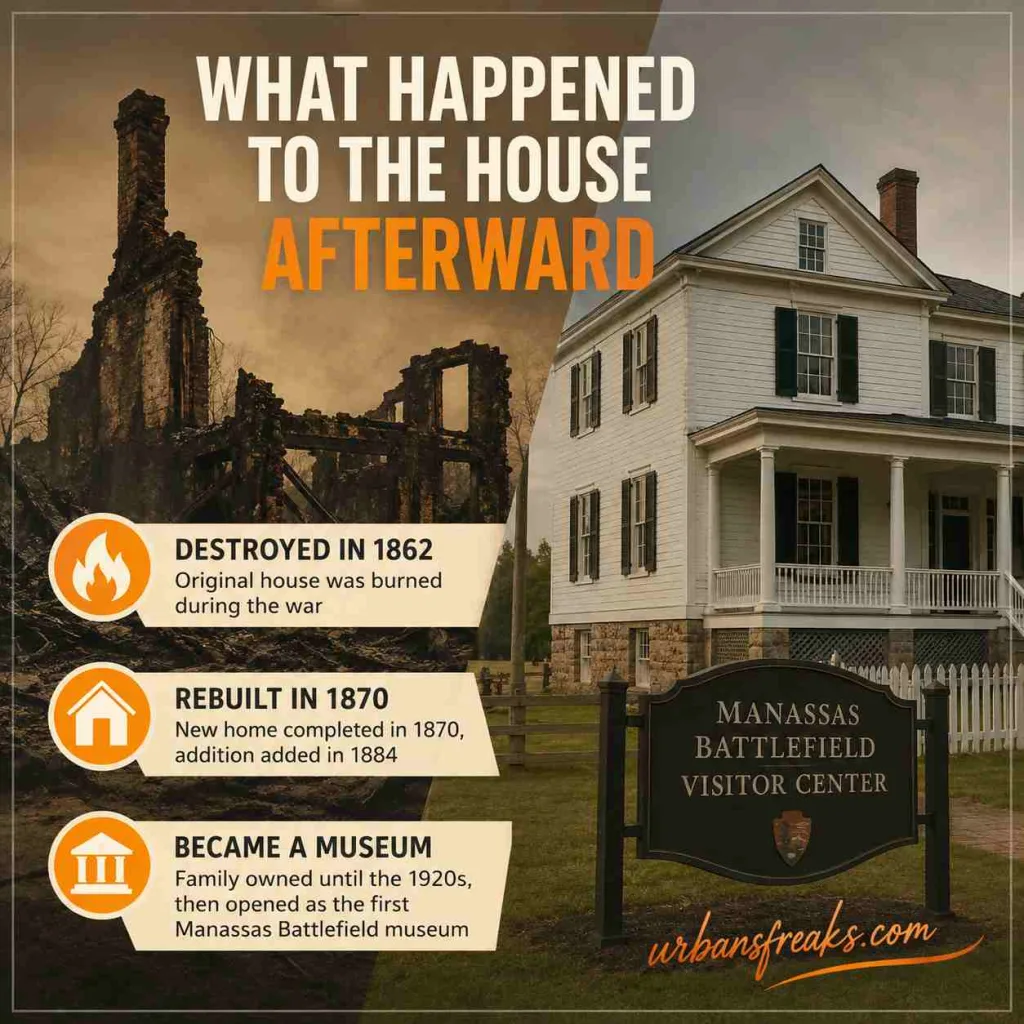
The original Henry House did not survive the war. After Confederate forces held the ground a second time during the Second Battle of Manassas in August 1862, the home was set on fire.
The Henry family later built a new house near the original site. Construction finished in 1870, with an addition added in 1884. That rebuilt structure is the one visitors see today. The family kept the property until the early 1920s, after which the house became the first museum and visitor center for Manassas Battlefield.
Why the House Stands Where It Does
The Henrys did not choose this hill for privacy or comfort. Judith Henry inherited the land from her family in 1825, and the Henrys had lived there since before that, having moved from Philadelphia to take over Spring Hill Farm. It was a working family farm, not a chosen retreat.
That same high ground later became valuable for a very different reason: its clear view over the surrounding fields made it a key position during the fighting, which is exactly why artillery was aimed at the house in the first place.

Notable Landmarks Around the House
In the yard of the Henry House lies the grave of Judith Carter Henry. Behind the house stands a monument from 1865, put up by Union soldiers in memory of those who fell at Bull Run. Both sit within easy sight of the trail.
The site carries official recognition too. It sits within the Manassas National Battlefield Park and is listed as a contributing property on the National Register of Historic Places, a status it has held since October 1966.

Why the House Still Matters
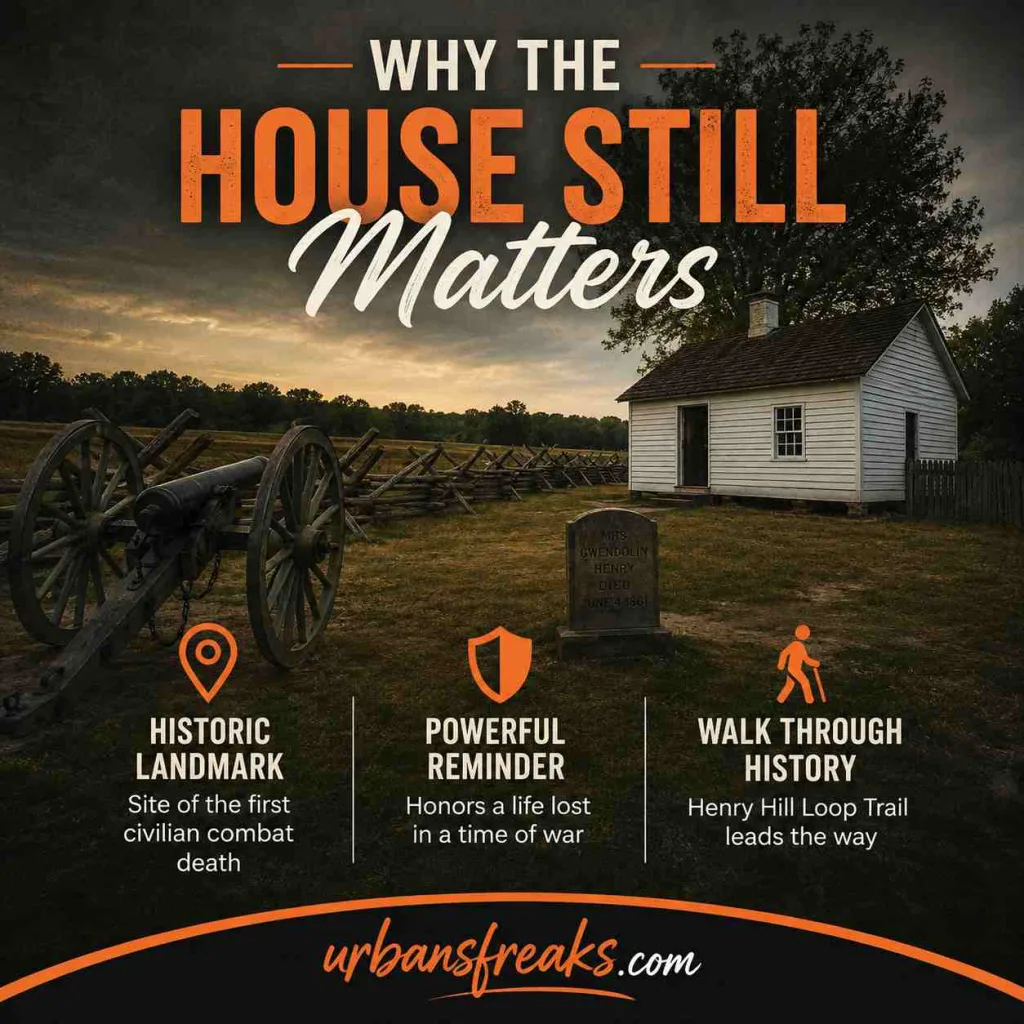
The Henry House is a small building with a heavy history. It marks the exact spot where a civilian woman lost her life to a war she had no part in fighting. Her death is still recorded as the first civilian combat death of the Civil War, and the house that replaced her home now stands as a quiet reminder of that fact.
Visitors who walk the Henry Hill Loop Trail today pass cannon lines, open fields, and a grave marker before reaching the Henry House itself. It is a short walk, but it carries the weight of one of the opening chapters of the American Civil War.