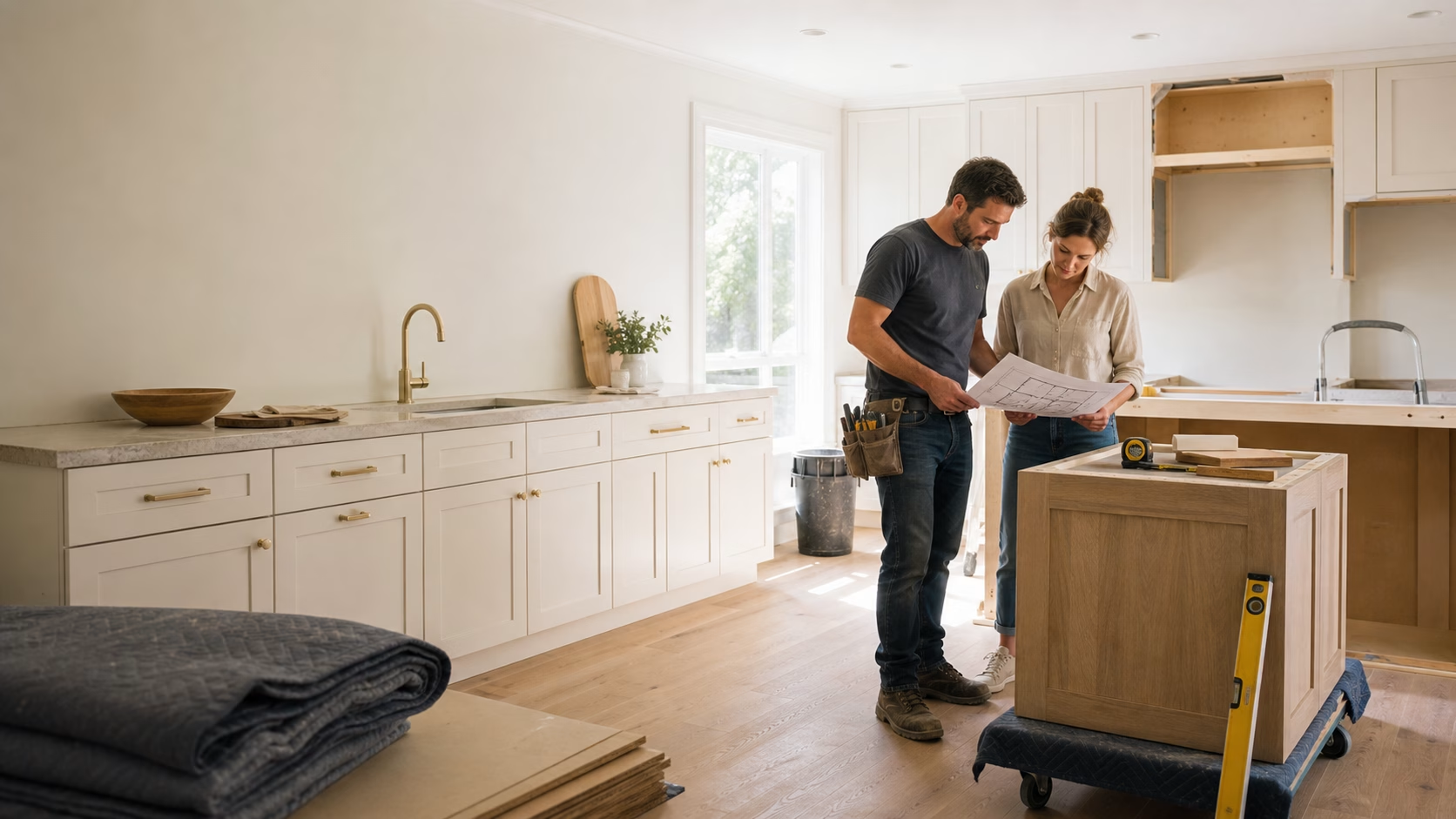
My kitchen renovation started with a phone call I wasn’t expecting: my contractor had an opening in six weeks, not the ten I’d planned around, and if I didn’t take it, the next one wasn’t until spring. I had already quoted custom cabinets. Twelve weeks, minimum, before anything would arrive. RTA looked faster on paper, but between researching box construction and psyching myself up for a weekend of assembly, I wasn’t thrilled about losing extra days to putting cabinets together while a contractor stood in my kitchen waiting on me specifically.
That’s when I started looking at fully assembled cabinets instead, and realized most of what I thought I knew about the category was wrong.
Assembled isn’t the “expensive option,” it’s a different supply chain
I’d assumed fully assembled meant custom-built, and custom-built meant a factory somewhere building your specific kitchen to order, which is exactly the ten-to-twelve-week wait I was trying to avoid. That’s true for some assembled cabinet lines. It’s not true for all of them. Some listings call this same category pre-made cabinets or ready-made cabinets instead, which confused me at first, but it’s the same idea either way: cabinets already built and sitting in inventory rather than built after you place the order. The distinction that actually matters is whether the cabinets are built to order or already built and sitting in a warehouse in a standard size and finish, ready to ship the day you order them. Ask that question specifically, because “assembled” alone doesn’t tell you which one you’re getting.
The math that actually decides your start date
Once I understood that distinction, the real comparison became simple: in-stock, pre-built cabinets versus a custom order, not assembled versus RTA. In-stock cabinets typically ship in 1 to 3 business days, because there’s no build queue behind them, just a warehouse pick and a freight pickup. That’s the number that let me keep the six-week slot. I wasn’t racing a factory schedule anymore. I was racing a truck schedule, which is a much shorter race.
What’s actually in the box, since you don’t get to inspect it first
Skipping assembly doesn’t mean skipping due diligence. It just moves the due diligence earlier. Since you can’t peel back a panel and check the material once a cabinet shows up already built, ask before you order what’s actually inside it: box material, drawer construction, hinge type. I ended up comparing a few in-stock, fully assembled sellers on exactly this, and Express Kitchens was one of the more specific ones about it: 3/4-inch plywood box construction and 5/8-inch solid birch dovetailed drawers, with full-extension undermount glides and soft-close hinges included on every order, not priced as an upgrade. That last part mattered to me after seeing soft-close listed separately on an earlier RTA quote I’d gotten. When the basics are already built in instead of upsold, it usually says something about how the rest of the order is put together too.
The KCMA stamp is worth checking on assembled cabinets too
I’d assumed certification mattered more for RTA, since you’re the one putting the joints together yourself. It matters just as much on an assembled cabinet, maybe more, because you can’t see the internal joinery once it shows up built. KCMA certification, tested to the ANSI/KCMA A161.1 standard, is an independent structural test, not a label a manufacturer applies to itself. If a listing calls something “certified” without naming the standard, ask which one before assuming it’s this one.
In stock doesn’t mean every color is in stock
The fastest shipping claim on a listing page applies to whatever’s actually sitting in the warehouse that week, not necessarily the exact door color and finish you picked. Popular finishes move faster than others. Before I committed a delivery window to my contractor, I confirmed the specific SKU I wanted, not just the collection, was showing as in stock rather than backordered. A five-minute phone call saved me from finding that out the hard way, mid-schedule.
Delivery day needs a plan before delivery day happens
A full kitchen of assembled cabinets arrives as a genuinely large freight shipment: boxed individually, but heavy and awkward to move alone. Figure out ahead of time whether you’ll need help getting boxes from a curb to a kitchen, and inspect every box against the packing slip before the driver leaves, not after. Freight damage on a large order isn’t rare enough to skip this step, and most claims require the damage to be documented at delivery, not discovered a week later once a box finally gets opened.
What you’re actually paying for
Assembled cabinets aren’t automatically the pricier option once you account for what’s already included. On my RTA quote, soft-close hardware and full-extension glides showed up as separate line items. On the in-stock assembled quote, they didn’t, because they were already part of the base price. Once I compared the two side by side with those inclusions actually counted, the gap between them was a lot smaller than the sticker prices alone suggested. It’s worth doing that comparison yourself rather than assuming assembled automatically costs more.
Six weeks later, the kitchen was in and the contractor moved on to his next job, on schedule, which was the entire point. I still think about how close I came to booking a custom order out of habit, without ever checking whether the timeline I actually needed had a faster answer sitting in a warehouse the whole time.