How to Be Better at Interior Design Mintpaldecor Expert Guide 2026

Most people think interior design is about picking furniture and paint colors. In my years as a practicing architect, I’ve seen that belief lead to rooms that look expensive but feel completely wrong. Real design skill is something you build — layer by layer, room by room.
If you’re serious about learning how to be better at interior design, the Mintpaldecor approach is one I find genuinely useful: it grounds design in principles first, aesthetics second. That order matters more than most beginners realize.
Here at UrbanSFreaks, we’ve helped thousands of homeowners move from guesswork to genuine design confidence. This guide is my honest breakdown of exactly how to get there — no fluff, no vague advice.
Start with the Core Principles — Before You Touch Anything
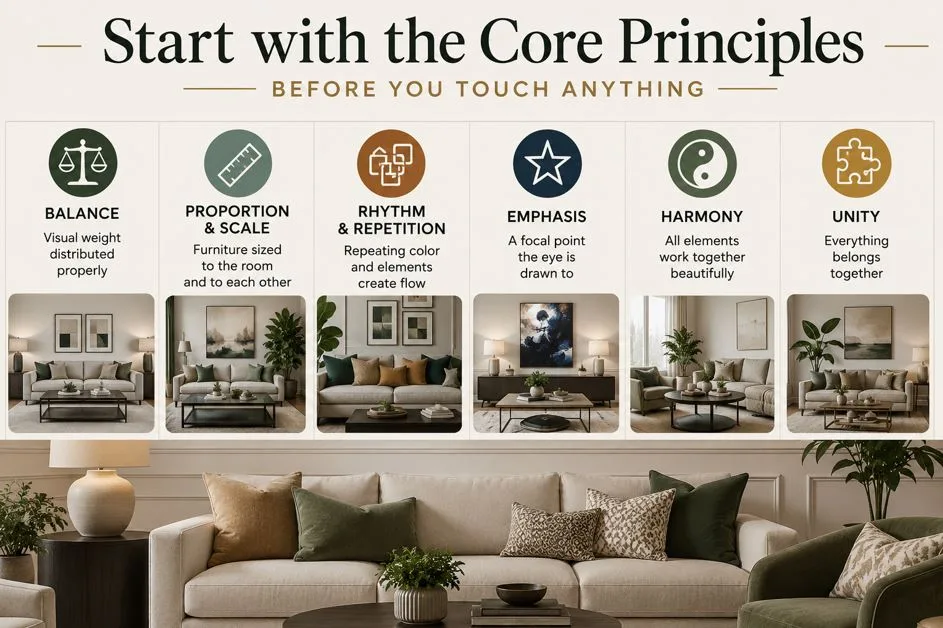
The very first thing I tell students in my design lectures: don’t buy a single cushion until you understand what makes a room feel right. That comes from the foundational principles of interior design — balance, proportion, scale, rhythm, emphasis, harmony, and unity.
These aren’t just academic ideas. They’re the invisible scaffolding behind every great room.
- Balance — A room feels settled when visual weight is distributed properly. This can be symmetrical (a matching pair of lamps on either side of a sofa) or asymmetrical (a tall plant offset by a low coffee table with books stacked on it). Both work — as long as the eye doesn’t feel pulled to one side without resolution.
- Proportion and scale — A king-sized sectional in a small apartment living room isn’t cozy — it’s suffocating. Every piece of furniture must be scaled to the room, and to each other.
- Rhythm and repetition — Repeating a color in your pillows, artwork, and an accent chair creates visual continuity. The eye follows a path, and the room feels intentional.
- Emphasis — Every well-designed room has a focal point. A fireplace, a statement wall, a piece of art. Everything else should support it, not compete.
- Harmony and unity — When all elements speak the same visual language, the room feels complete. This doesn’t mean everything matches — it means everything belongs.
Mastering these basics is the real starting point for learning how to be better at interior design Mintpaldecor-style: principle-driven, not trend-driven.
Learn Color Theory — and Use It with Intention
Color is the most emotionally charged tool in any designer’s kit. I’ve walked into rooms where everything was “right” — good furniture, good light — and the space still felt off. Nine times out of ten, the color palette was the problem.
Here’s how I break it down for anyone starting out:
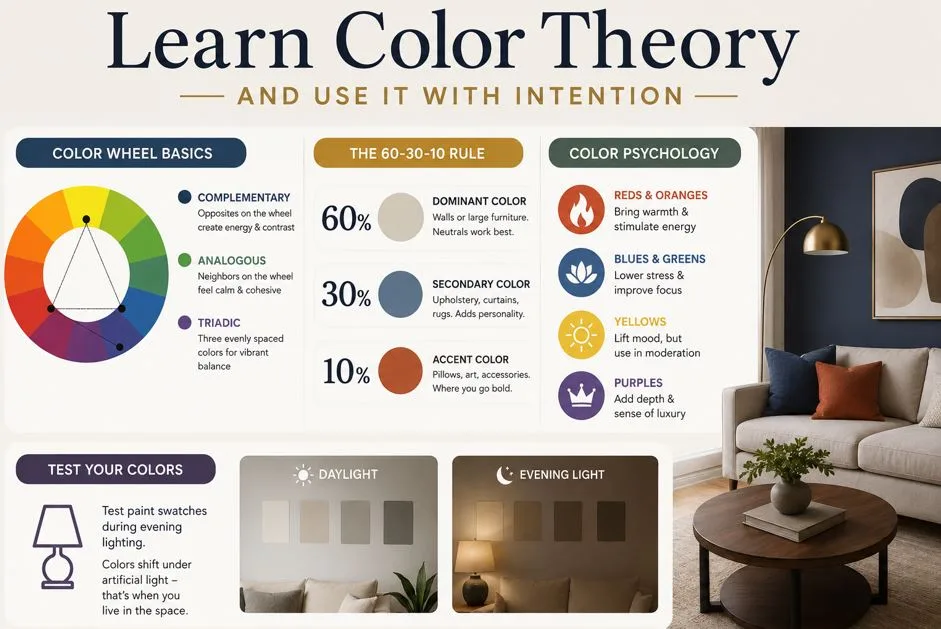
Understand the color wheel first. Complementary colors (opposites on the wheel, like blue and orange) create energy and contrast. Analogous colors (neighbors, like blue, blue-green, and green) feel calm and cohesive. Triadic schemes use three evenly spaced colors for a vibrant, balanced look.
Then apply the 60-30-10 rule. This is the simplest, most reliable formula in interior design:
- 60% — Your dominant color. Usually walls or large furniture. Neutral tones like warm white, greige, or soft taupe work well here.
- 30% — A secondary color. Upholstery, curtains, rugs. This adds personality.
- 10% — An accent color. Pillows, art, accessories. This is where you can go bold.
Color psychology matters too. According to research from institutions like the American Institute of Architects, the way color affects mood is measurable — not just intuitive. Reds and oranges bring warmth and stimulate energy, which is why they work well in dining spaces. Blues and greens lower stress and improve focus — excellent for bedrooms and bathrooms. Yellows lift mood, though in excess they can feel anxious. Purples add depth and a sense of luxury.
Before selecting any paint, test your swatches during evening lighting — not just midday. Colors shift dramatically under artificial light, and that’s when you actually live in the space.
Plan the Space Before You Decorate It
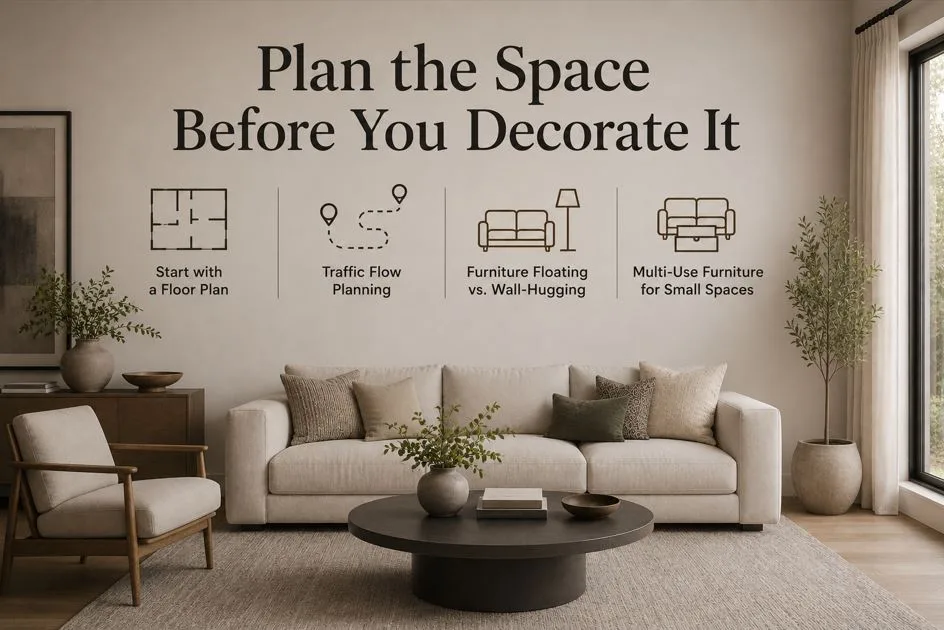
Space planning is the single most underrated skill in interior design — and the one most beginners skip entirely. According to the American Institute of Architects’ 2026 residential trends data, poorly planned furniture layouts are the number one reason homeowners feel their rooms are “not working,” even after significant investment in decor. Space planning is not about making a room look good in a photo. It is about making it work for the people who actually live in it, move through it, and use it every single day.
Start with a Floor Plan
Before moving anything, draw your room to scale on graphing paper or use a free digital floor plan tool. Map every door swing, window location, and fixed feature — radiators, fireplaces, structural columns. This single step saves hours of frustration and prevents expensive mistakes.
Traffic Flow Planning
Allocate a minimum of 30 to 36 inches for walkways in high-traffic zones. In living rooms, seating should be grouped 8 to 10 feet apart to allow conversation without shouting. In dining spaces, leave 36 to 48 inches between the table edge and the nearest wall so chairs can pull out comfortably.
Furniture Floating vs. Wall-Hugging
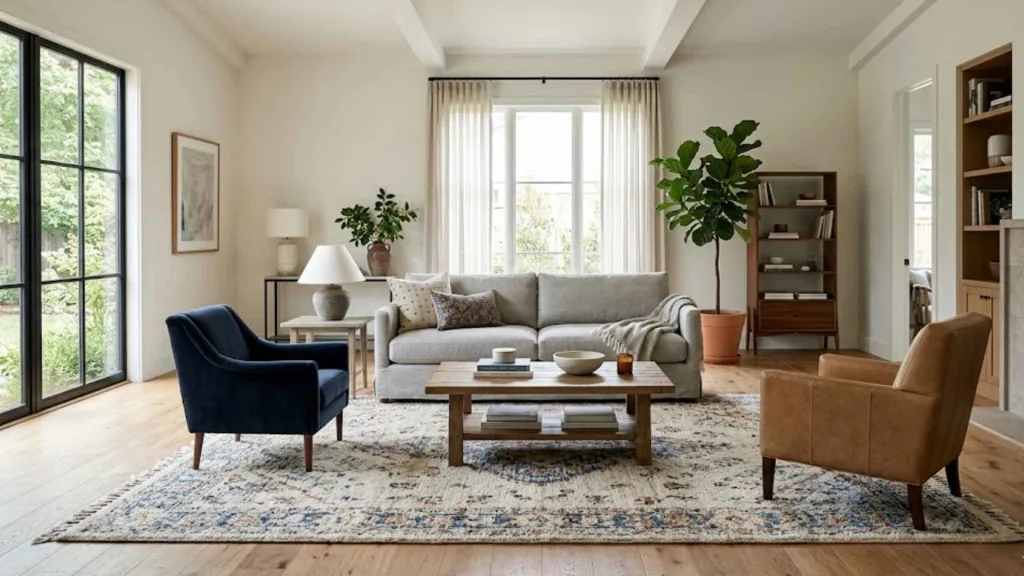
A common mistake is pushing all furniture against the walls. Floating furniture — pulling pieces away from walls into conversational groupings — almost always makes a room feel more intentional and more comfortable. It is a simple move that produces a dramatic shift in how a space reads.
Multi-Use Furniture for Small Spaces
In studio apartments and compact rooms, multi-use furniture is essential, not optional. Storage ottomans, sofa beds, fold-down dining tables, and built-in shelving all solve the space planning challenge without sacrificing comfort or utility. This is smart design under real constraints.
Studying Design Resources and Inspiration
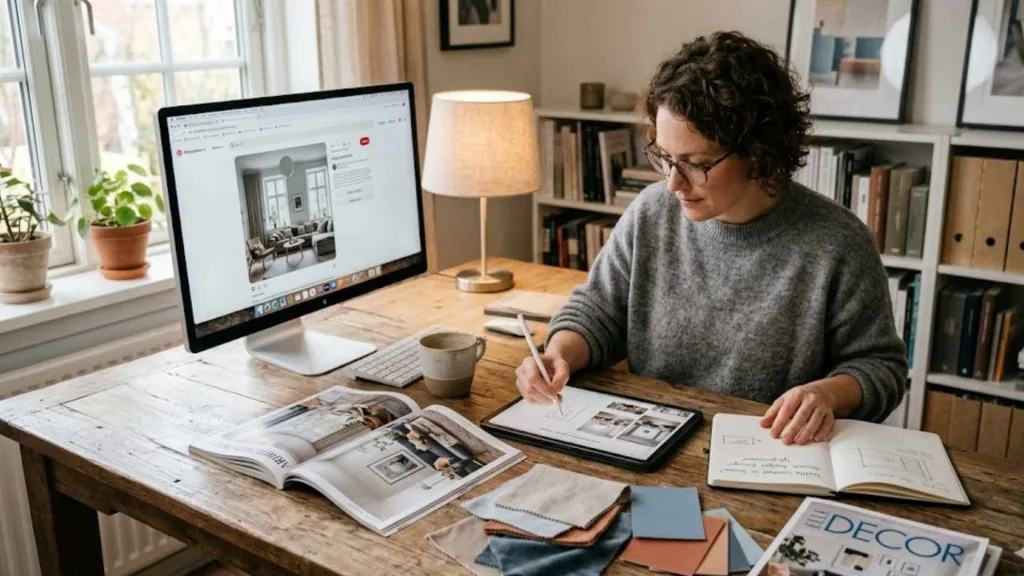
Getting better at interior design requires consistent visual input — but the kind of input matters. In 2026, design inspiration is everywhere: Instagram, Pinterest, design platforms like Mintpaldecor, architecture magazines, and showroom tours.
The problem is that consuming inspiration without analyzing it leads to confusion rather than clarity. The designers who improve fastest are not the ones who look at the most rooms — they are the ones who look at rooms with intention, asking specific questions about what is actually working and why.
What to Look for in Spaces You Admire
When you see an interior you love, stop and ask: Is it the scale? The palette? The way light enters? The texture contrast? Identifying the specific reason a room works trains your eye far faster than passively scrolling images.
Using Physical and Digital Tools
Magazines like Architectural Digest and online platforms including the Interior Design Society offer both visual inspiration and technical insight. Reading how professional designers approach a brief — not just the finished result — is where the real learning happens.
Practicing with Real Projects
There is no substitute for hands-on experience. Theory builds vocabulary; practice builds instinct. The fastest way to improve your design skills is to complete actual projects — start small, finish fully, and then review what worked and what did not. A room rearranged is worth more than ten mood boards pinned.
Start with One Room
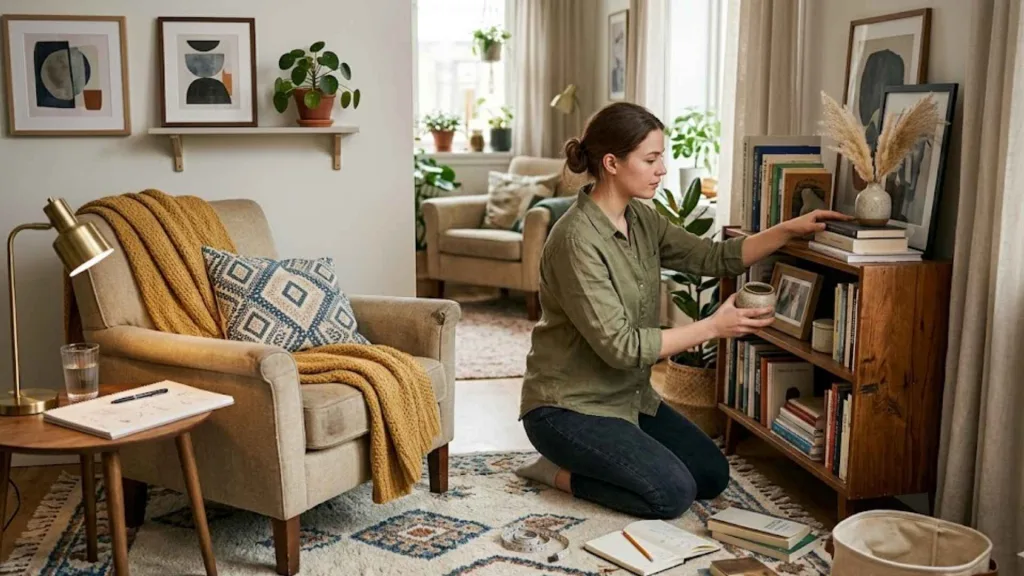
Pick one room — ideally a bedroom or a reading corner — and commit to completing it fully before moving on. Finishing a project from concept to execution teaches proportion, color interaction, and spatial flow in ways that reading about it simply cannot replicate.
Small Projects to Build Your Eye
- Restyle a single shelf or bookcase
- Redesign a bathroom countertop
- Rearrange living room furniture using a floor plan sketch
- Create a styled corner with layered texture — soft rugs, a plant, and a lamp
Reflect After Every Project
Ask yourself: What changed in the room’s feel? What would I do differently? What surprised me? This reflection step is where design intuition is actually built. Most beginners skip it — and it costs them months of growth.
Texture and Layering Techniques
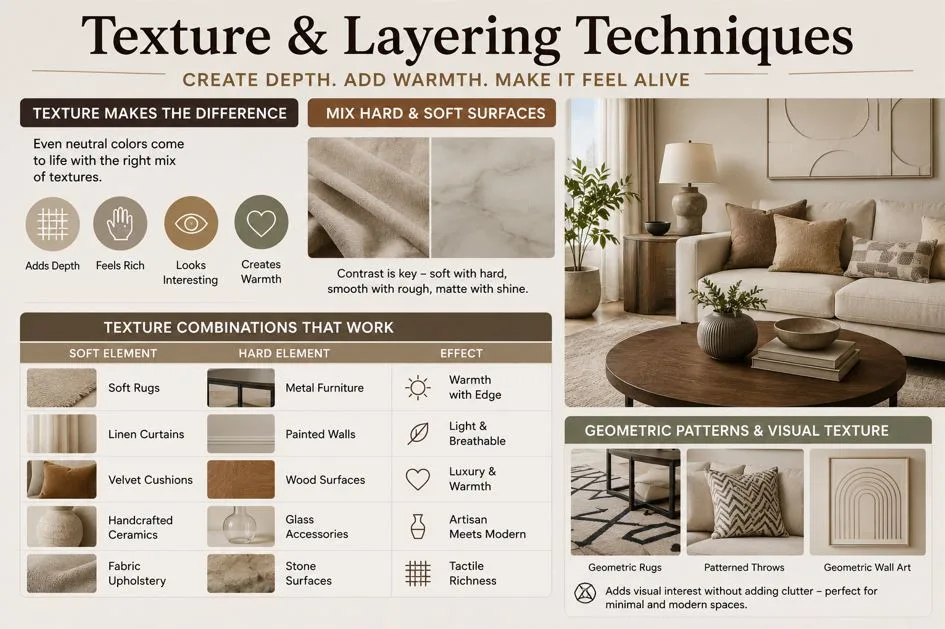
Texture is what separates a room that looks decorated from a room that feels alive. You can work with an entirely neutral color palette and still create a deeply interesting, layered space — if your textures are doing their job. This is one of the most important concepts in understanding how to be better at interior design Mintpaldecor covers consistently across its design guidance.
Mix Hard and Soft Surfaces
The most effective texture combinations contrast material categories: soft rugs against polished concrete, velvet upholstery next to a matte painted wall, or linen curtains beside smooth lacquered furniture. The contrast is what creates visual depth.
Common Texture Combinations That Work
| Soft Element | Hard Element | Effect |
| Soft rugs | Metal furniture | Warmth with edge |
| Linen curtains | Painted walls | Light and breathable |
| Velvet cushions | Wood surfaces | Luxury and warmth |
| Handcrafted ceramics | Glass accessories | Artisan meets modern |
| Fabric upholstery | Stone surfaces | Tactile richness |
Geometric Patterns and Visual Texture
Geometric patterns in rugs, throws, or wall art add visual texture without adding physical weight — a useful technique in minimalist spaces where clutter is the enemy but flatness is equally undesirable.
Use Lighting as a Design Element, Not an Afterthought
Lighting is not decoration — it is architecture. It shapes how a room reads, how colors appear, and how the space feels at different times of day. A poorly lit room with beautiful furniture still feels disappointing. A well-lit simple room feels considered and comfortable. In 2026, layered lighting design has become one of the defining markers of a professionally designed home.
The Three Lighting Layers
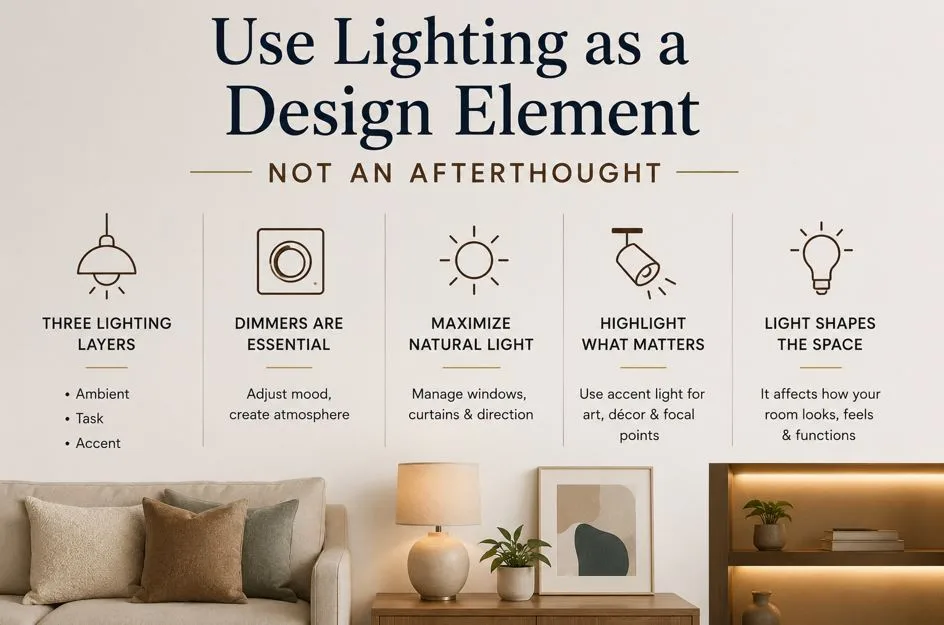
Every well-designed room needs three layers working together:
- Ambient — The base layer. General overhead illumination that sets the room’s brightness level.
- Task — Focused light for specific functions: reading lamps, under-cabinet kitchen lights, vanity lights in bathrooms.
- Accent — Directional light that highlights focal points: picture lights over art, LED strips under floating shelves, spotlights on sculptural furniture.
Dimmers Are Non-Negotiable
Dimmers allow you to shift a room from bright and functional to warm and atmospheric within seconds. They are one of the lowest-cost, highest-impact upgrades available — and one of the first things I specify on every project.
Natural Light Management
The direction a room faces, the weight of curtains, and the color of window frames all shape how natural light enters and how the room reads at different times of day. Before selecting paint colors, observe how your room handles natural light throughout the day.
Know the Common Mistakes — and Avoid Them Early
Every designer — beginners and experienced professionals alike — has made these mistakes. Recognizing them early is the fastest way to accelerate your growth.
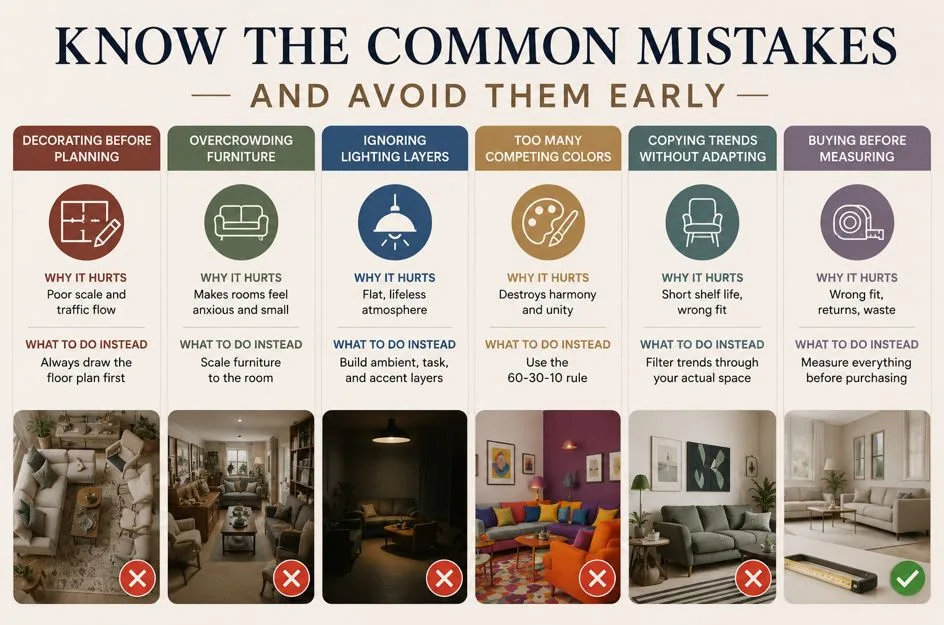
| Mistake | Why It Hurts | What to Do Instead |
| Decorating before planning | Poor scale and traffic flow | Always draw the floor plan first |
| Overcrowding furniture | Makes rooms feel anxious and small | Scale furniture to the room |
| Ignoring lighting layers | Flat, lifeless atmosphere | Build ambient, task, and accent layers |
| Too many competing colors | Destroys harmony and unity | Use the 60-30-10 rule |
| Copying trends without adapting | Short shelf life, wrong fit | Filter trends through your actual space |
| Buying before measuring | Wrong fit, returns, waste | Measure everything before purchasing |
Best Practices for a Successful Interior Design Outcome
These are the principles I return to on every project — from a single room refresh to a full home renovation. They are not rules that limit creativity; they are the framework that makes creativity work.
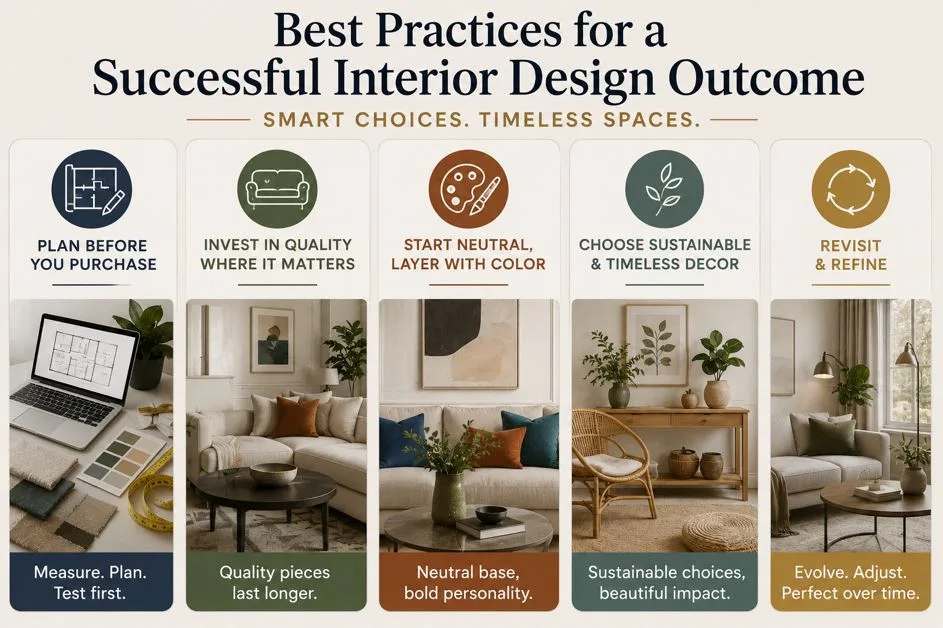
- Plan before you purchase. Draw your floor plan. Know your measurements. Test colors in situ before committing.
- Invest in quality where it matters. A well-made sofa, a good rug, quality lighting — these anchor everything else. Save on accessories, not on the structural pieces.
- Start with neutral tones, layer with vivid colors. A neutral base gives you flexibility. Bold colors in pillows, art, and accessories can be changed affordably as your taste evolves.
- Introduce sustainable decor intentionally. In 2026, reclaimed wood, natural fibers, and long-lasting classics are not just ethical choices — they produce better-looking, longer-lasting interiors than fast-fashion furniture.
- Revisit and refine. Great design is not finished in one pass. Live in the space, notice what bothers you, and adjust deliberately.
Embracing Continuous Improvement
The designers I most admire — including those behind platforms like Mintpaldecor and the resources catalogued at decorluxuryhome — share one trait: they never stop learning. Interior design is not a destination. It is an evolving practice. Trends shift, new materials emerge, and your own taste matures with experience. In 2026, the most admired interiors are not the most expensive or the most fashionable — they are the most intentional. Spaces that clearly reflect a point of view, built by someone who understood the principles well enough to apply them with confidence.
How to Keep Growing
- Study real interiors with analytical eyes, not just admiring eyes
- Complete one project fully before starting another
- Follow design education platforms and professional associations
- Challenge yourself with a new room type — if you’ve only styled bedrooms, try a dining room or a home office
- Document your work over time — seeing your own progression is one of the most motivating things in any creative discipline
Final Thoughts
Getting better at interior design is not about talent — it is about method. Learn the principles first. Build your color theory palettes with intention. Plan every space before you decorate it. Layer texture and lighting deliberately. Practice on small projects and reflect honestly after each one.
The Mintpaldecor approach to how to be better at interior design treats this as a learnable skill, not a gift — and that framing is what makes the guidance genuinely useful rather than aspirational. The Home Decor section here at UrbanSFreaks continues that same philosophy: every article written from real project experience, for people who want results they can actually live in.