
Built to Break Minds Alcatraz Prison: Inside a Powerful Yet Remarkable Institution That Changed History

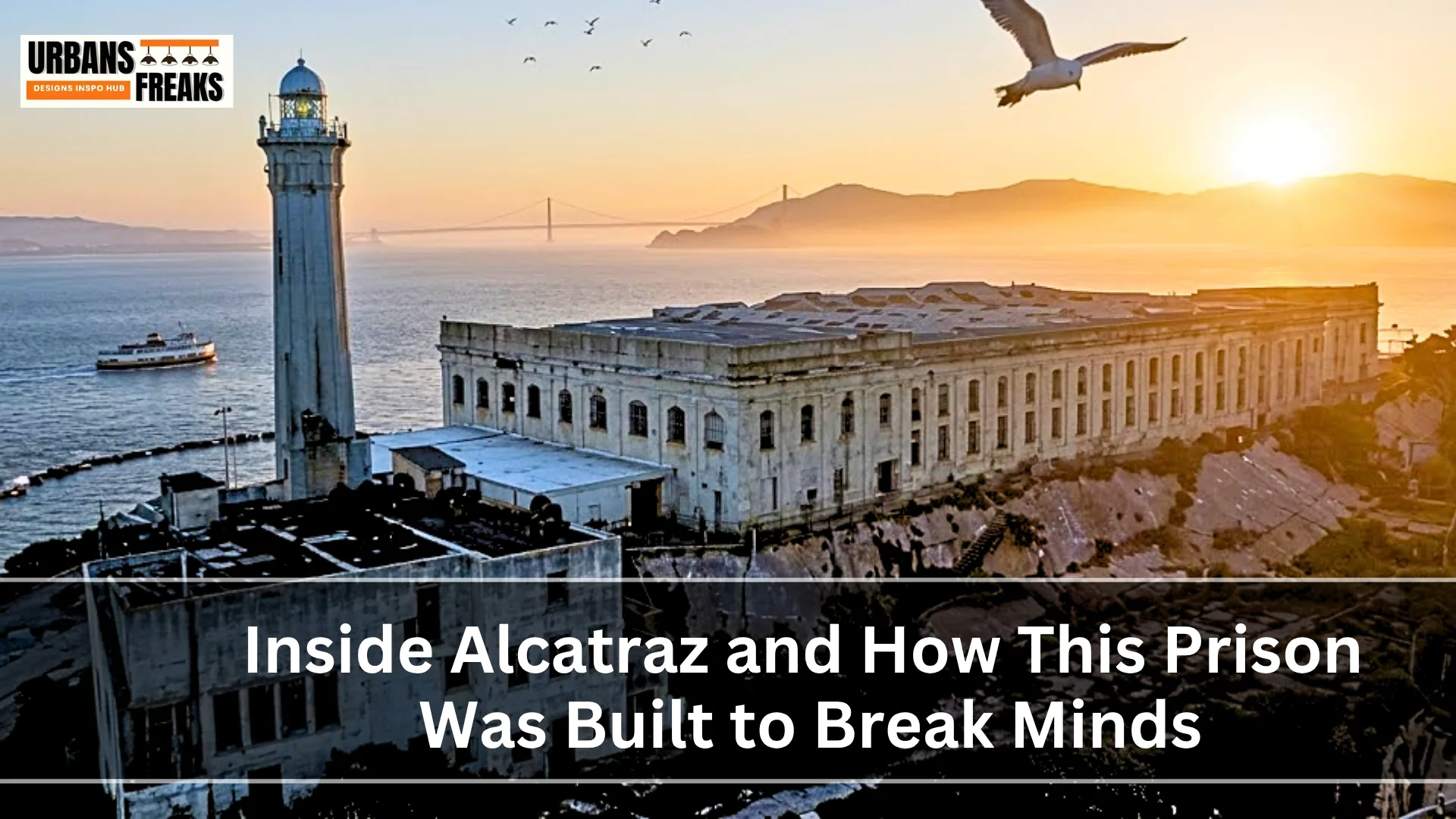
As Todd Lynch from Urbansfreaks, Today, we’re stepping inside one of the most feared prisons in American history — Alcatraz Federal Penitentiary. More than just a jail, it was a place designed for control, isolation, and psychological pressure. Sitting on Alcatraz Island, surrounded by freezing waters and powerful currents, it was considered nearly impossible to escape.
Inside, life followed strict routines. Prisoners lived in small, bare cells, ate in silence, and followed rigid rules every single day. Any violation meant harsh consequences. Notorious inmates like Al Capone and Robert Stroud experienced firsthand how intense and unforgiving this place could be. Guards enforced discipline with precision, and even the smallest privileges had to be earned.
Quick Facts About Alcatraz
Here is the condensed table containing the key information about Built to Break Minds Alcatraz Prison:
| Detail | Info |
| Location & Type | Alcatraz Island, San Francisco Bay (Federal Penitentiary) |
| Operational Years | 1934 – 1963 (29 years total) |
| Inmate Statistics | 1,576 total inmates; average of 260 daily |
| Facility Layout | 4 Blocks (A–D); 336 standard cells (B & C) |
| Cell Specs | 5 ft x 9 ft x 7 ft; includes 42 solitary/segregation units |
| Staffing & Security | 1 guard per 3 prisoners; 14 escape attempts (36 men) |
| Operating Costs | $10/day per prisoner (over 3x higher than other prisons) |
| Reason for Closure | High operating costs and severe structural salt damage |
Built to Break Minds: Alcatraz Prison Location
Built to Break Minds Alcatraz Prison Island sits about 1.25 miles offshore from San Francisco, in the San Francisco Bay, near the Golden Gate Strait.To get there today, visitors board a ferry from Pier 33, Embarcadero, San Francisco, CA 94111. The boat ride takes about 15 minutes. You can see the island clearly from Fisherman’s Wharf.The location was chosen on purpose. The strong tidal currents and the freezing cold water made escape nearly impossible. There were no bridges. No nearby shores. It was the perfect natural prison.
What Is the Reason Behind Alcatraz being built?
Between 1910 and 1912, the prison was entirely rebuilt in concrete by prisoners themselves, for $250,000.When the new cellhouse was completed in 1912, it was the largest concrete structure in the world at that time.The building was modernized again in 1933 and 1934 and officially became the main federal penitentiary cellhouse. Many old materials were reused. Iron staircases and old cell bars were built right into the walls.In 1933, the U.S. Army handed Built to Break Minds Alcatraz Prisonto the Justice Department, which wanted a prison that could hold criminals too dangerous for any other facility. The maximum-security prison officially opened on July 1, 1934.
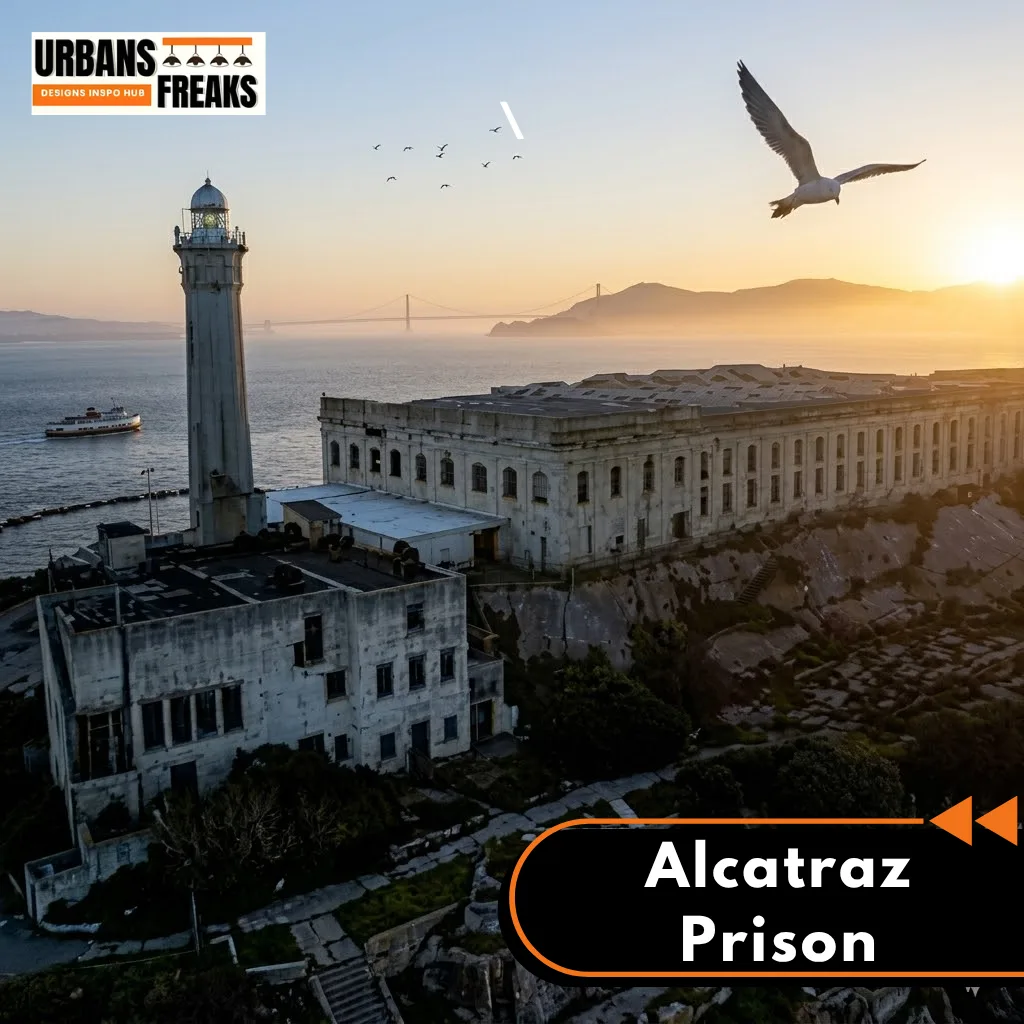
Built to Break Minds: Alcatraz Prison: A Cold, Tight World
Each cell in B and C Block measured just 5 feet by 9 feet, containing only a small sink with cold running water, a sleeping cot, and a toilet. Most inmates could touch both walls simultaneously by extending their arms. The corridors carried street names — Broadway ran between B and C Block, Michigan Avenue sat beside A-Block, Park Avenue ran near the library, and Sunset Strip cut through D-Block. There was no central heating, walls stayed permanently damp, and the Bay fog never truly lifted.
The Spanish Dungeon — The Forgotten Underground
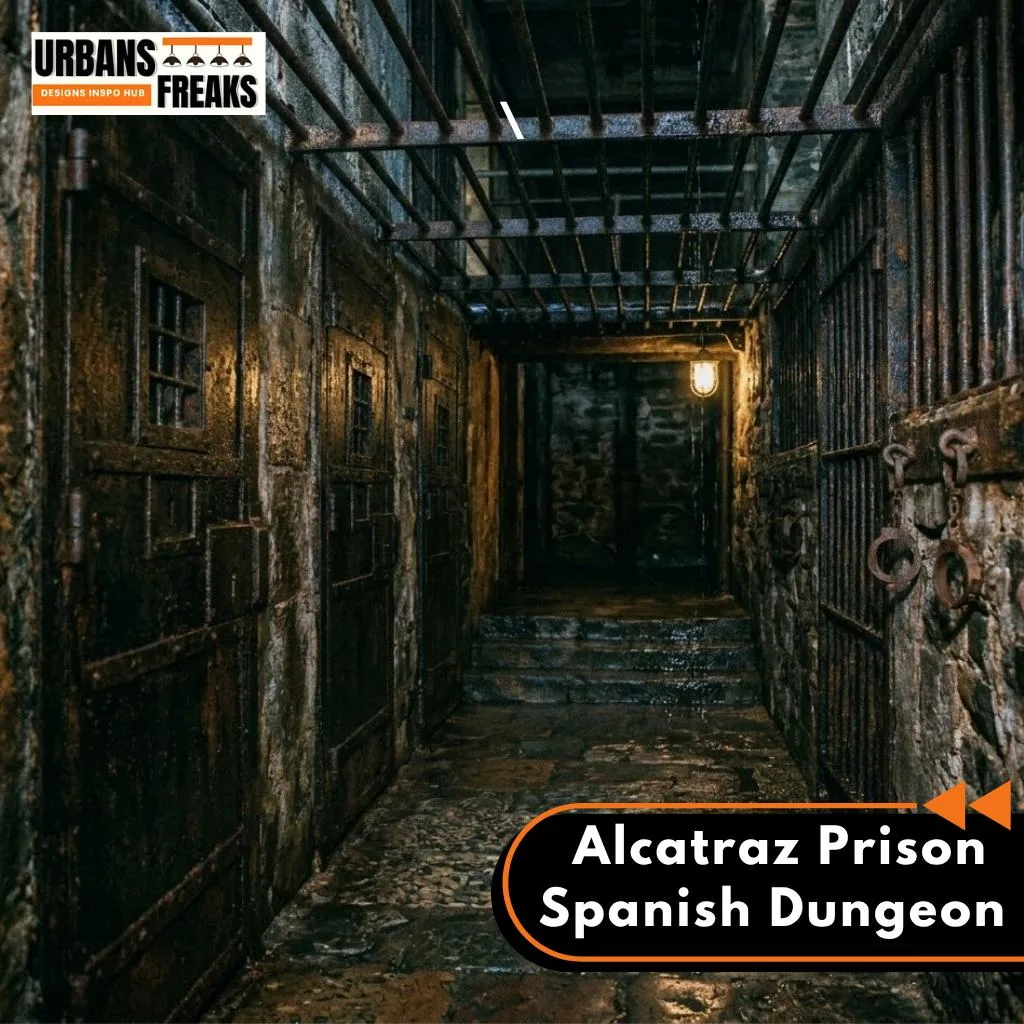
Below A-Block in Built to Break Minds Alcatraz Prison, there was a hidden section called the Spanish Dungeon. Most visitors never hear about it. This underground space was built during the military era and sat beneath the entire cellhouse. It was dark, damp, and cut off from everything above. In the late 1930s, reports suggest that extremely difficult inmates were handcuffed directly to the bars down there for short periods. No light. No sound. Just cold stone and iron. Guards rarely talked about it openly, but many confirmed they knew it existed and was used.
The Strip Cell — Naked, Cold, and Forgotten
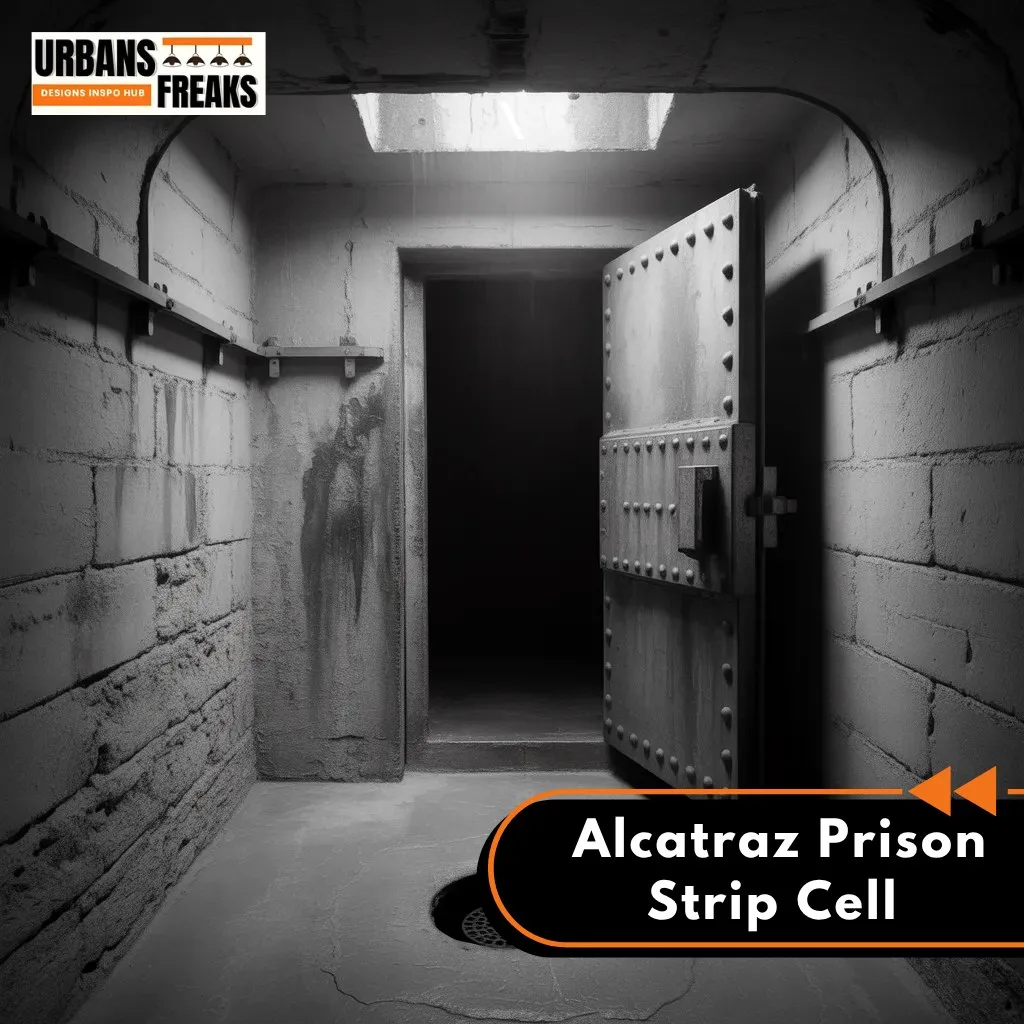
At the very end of D-Block sat one cell different from all others in the Built to Break Minds Alcatraz Prison. It had no sink, bed, or toilet—just a hole in the floor. Guards would place an inmate inside naked and shut a solid steel door, cutting off all light. As temperatures plummeted from the bay winds, the isolation felt as chilling and haunted as being inside the Buckner Mansion of American Horror Story: Coven House. Survivors rarely lasted more than two days before their minds fractured. While never officially labeled torture, everyone inside knew exactly what it was.
The Dark Cell — Where Time Disappeared at Built to Break Minds Alcatraz Prison
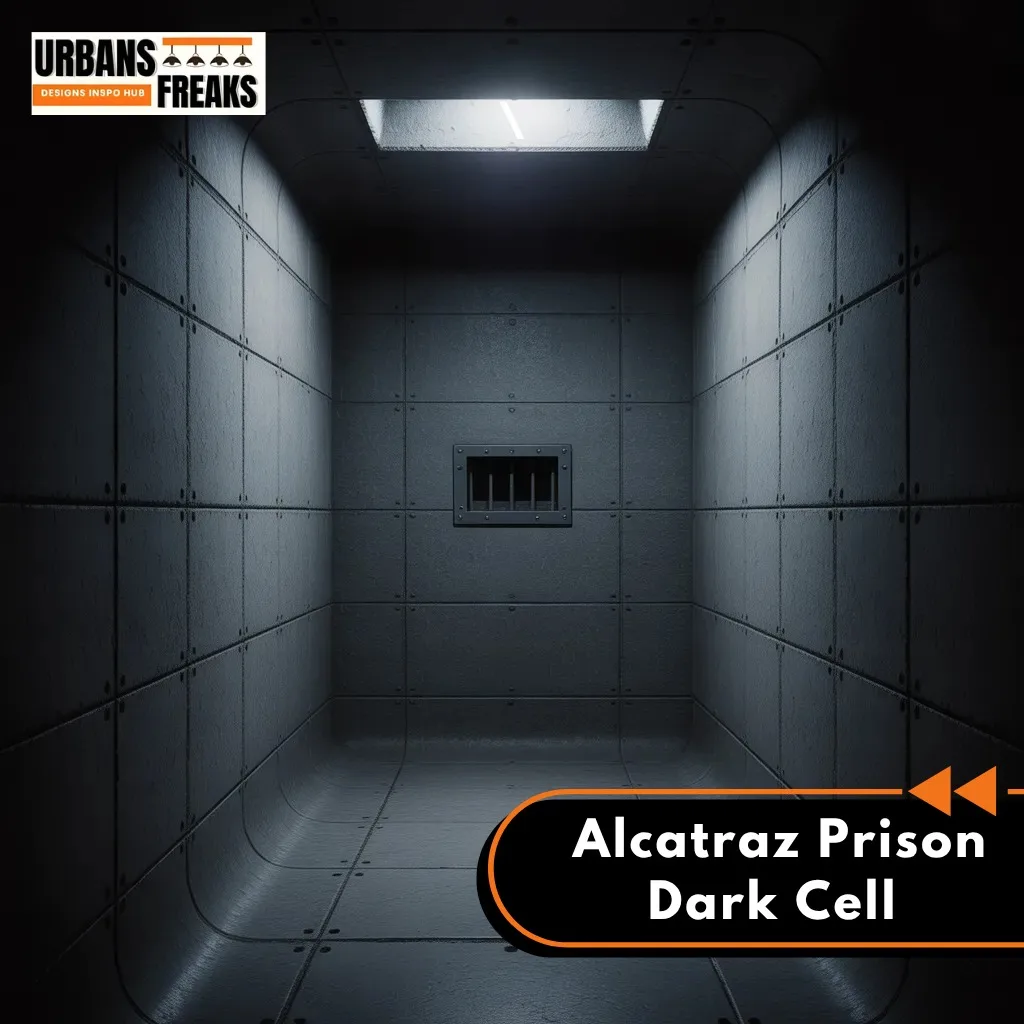
Separate from the Strip Cell, certain isolation chambers in D-Block were designed so that zero light entered at any point. No cracks. No gaps. Pure blackness 24 hours a day. Inmates lost all sense of time within hours. They could not tell if it was day or night, morning or evening. This was intentional. When a person loses track of time completely, the mind starts to fracture. Guards would not speak to the inmate. Food was pushed through a slot silently. One prisoner placed in a dark cell reportedly began screaming that a glowing-eyed creature was attacking him. By morning, he was found dead — cause unknown.
The Entrance Routine — Designed to Destroy Dignity Immediately
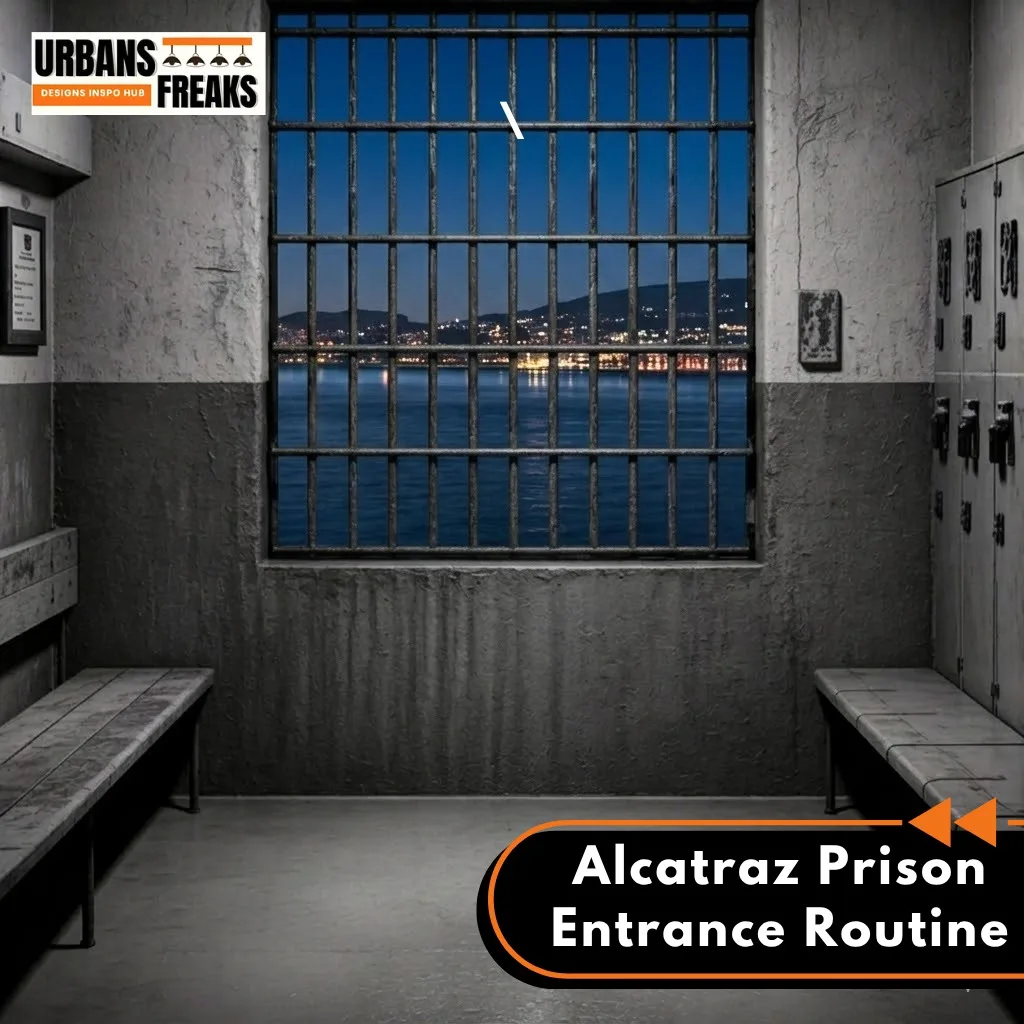
The torture at Built to Break Minds Alcatraz Prison did not begin inside a cell. It started the moment a prisoner arrived. Inmates came in by boat in handcuffs and ankle shackles. The moment they stepped off, they were taken to a processing room, stripped completely, and searched. Every personal item was removed. Their name was replaced with a number. They were given no information about when they might leave or what came next. This deliberate stripping of identity was the first psychological weapon. By the time a man reached his cell, he had already been broken down to nothing. That was the point.
The Mess Hall — Control Through Silence and Smell
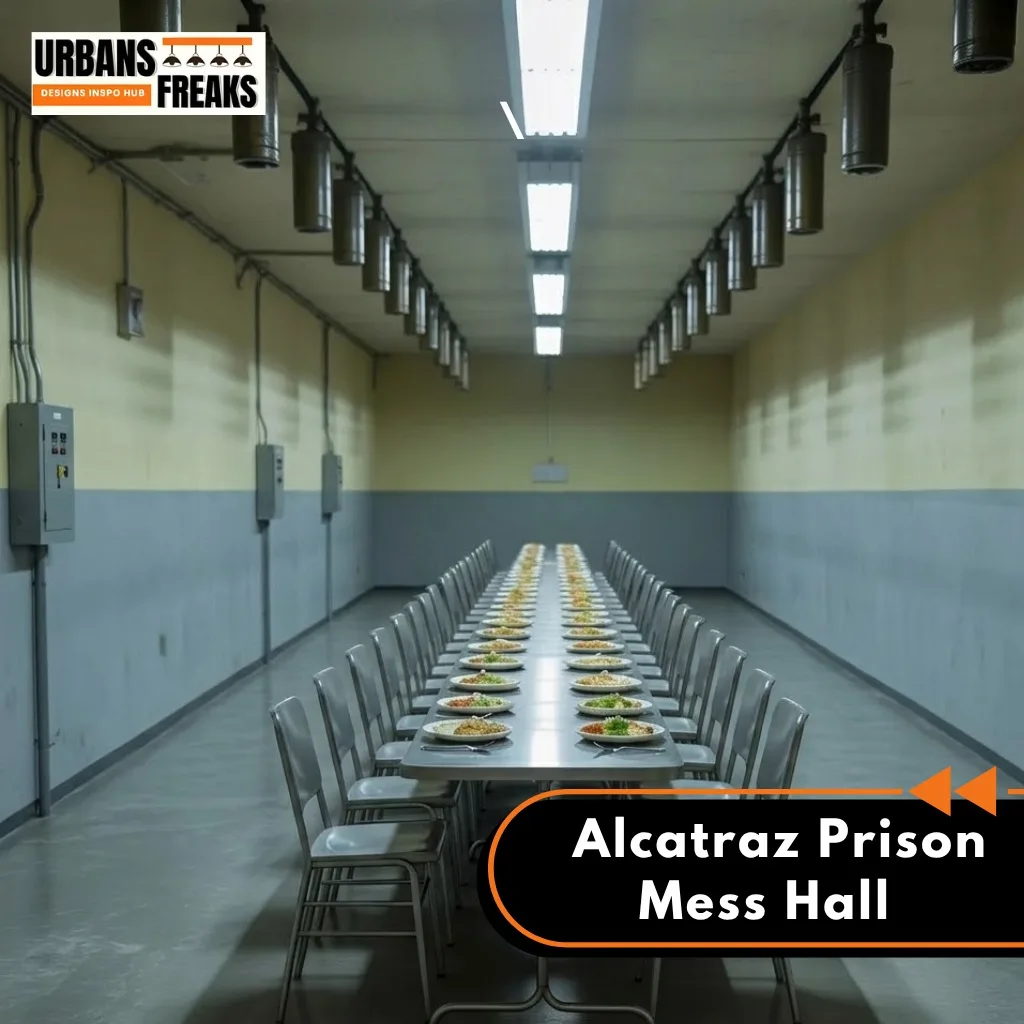
The dining hall looked almost normal compared to the rest of the Built to Break Minds Alcatraz Prison. But it was another tool of psychological pressure. In the early years, a strict rule of complete silence was enforced during every meal. Men sat in rows, ate quickly, and could not speak a word. Guards stood at every corner holding rifles. The smell of gun oil mixed with food was constant. Tear gas canisters were installed directly in the ceiling above the tables — ready to drop at any moment if a fight broke out. Eating, which is one of the most basic human comforts, was turned into a tense, military exercise every single day.
The Psychology Behind the Design
Built to Break Minds Alcatraz Prison was no accident — every feature was a deliberate weapon against the human mind. Solitary confinement strips away time, contact, and identity. Most isolated individuals develop severe anxiety, depression, and PTSD long after release. The first American experiment in solitary confinement in 1829 drove most participants to suicide. Yet the U.S. government repeated the same method at Alcatraz a century later and made it significantly worse.
Escape Attempts — Why Almost Nobody Made It Out
Over its 29-year history, Built to Break Minds Alcatraz Prison saw 14 escape attempts by 36 inmates. The outcomes were grim: 23 were captured, six were shot dead, and two confirmed drowned. Five others remain missing and are presumed dead, including Frank Morris and the Anglin brothers. During their famous 1962 disappearance, they tunneled through B-Block into the bay’s treacherous waters. Ultimately, the island’s primary defense wasn’t just stone walls, but the freezing temperatures and lethal currents of San Francisco Bay, which acted as an inescapable natural barrier for the “Rock.”
The Famous Inmates of Alcatraz
During its 29-year history, 36 inmates attempted 14 escapes from Built to Break Minds Alcatraz Prison. Most were captured, shot, or drowned. The most legendary attempt occurred in 1962, when Frank Morris and the Anglin brothers vanished after tunneling into the bay. Though officially presumed drowned, their fate remains a mystery. Ultimately, the island’s deadliest guards were the freezing, lethal currents of the San Francisco Bay.
Why Alcatraz Finally Closed
By the late 1950s, the costs were becoming impossible to justify.A 1959 report found that Built to Break Minds Alcatraz Prisoners cost $10 per day — compared to just $3 at comparable prisons. All food and supplies had to be shipped in by boat. The salty sea air was slowly destroying the buildings. Engineers estimated it would cost $5 million just to repair the structural damage.On March 21, 1963, Attorney General Robert Kennedy shut it down permanently. The remaining prisoners were transferred to a new maximum-security facility in Marion, Illinois.
Built to Break Minds Alcatraz Prison Today — The Rock Lives On
Today, Built to Break Minds Alcatraz Prison is one of San Francisco’s most visited tourist attractions, drawing around 1.5 million visitors per year. Visitors take a ferry from Pier 33 to the island and walk through the actual cellhouse. Audio tours narrated by former inmates and guards are available. The National Park Service manages and restores the buildings.In May 2025, President Donald Trump proposed reopening Alcatraz as a prison for violent offenders. Historians and prison experts noted the renovation costs would be enormous. No reopening has taken place.The buildings remain protected under the National Register of Historic Places.
Final Thoughts
Built to Break Minds Alcatraz Prison Island was a grueling experiment in total control. By combining geographic isolation with a crushing psychological regime—including tiny cells and the sensory deprivation of “The Hole”—it aimed to break America’s most defiant inmates. The layout created a labyrinth of pressure, with corridors as disorienting as the Winchester Mystery House’s Most Mysterious Rooms. While maintaining order, it shattered prisoners’ sanity. Today, its legacy fuels debates over humane incarceration, reminding us that systems built on pure discipline permanently scar the mind.
If this kind of tour increases your curiosity, don’t ignore it — there is a reason it resonates. Historical House like this to visit.