I Make $70000 a Year — How Much House Can I Afford?

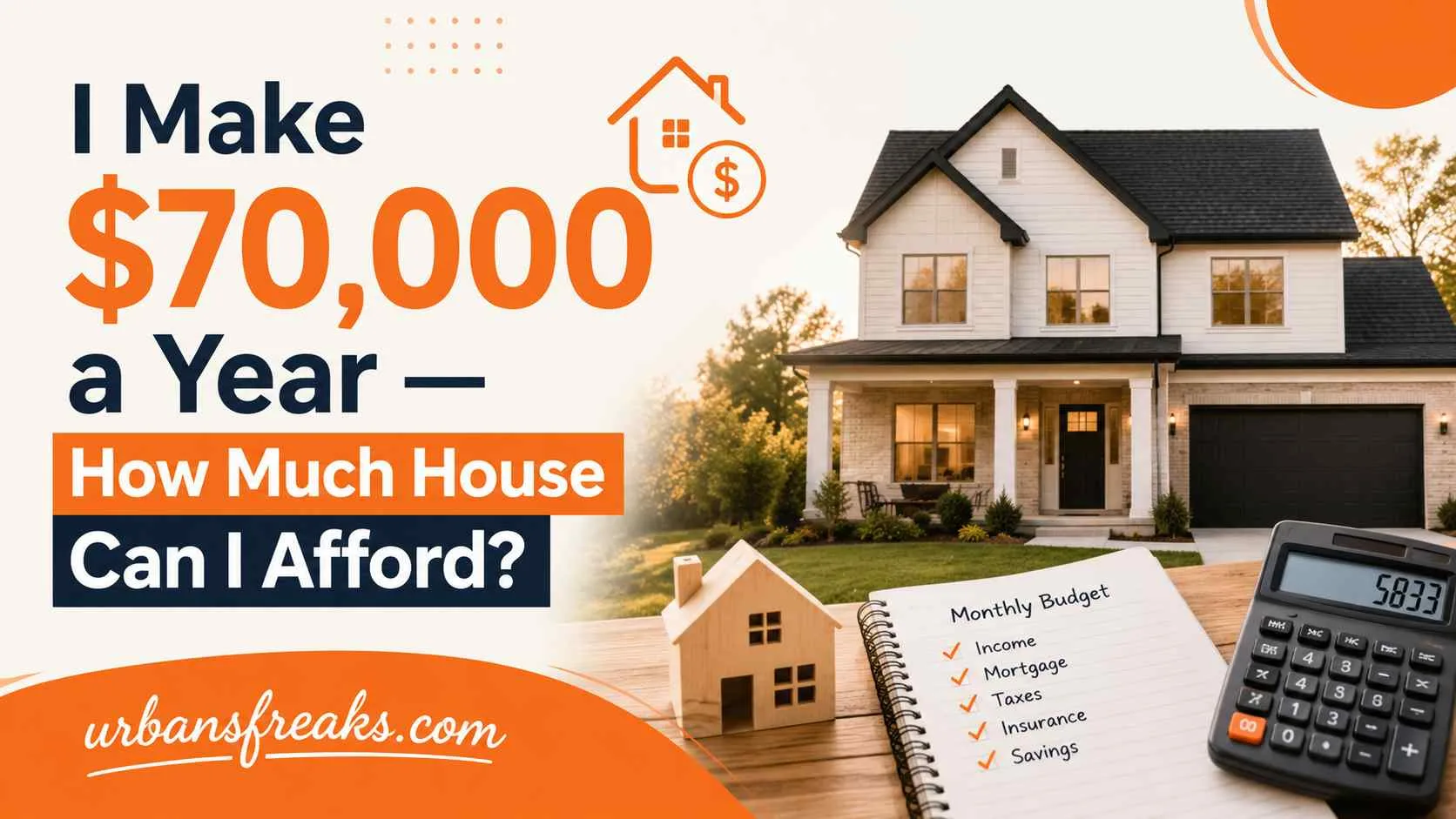
I Make $70000 a Year, you may be able to afford a home between $220,000 and $320,000, depending on your down payment, debts, credit score, and interest rate. I’m Todd Lynch, founder of Urbansfreaks and an architect focused on creating homes people can afford to live in comfortably.
Affordability is more than a lender’s calculation—it’s also about smart design and everyday living. A well-planned smaller home can often serve you better than one that stretches your budget too far.
Quick Answer: I Make $70000 a Year Salary Home Affordability
Here’s the short version before we go I Make $70000 a Year.
| Factor | Typical Range |
|---|---|
| Monthly gross income | $5,833 |
| Recommended housing payment (28% rule) | $1,633/month |
| Recommended total debt payment (36% rule) | $2,100/month |
| Affordable home price | $220,000 – $320,000 |
| Estimated monthly mortgage payment | $1,600 – $2,200 |
These numbers assume a 30-year fixed loan, a decent credit score, and average property taxes and insurance. Your actual number could be higher or lower.
Is $70K a Good Salary to Buy a House?
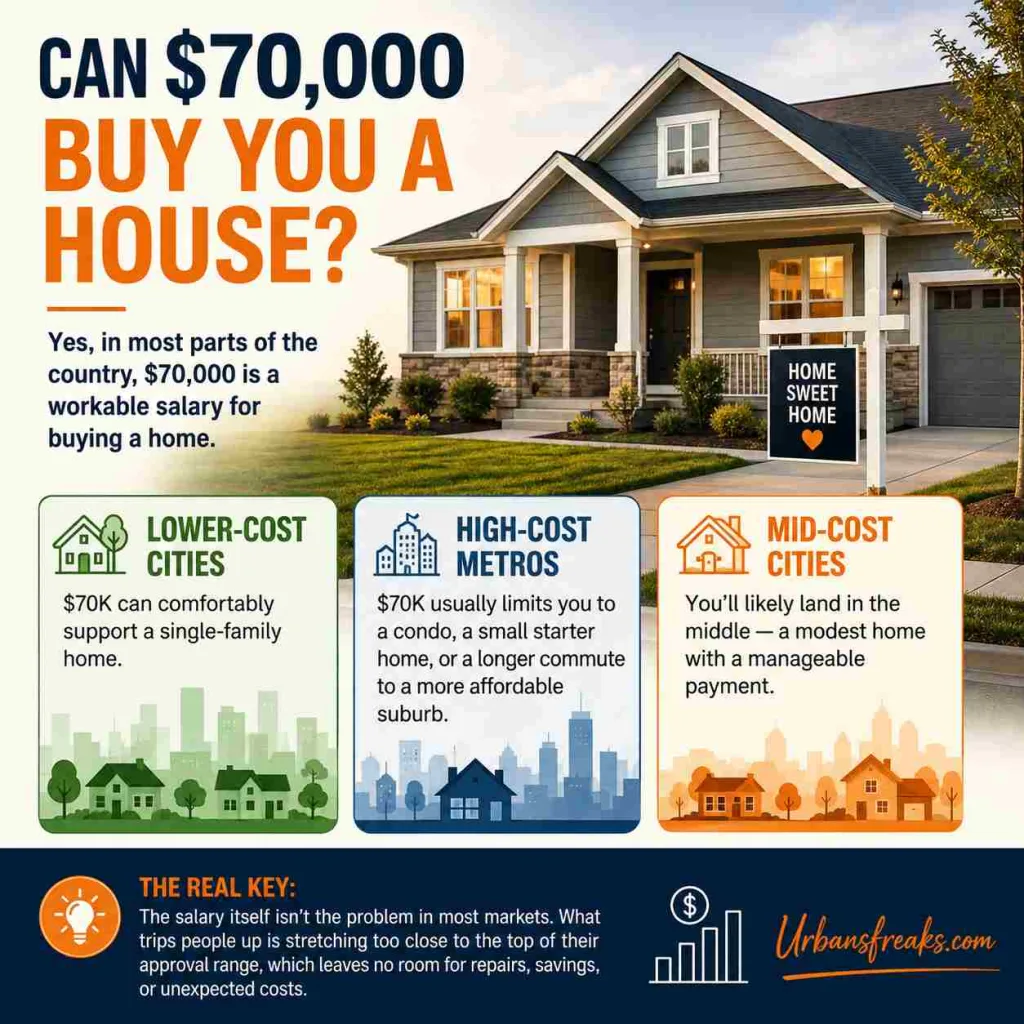
Yes, in most parts of the country, $70,000 is a workable salary for buying a home. It’s close to the national median household income, so you’re not starting from a disadvantage.
That said, “good” depends on where you live:
- In lower-cost cities, $70K can comfortably support a single-family home.
- In high-cost metros like San Francisco, New York, or Los Angeles, $70K usually limits you to a condo, a small starter home, or a longer commute to a more affordable suburb.
- In mid-cost cities, you’ll likely land in the middle — a modest home with a manageable payment.
The salary itself isn’t the problem in most markets. What trips people up is stretching too close to the top of their approval range, which leaves no room for repairs, savings, or unexpected costs.
How Lenders Decide How Much House You Can Afford
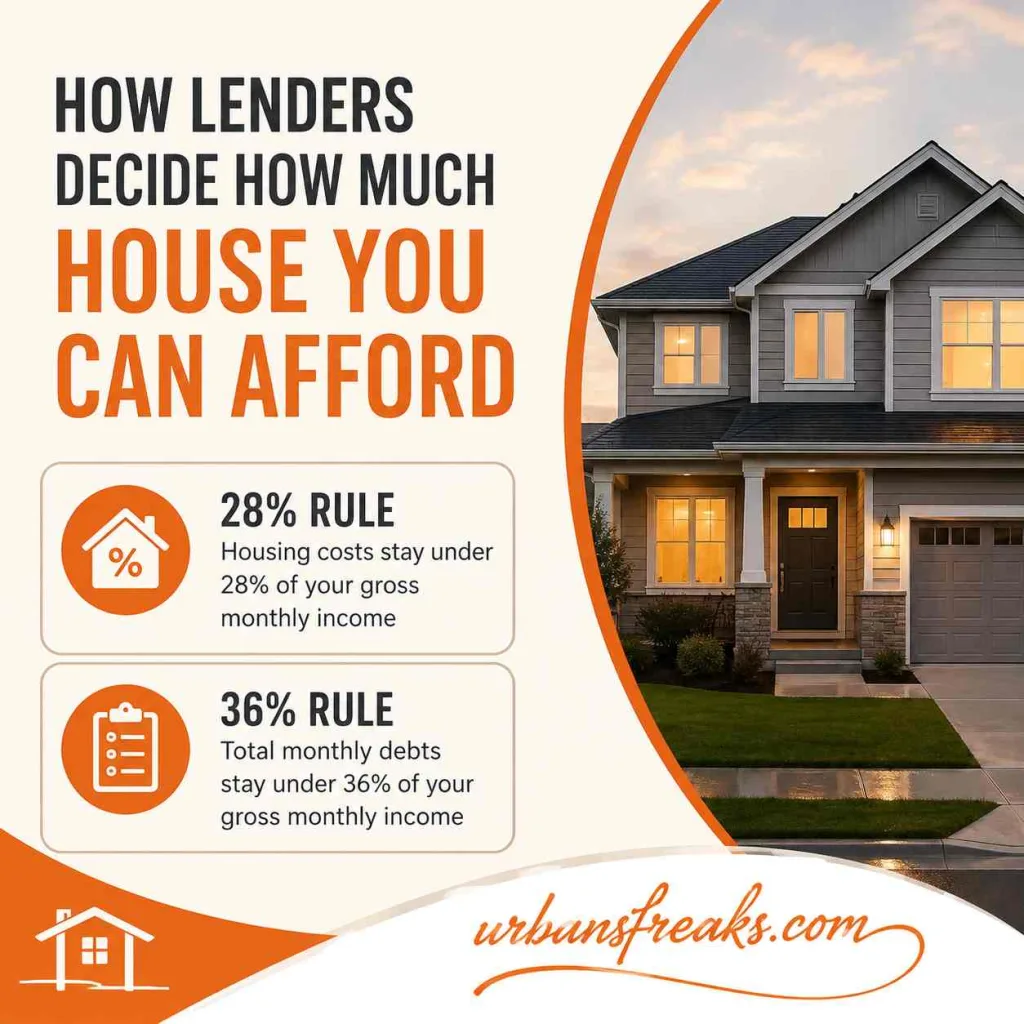
Lenders use a simple formula called the 28/36 rule. It’s the same rule used across most conventional loans, and it’s a good starting point even if you’re not applying for a mortgage yet.
- 28% rule: Your monthly housing payment (mortgage, taxes, insurance, HOA) should stay under 28% of your gross monthly income.
- 36% rule: All your monthly debts combined, including the new mortgage, shouldn’t go over 36% of your gross monthly income.
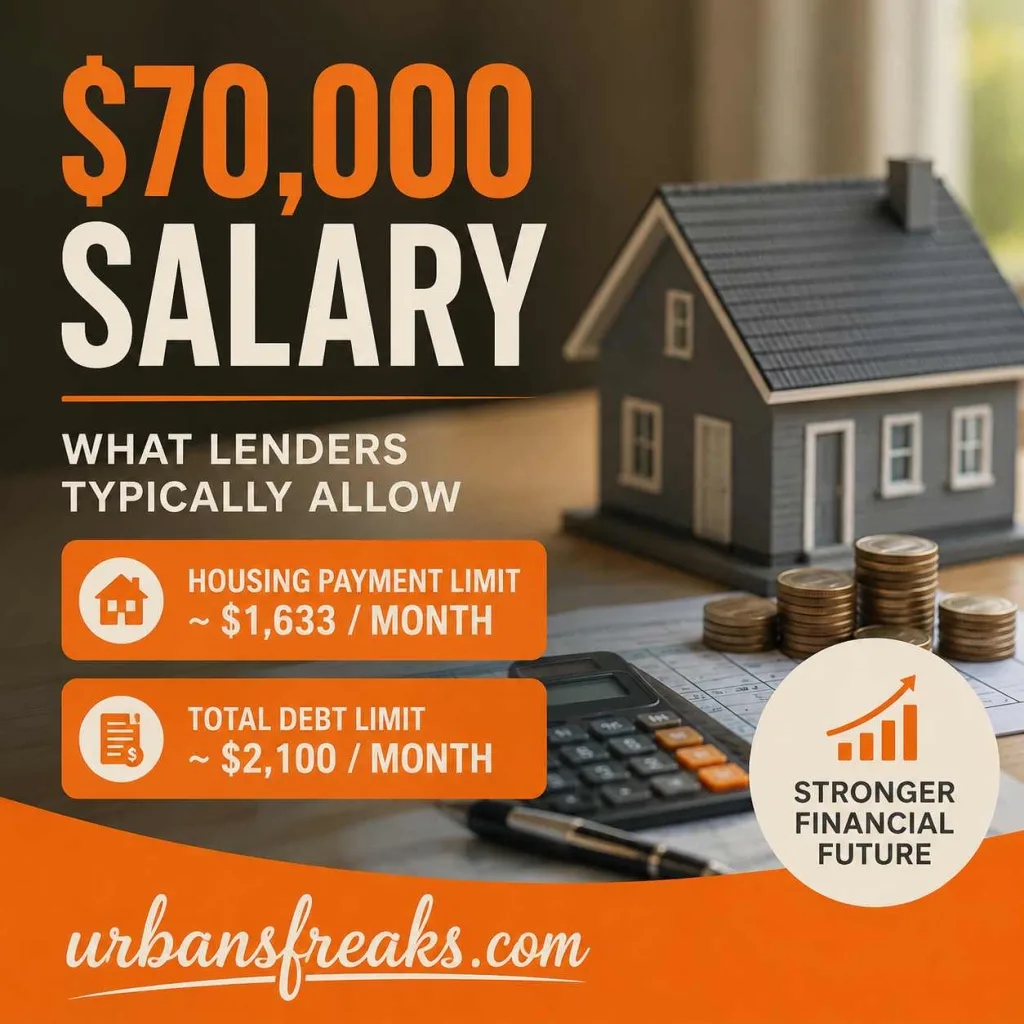
I Make $70000 a Year, your gross monthly income is $5,833. That means:
- Housing payment limit: about $1,633/month
- Total debt limit: about $2,100/month
The Consumer Financial Protection Bureau uses this same debt-to-income guideline when explaining what lenders look for, so it’s not just a marketing rule of thumb — it’s close to industry standard.
Some lenders, especially for FHA loans, will go up to 43-50% DTI. That gets you more house on paper, but it leaves less room in your monthly budget for everything else.
How Much House $70K a Year Actually Buys
Here’s where the real answer changes based on your personal numbers. I’ve laid out three common scenarios below, based on a 30-year fixed mortgage.
| Scenario | Credit Score | Down Payment | Monthly Debts | Interest Rate | Affordable Home Price |
|---|---|---|---|---|---|
| Strong position | 740+ | 20% | Under $200 | 6.5% | $290,000 – $320,000 |
| Average position | 680-720 | 5-10% | $300-500 | 6.7% | $240,000 – $275,000 |
| Tight budget | 620-670 | 3.5% (FHA) | $600+ | 7%+ | $190,000 – $225,000 |
Mortgage rates move often. As of this month, the average 30-year fixed rate is sitting around 6.7%, according to Freddie Mac’s weekly survey. A half-point swing in rates can shift your affordable home price by $15,000 to $20,000, so it’s worth checking current rates before you set your expectations.
What Actually Changes Your Number
Four things move your affordable home price up or down. Here’s how each one works.
1. Your Down Payment
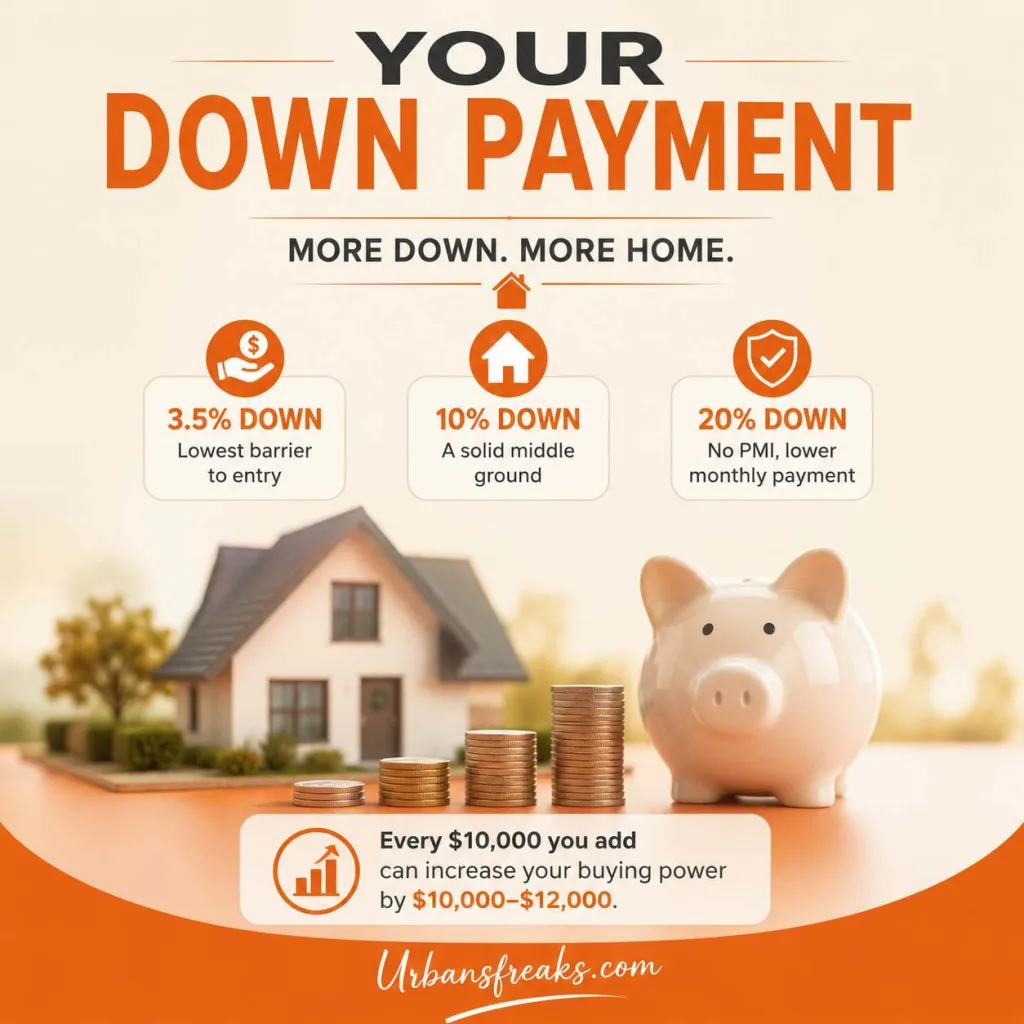
The bigger your down payment, the more house you can afford, because you’re borrowing less. On a $70K salary:
- 3.5% down (FHA loan): Lowest barrier to entry, but you’ll pay mortgage insurance
- 10% down: A solid middle ground for most buyers
- 20% down: No private mortgage insurance (PMI), and your monthly payment drops significantly
Every $10,000 you add to your down payment usually adds $10,000 to $12,000 to your buying power, since it directly reduces the loan amount.
2. Your Existing Debt
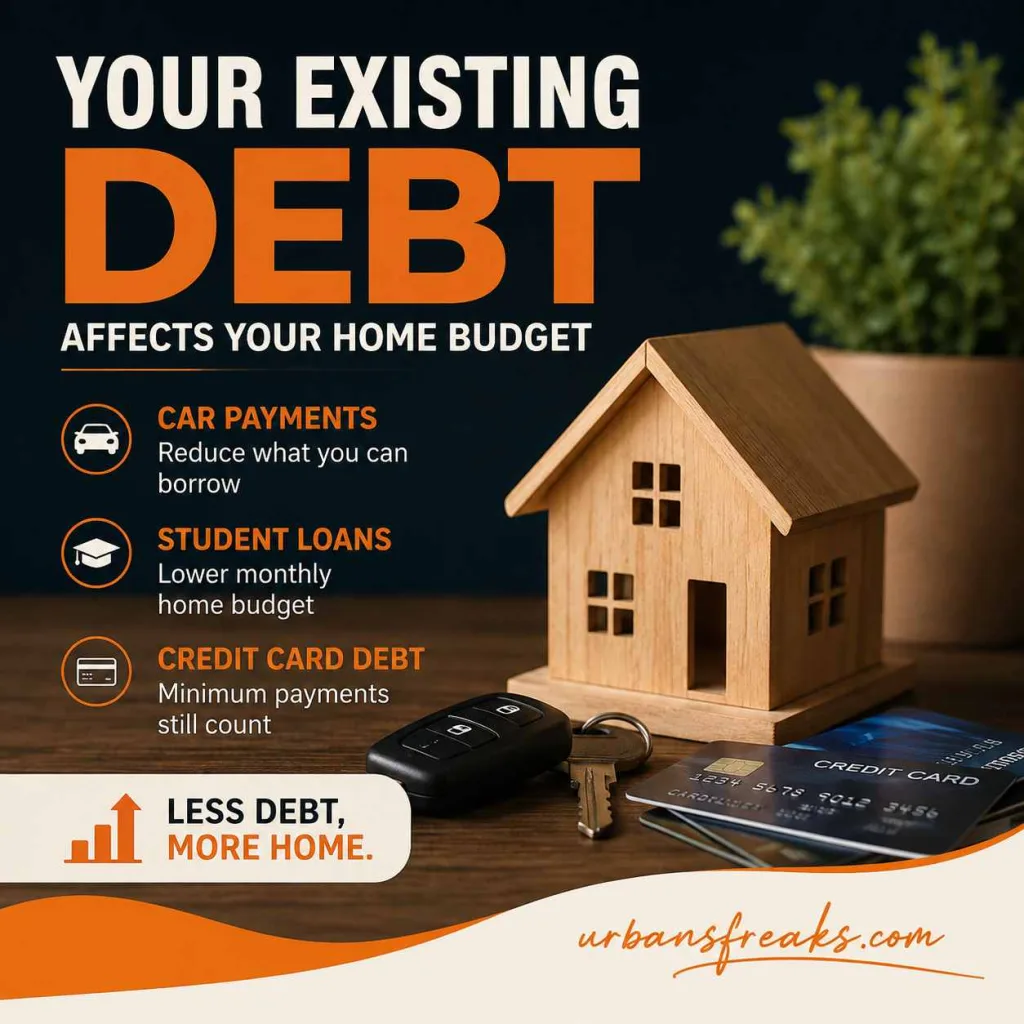
This is the one people underestimate. Every $100 in monthly debt — a car payment, a student loan, minimum credit card payments — cuts your home buying power by roughly $15,000 to $20,000.
- $0 in debt: full $2,100/month available for housing
- $300 car payment: about $1,800/month left for housing
- $700 in combined debts: about $1,400/month left for housing
If you’re planning to buy in the next year, paying down debt is one of the fastest ways to raise your number.
3. Your Credit Score
Credit score affects your interest rate, and rate affects everything. A borrower with a 740+ score can often get a rate that’s 0.5% to 1% lower than someone with a 620-660 score. On a $250,000 loan, that difference alone can mean $80-$150 less per month.

4. Where You’re Buying
A $70,000 salary buys very different homes depending on the market. In lower-cost cities in the Midwest or South, that budget can land you a solid single-family home. In high-cost coastal metros, the same salary might only stretch to a condo or a much smaller property. Check local median home prices before settling on a target number, since national averages don’t reflect what’s actually on the market near you.

A Real Example
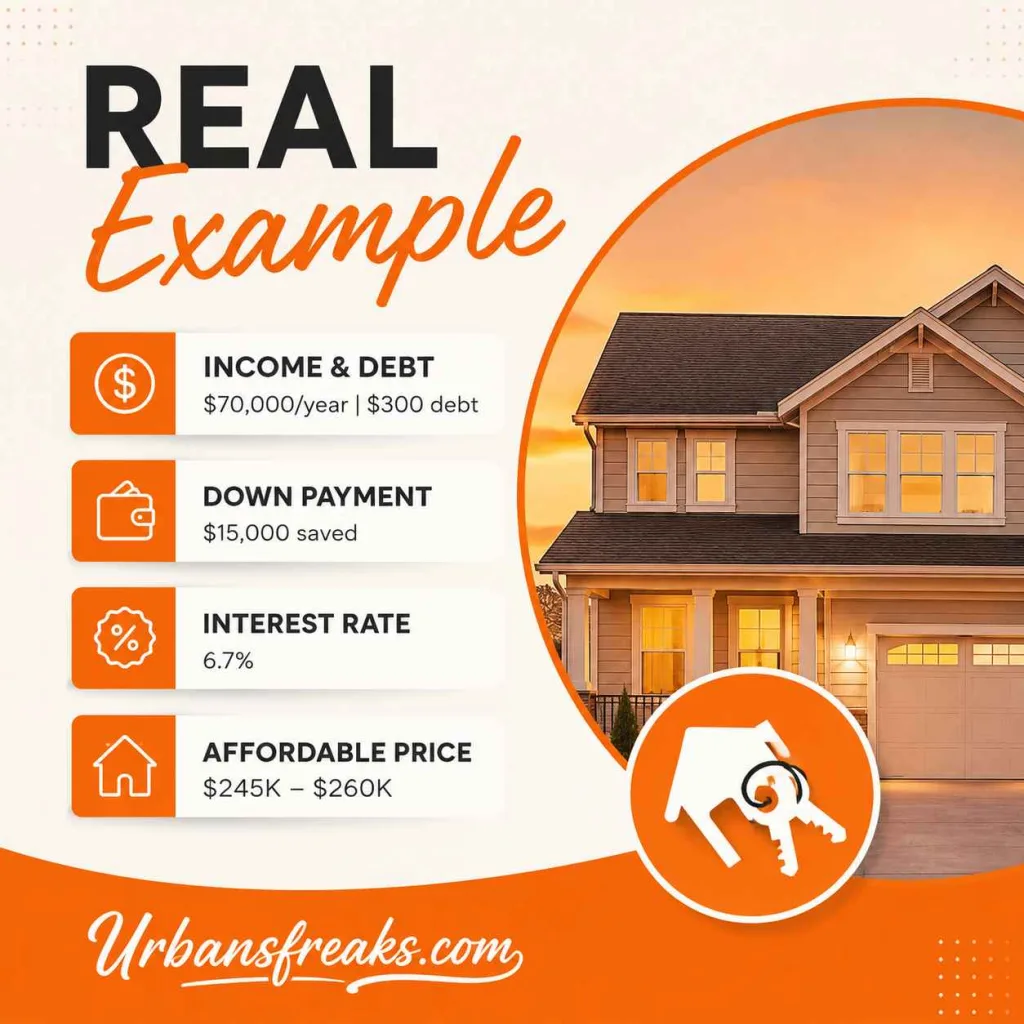
Let’s say you earn $70,000 a year, have $300 in monthly debt (a car payment), a credit score of 700, and $15,000 saved for a down payment.
- Gross monthly income: $5,833
- Housing budget: $1,633 (minus adjustments for the car payment)
- Realistic mortgage payment: around $1,500/month
- Interest rate: 6.7%
- Estimated affordable home price: $245,000 – $260,000
This is close to what you’ll see if you run the same numbers through Chase’s affordability calculator or a similar tool — the math holds up across most lenders.
How Much House With No Debt on a $70K Salary?
If you have no monthly debt, your buying power goes up significantly. With the full $2,100 debt limit available for housing, and a solid credit score, you could qualify for a home in the $300,000 to $330,000 range at current rates.
Here’s why debt-free buyers have such an advantage:
- The entire 36% debt limit is available for the mortgage alone
- Lenders see you as lower risk, which can help with approval odds
- You have more flexibility to accept a slightly higher rate without stretching your budget
If you’re a few months from buying and carrying a car loan or credit card balance, paying it off first is one of the most effective ways to raise your number before you apply.

Loan Types That Can Change Your Budget
Not every loan works the same way, and the type you qualify for can shift your number by tens of thousands of dollars.
- Conventional loan: Usually needs 5-20% down and a credit score of 620+
- FHA loan: Just 3.5% down with a 580+ credit score, good for buyers with less saved
- VA loan: No down payment for eligible veterans and active-duty service members, backed by the Department of Veterans Affairs
- USDA loan: No down payment, but only for eligible rural and suburban areas
First-time buyer programs, down payment assistance, and closing cost help are also worth checking with a local lender or housing agency — they can make a real difference on a $70K income.

Beyond the Mortgage: What a $70K Budget Actually Covers
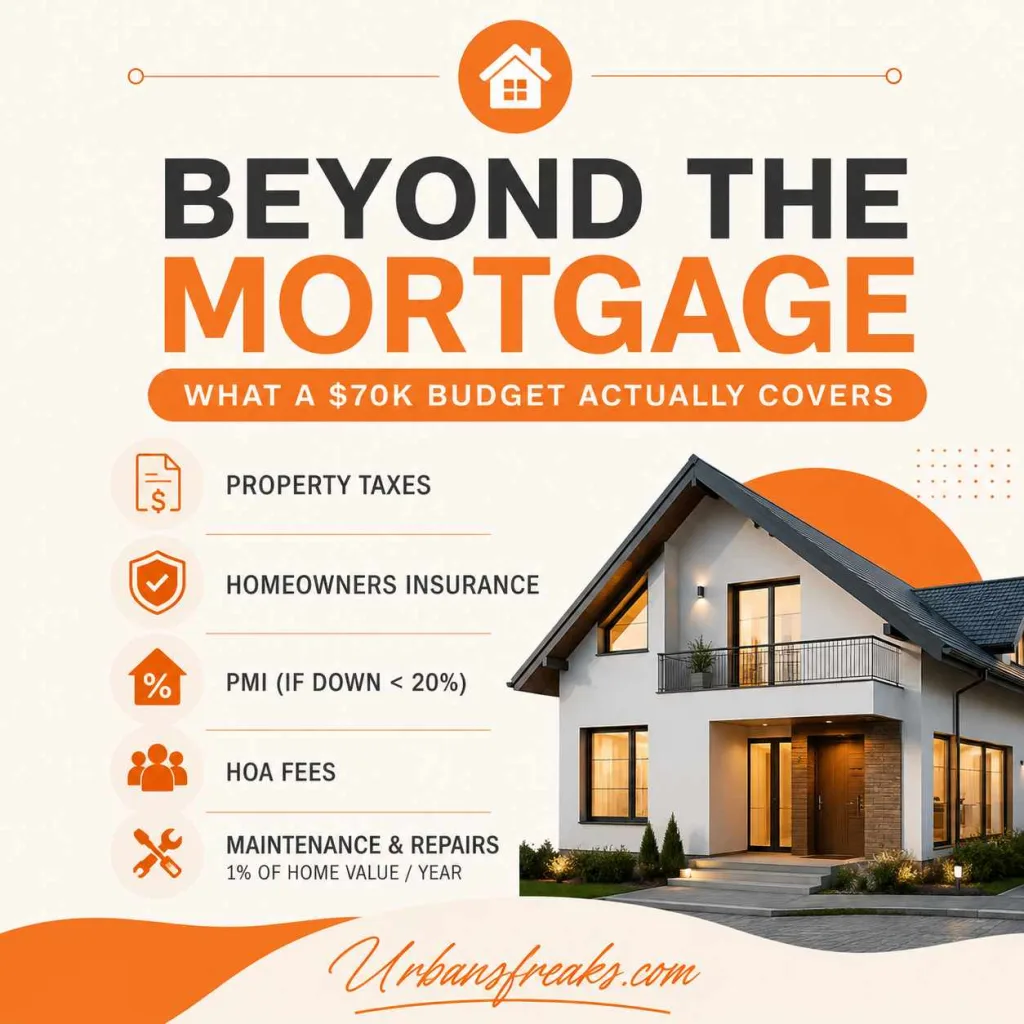
As an architect, I always tell people the mortgage is only part of the cost of owning a home. Your monthly housing number also needs to cover :
- Property taxes (varies widely by state and county)
- Homeowners insurance
- PMI, if your down payment is under 20%
- HOA fees, if applicable
- Ongoing maintenance and repairs — a good rule is to set aside 1% of the home’s value each year
This is also where design choices matter. A well-planned, energy-efficient home costs less to run every month than a poorly designed one, even at the same purchase price. If you’re weighing two homes at a similar budget, look closely at insulation, window quality, and layout efficiency — not just square footage. It’s one reason I spend so much time on home decor and functional layouts that get more use out of less space.
Tips to Increase What You Can Afford when I Make $70000 a Year
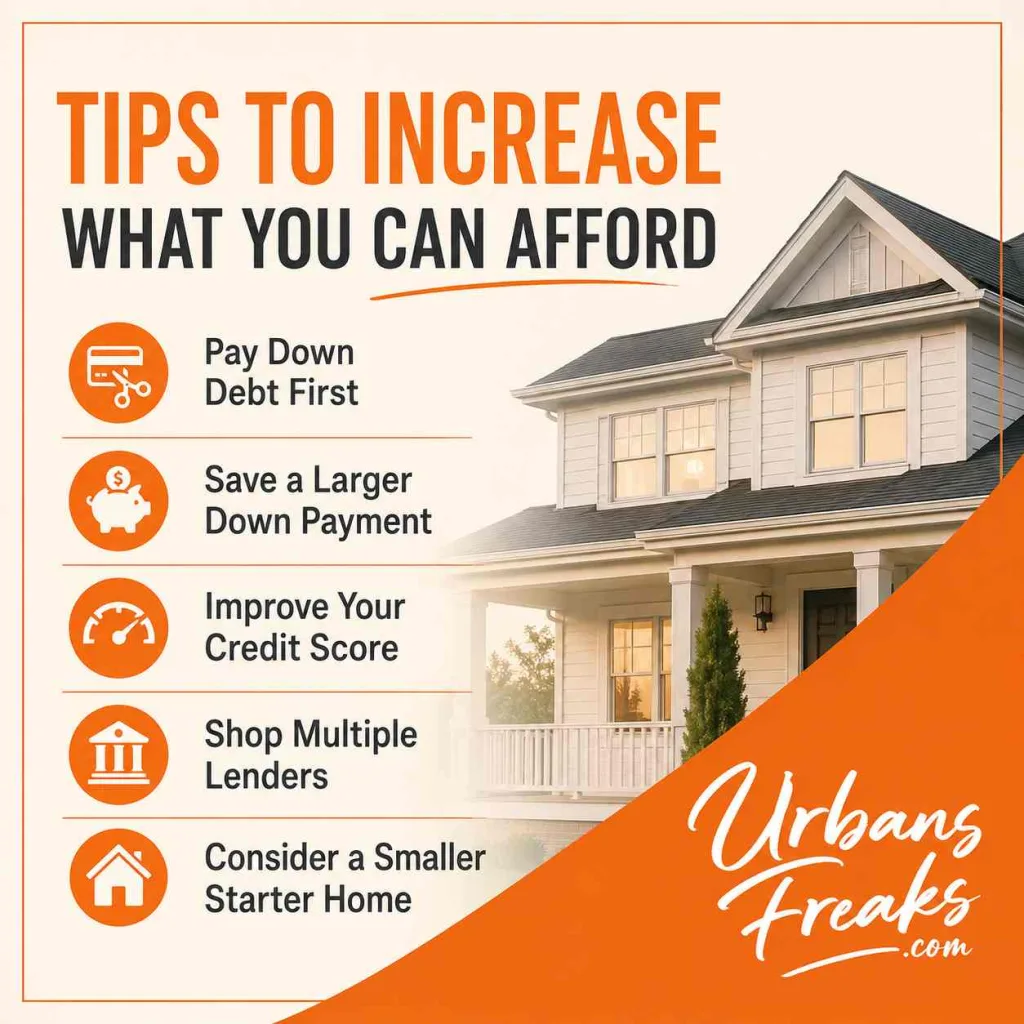
- Pay down debt first. Reducing your monthly obligations has one of the biggest effects on your buying power.
- Save a larger down payment. Even an extra $5,000-$10,000 makes a real difference.
- Improve your credit score. A 20-40 point jump can lower your rate and your monthly payment.
- Shop multiple lenders. Rates and fees vary, and comparing three to five lenders can save you thousands over the life of the loan.
- Consider a smaller starter home. Buying within your comfort zone, not your maximum approval, leaves room for life’s other expenses.
FAQs About buying house when I Make $70000 a Year
Is $250,000 too much house for a $70K salary?
Not necessarily. With a decent down payment, low debt, and a good credit score, $250,000 usually fits comfortably within the recommended budget.
What credit score do I need to buy a house on $70K a year?
Most conventional loans want at least 620, but 680 or higher will get you a better rate. FHA loans allow scores as low as 580.
How much should my down payment be on a $70K salary?
There’s no fixed number, but 5-10% is common, and 20% avoids PMI. FHA loans allow as little as 3.5%.
Can I Make $70000 a Year with student loans?
Yes, but your student loan payment counts toward your 36% debt limit, so it will lower your home price range. Check your actual DTI before house hunting.
Final Thoughts
So,I Make $70000 a Year, how much house can you afford? Realistically, plan for a home in the $220,000 to $320,000 range, with a monthly payment between $1,600 and $2,200. Your exact number depends on your debt, your down payment, your credit, and where you’re buying.
My advice, both as an architect and someone who’s watched clients move into homes at every budget level, is simple: if you’re thinking, “I Make $70000 a Year,” don’t chase the top of your approval range. If I Make $70000 a Year, I’d focus on buying comfortably rather than stretching your finances. And if I Make $70000 a Year, I’d put the money you save into making the home work better for how you actually live.