Smart Homes Techoelite: Complete 2026 Guide to Intelligent Connected Living

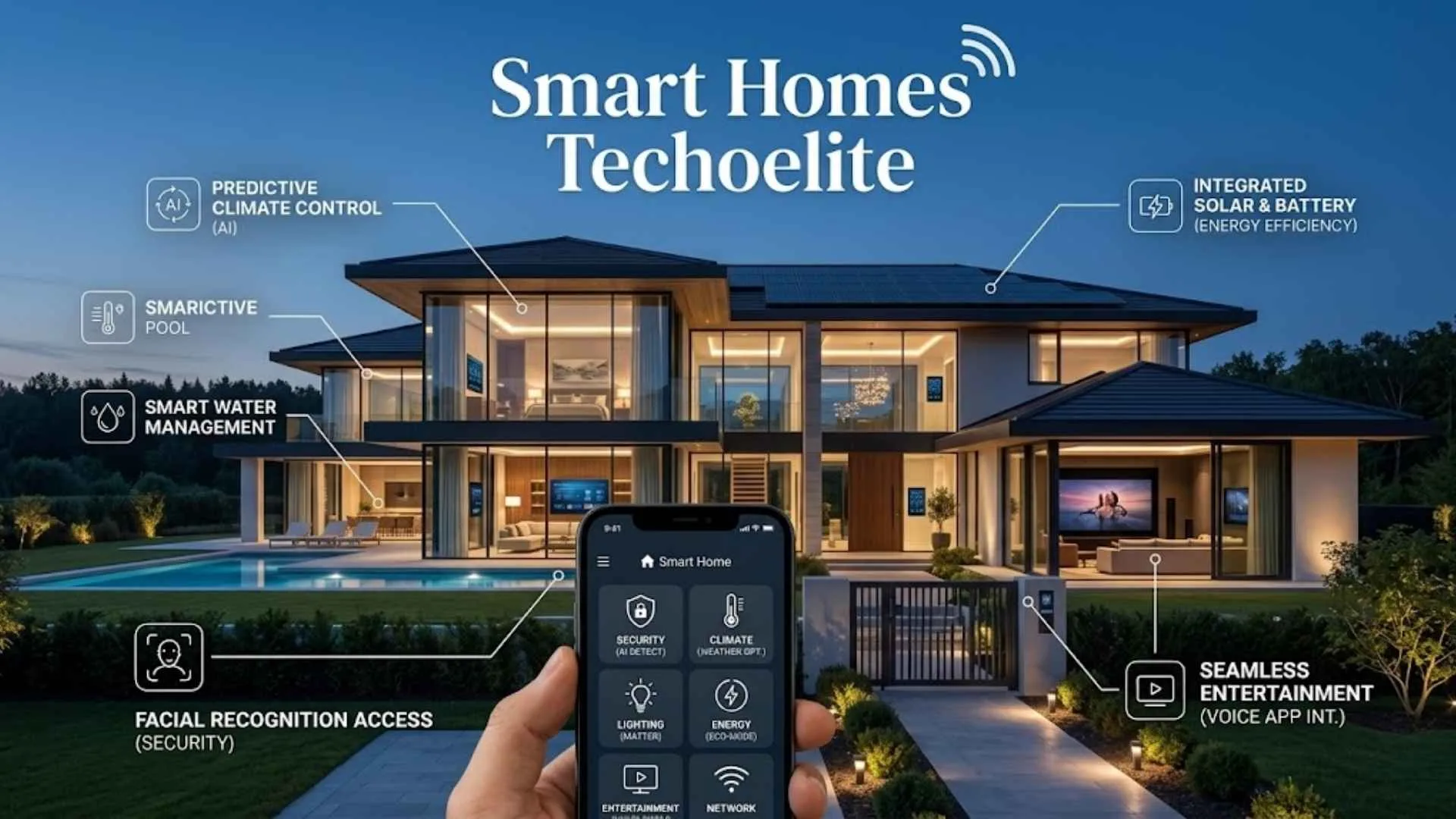
I have been designing homes professionally for over a decade. The question I get most often right now is not about finishes or layouts — it is about how to make a home smarter. Smart homes Techoelite keeps coming up in those conversations, and for good reason.
Security note: for choosing protection for everyday Windows devices, this Windows antivirus comparison is a useful related reference.
In 2026, the global smart home market is valued at $164.13 billion, with the USA accounting for roughly $54.53 billion of that figure alone (Mordor Intelligence, 2026). Over 77 million US households — more than half of all American homes — are already using at least one smart home device. This is no longer an enthusiast trend. It is mainstream infrastructure.
At UrbanSFreaks, we help homeowners make design decisions that are both beautiful and functional. Smart home automation sits squarely at that intersection. This guide covers everything — what the system does, how it works, what to buy first, and what mistakes will cost you time and money.
What Are Smart Homes Techoelite?
Smart homes Techoelite refers to a category of residential systems — and the brand framework around them — that bring together automation, IoT devices, and AI-assisted controls to manage a home’s core functions from one connected platform.
Rather than operating your lights, locks, climate, and security separately, everything runs through a unified hub. You can control it via smartphone, tablet, or voice assistant. The home stops being passive. It becomes responsive.
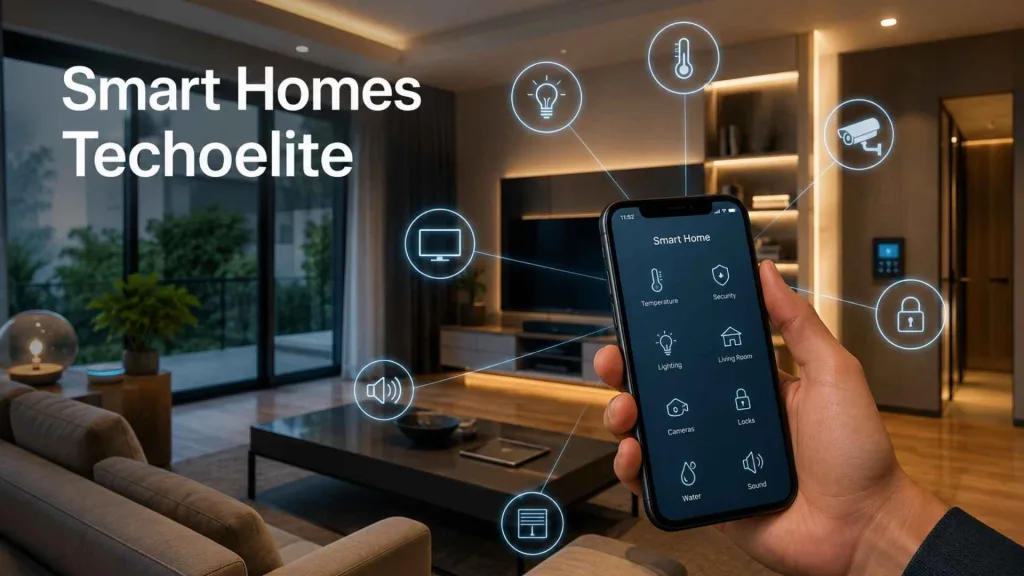
The core idea is not complicated: sensors collect data, devices communicate with each other, and automation rules do the work so you do not have to. What makes smart homes Techoelite relevant is how it packages that experience — with an emphasis on ease of setup, platform flexibility, and real-world usability across different property types.
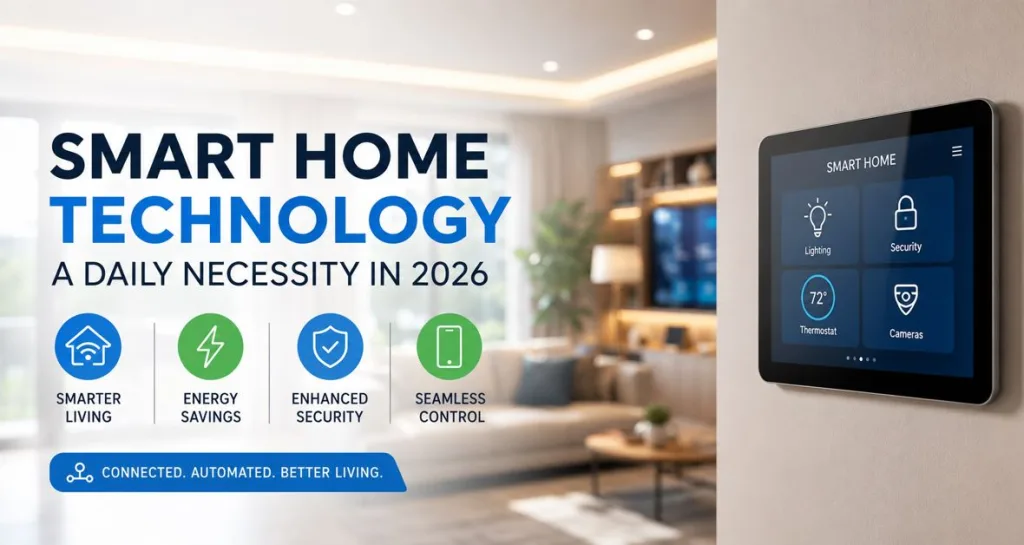
Why Smart Home Technology Is a Daily Necessity in 2026
The numbers explain the growth better than anything else:
| 2026 Data Point | Figure |
| Global smart home market value | $164.13 billion |
| US market share | $54.53 billion |
| US households using smart devices | 77 million (51.37%) |
| Global device shipments in 2026 | ~1.25 billion units |
| Smart home adoption growth (2024–2025) | 49% → 59% in US/Canada |
| Projected market value by 2031 | $311.22 billion |
Rising energy bills, remote work, and security concerns are pushing homeowners toward home automation. At the same time, affordable wireless devices and the Matter interoperability standard have made setup far easier than it was even three years ago.
Key Features of Smart Homes Techoelite
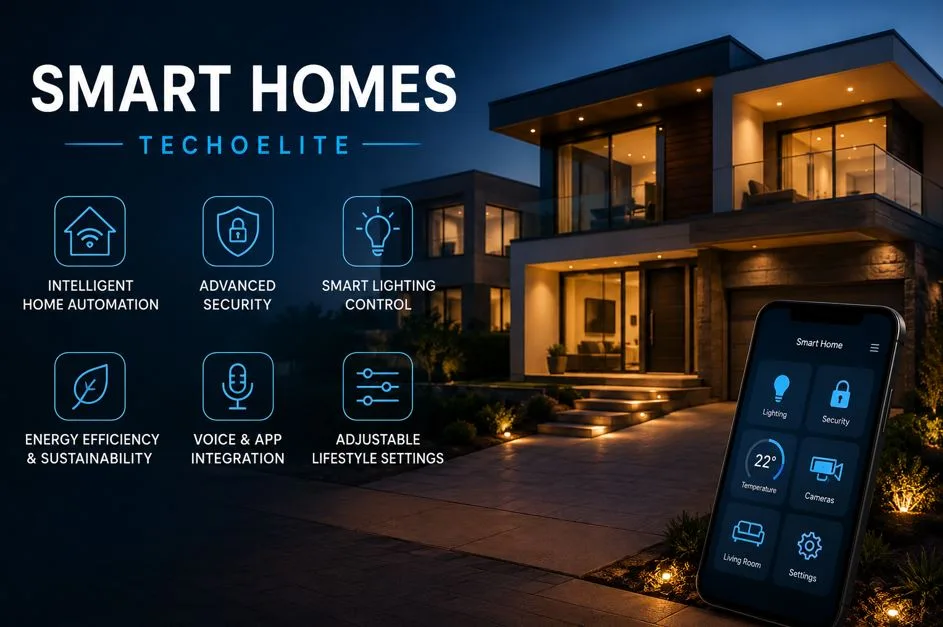
Intelligent Home Automation and Control
Programmable routines handle the repetitive work of running a house. Intelligent switches, motion detectors, and scheduled scenes respond to your patterns automatically. Lights come on when you enter a room. The thermostat adjusts before you wake up. Once configured, it simply runs.
Advanced Security Solutions
A properly built system includes CCTV cameras, smart locks, video door bells, and intrusion detection systems working as one network. Motion triggers activates cameras, sends a phone alert, and floods exterior lights — simultaneously. For vacation homes and rental properties, remote access and keyless entry solve real operational problems.
Smart Lighting and Ambiance Control
Smart lighting reduces energy waste while giving you full control over brightness, color temperature, and schedules through an app or voice assistant. Scenes can be set for movies, work-from-home focus, dinner, or sleep — and switched with a single tap.

Energy Efficiency and Sustainability
Smart thermostats, automated blinds, and energy usage monitors are the core tools for eco-responsible living. According to the U.S. Department of Energy, a properly programmed thermostat reduces heating and cooling costs by up to 10% annually. Connected thermostats can actually save 10–23% by learning occupancy patterns.
Voice and App Integration
Smart homes Techoelite systems work natively with Amazon Alexa, Google Assistant, and Apple Siri. Voice app integration is built in — not patched on. Control your home hands-free or through an app from anywhere in the world.
Adjustable Lifestyle Settings
Customized scenes change your entire home environment with one command. Working from home, hosting guests, winding down for the night — each has a different lighting, temperature, and alert profile. Once you have this, manual adjustment feels slow and clumsy.
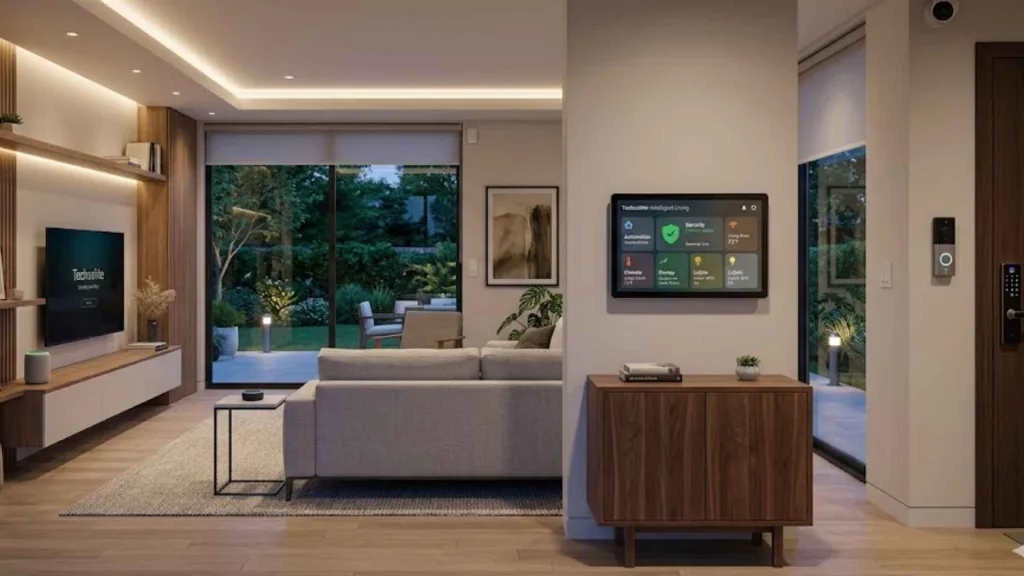
How Smart Homes Techoelite Actually Work?
Understanding the mechanics helps when you are evaluating or planning a system.
- Sensors collect data — motion, temperature, light, door contact, sound
- Devices communicate — through Wi-Fi, Zigbee, Z-Wave, Bluetooth, or Matter
- A hub or cloud platform processes inputs — and triggers automation rules
- You manage everything — through an app, voice assistant, or control panel
The most important infrastructure decision is network quality. A weak Wi-Fi signal is the single most common cause of unreliable smart home performance. Before buying any devices, assess your network coverage first. For larger homes, a mesh Wi-Fi system eliminates dead zones.
Matter-compatible devices are now the standard to target. Backed by Apple, Google, Samsung, and Amazon, Matter removes brand barriers and simplifies setup across all major ecosystems.
Best Devices for Building Smart Homes Techoelite Systems
Choosing the right devices from the start prevents compatibility problems later. Popular ecosystems — Amazon Alexa, Google Home, and Apple HomeKit — all support broad device ranges in 2026.
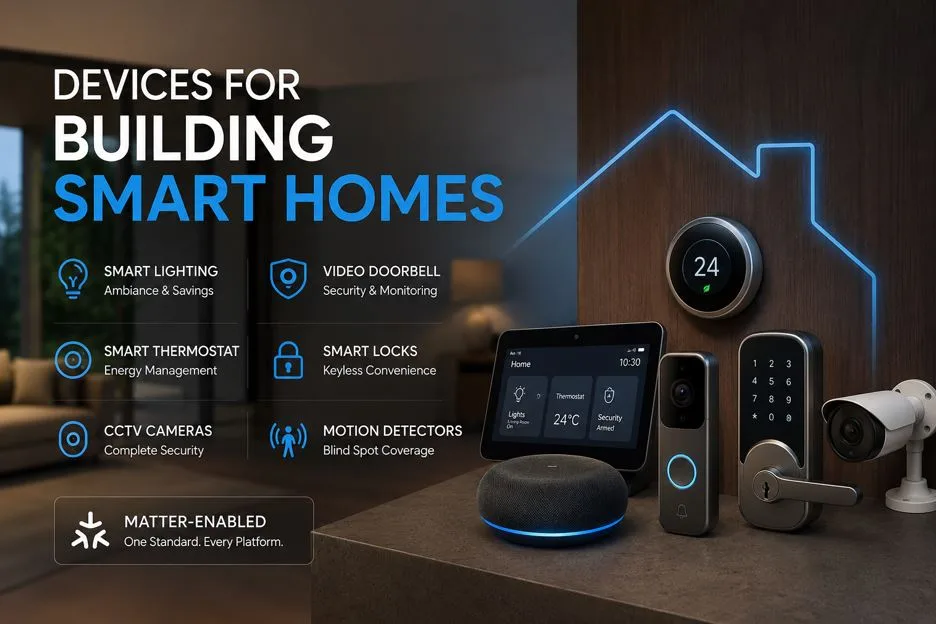
| Device Category | Best Use Case | Recommended Start? |
| Smart lighting systems | Ambiance, energy savings | ✅ Yes — easiest entry point |
| Video doorbell | Security, visitor monitoring | ✅ Yes — immediate value |
| Smart thermostat | Energy management | ✅ Yes — pays for itself |
| Smart locks | Keyless access, rental management | ✅ Yes |
| CCTV cameras | Full perimeter security | After basics are set |
| Motion detectors | Blind spot coverage | After basics are set |
| Automated blinds | Temperature regulation | Expand phase |
| Energy usage monitors | Consumption tracking | Expand phase |
| Smart speakers/hubs | Voice control center | Foundational |
| Intelligent switches | Retrofit automation | Retrofits only |
Matter-enabled devices are the safest long-term choice because they work across all major platforms without lock-in.
Security Systems and Connected Protection
Security is consistently the top reason homeowners invest in smart home automation. In 2026, smart security cameras are growing at 18.32% CAGR — the fastest-growing smart home segment — driven by AI-powered detection features.
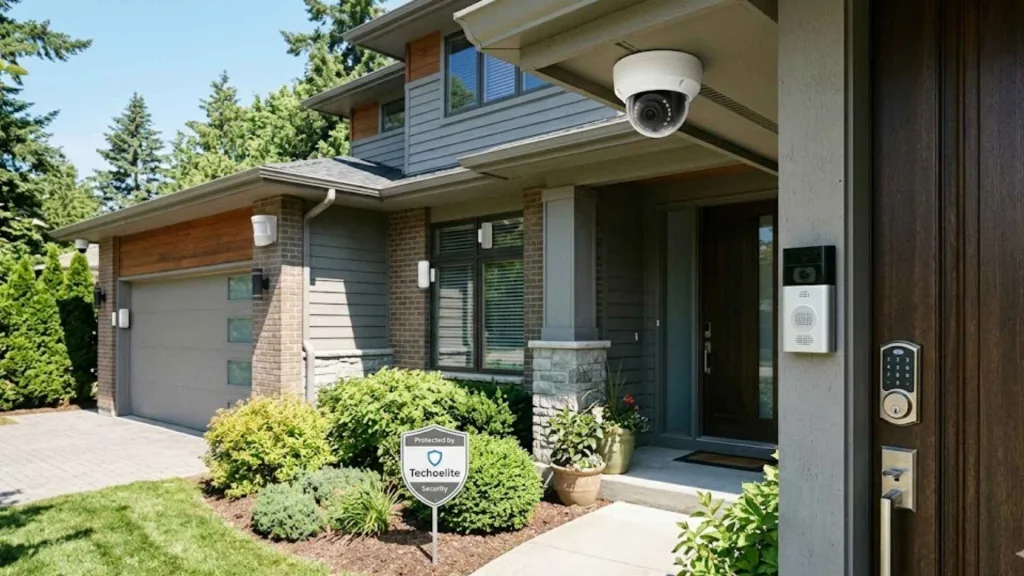
A complete Techoelite-style security setup includes:
- Smart locks — keyless entry with audit logs and remote lock/unlock
- CCTV cameras — motion-activated recording, cloud storage access
- Video door bells — two-way audio, instant phone alerts
- Intrusion detection systems — window and door sensors, tamper alerts
- Motion detectors — secondary coverage for garages, gardens, blind spots
When these work as one system rather than separate gadgets, the response is layered and automatic. That is the difference between a collection of devices and a genuine security network.
Energy Efficiency and Cost Reduction
The retrofit segment — upgrading existing homes with smart energy devices — held 51.18% of the smart home market share in 2026. That tells you most people are adding smart energy tools to homes they already live in, not just new builds.
The real savings come from:
- Smart thermostats learning occupancy patterns and cutting 10–23% off heating and cooling costs
- Automated blinds managing solar heat gain without manual input
- Energy usage monitors making hidden consumption visible so you can act on it
- Smart plugs eliminating standby power drain from appliances
The US government’s Affordable Home Energy Shot program targets a 50% reduction in household energy costs by 2030 — and connected home devices are central to how that goal gets reached. Eco-responsible living is no longer just an aspiration; it is a financial strategy.
Applications: Property Types Where This System Works
Smart homes Techoelite solutions scale across every property type. This matters because the right configuration looks different depending on what you own.
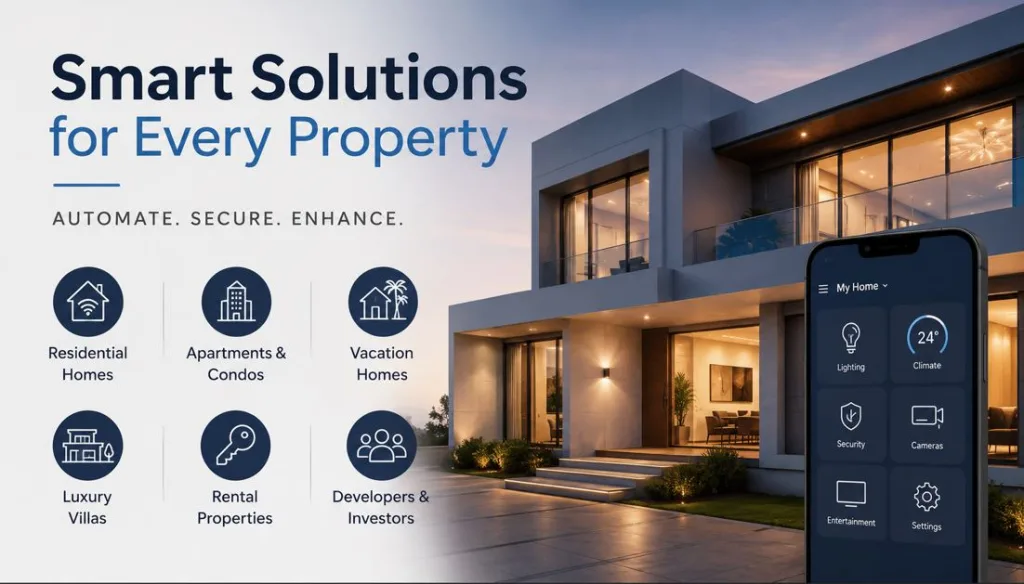
- Residential homes — full-home automation: zone climate control, lighting scenes, security, and entertainment
- Apartments and condos — wireless devices requiring zero structural changes; easy to install and remove
- Vacation homes — remote access, automated security, and energy management between visits
- Luxury villas — deep integration including home theater, outdoor entertainment, and advanced surveillance
- Rental properties — smart locks for keyless tenant access, energy monitoring, and remote management
For property developers and real estate investors, smart home features are now an active selling point. The tech-savvy buyer segment treats automation as standard infrastructure, not a premium add-on.
Pros and Cons of Smart Home Technology
Before recommending any system to a client, I walk them through an honest list. Here is mine.
Advantages
- Automates repetitive daily tasks, reducing manual effort and decision fatigue
- Strengthens security with real-time alerts, remote monitoring, and layered responses
- Reduces energy waste through intelligent scheduling and usage tracking
- Gives complete remote control over all home systems from anywhere
- Supports eco-responsible living through sustainability-focused automation
- Increases property resale value — modern buyers actively prefer smart-enabled homes
Limitations
- Higher upfront cost than traditional non-connected setups
- Requires stable, fast internet — connectivity problems cascade across all devices
- Mixing incompatible ecosystems creates integration headaches
- Cybersecurity demands active management: strong passwords, network separation, firmware updates
- Learning curve for first-time users; some platforms take time to configure well
Best Practices for Individual Homeowners
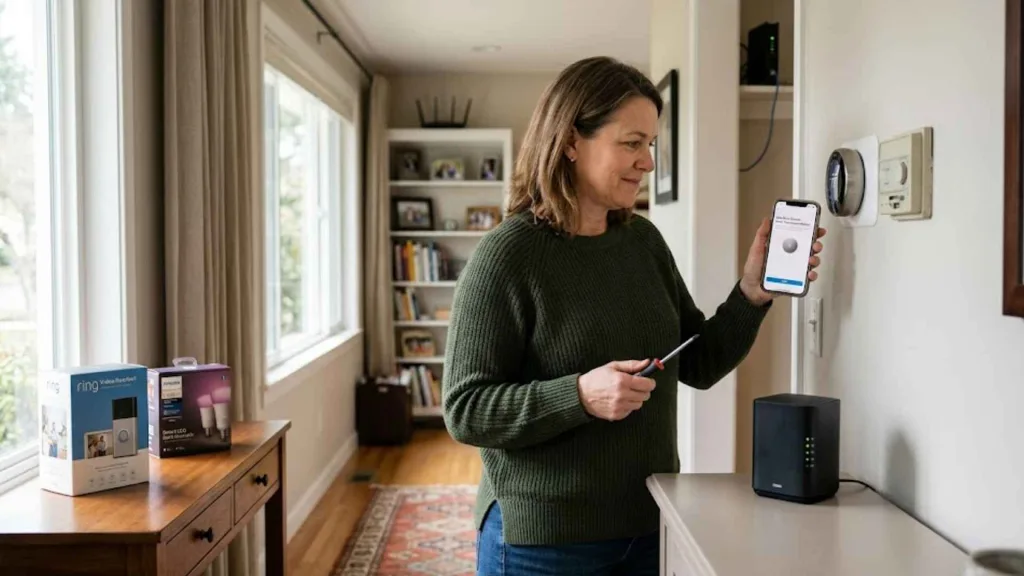
Start with three or four practical devices before expanding. Smart lighting, a video doorbell, and a smart thermostat cover the biggest daily gains for the lowest cost. Get your Wi-Fi coverage right first — every smart device depends on it. Prioritize Matter-compatible devices so you are not locked into one ecosystem as your system grows.
Best Practices for Technical Teams and Installers
Technical teams handling larger deployments should focus on network architecture before device selection. Standardized ecosystems cut maintenance overhead. Network segmentation — isolating smart devices from guest or work traffic — is a critical security step. Matter-compatible infrastructure is becoming the default specification for professional installations in 2026 because it removes long-term compatibility risk.
Common Mistakes New Buyers Should Avoid
From real installations across residential homes, apartments, and luxury villas, these are the patterns I see most often:
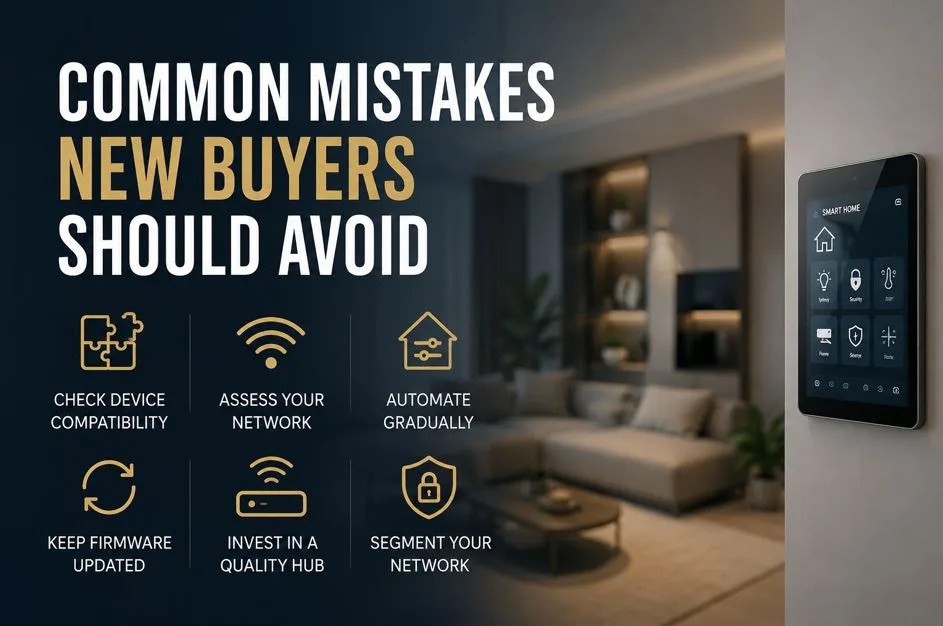
- Buying incompatible devices from multiple ecosystems without checking integration support
- Skipping network assessment — weak Wi-Fi will undermine every device
- Over-automating too fast — homes should feel natural, not like a tech demo
- Ignoring firmware updates — outdated software is the primary cybersecurity vulnerability
- Cheap hub devices — the hub is the brain; cutting costs here hurts the whole system
- No network segmentation — smart devices should be on a separate network from personal computers
The Future of Smart Homes Techoelite
The smart home market is projected to grow from $164 billion in 2026 to $311 billion by 2031 — doubling in five years. The direction is away from reactive systems toward predictive ones.
AI-powered climate systems will factor in weather forecasts, occupancy patterns, and electricity pricing. Health-focused environments will monitor air quality, humidity, and sleep conditions. Predictive energy redistribution will shift consumption automatically to off-peak rate windows.
The Consumer Technology Association tracks smart home standards and adoption trends — a useful reference if you want to follow where the industry is heading. For anyone building or renovating now, the best move is a future-proof base: Matter-compatible devices, robust mesh networking, and a platform with strong ongoing support.
Conclusion
Smart homes Techoelite represents the practical future of residential living — homes that think, respond, and adapt rather than just shelter. The combination of home automation control, advanced security solutions, energy efficiency sustainability, and voice app integration delivers measurable improvements to daily life, not just novelty.
With the US market at $54 billion in 2026 and growing, the question is no longer whether smart home technology makes sense. It is how to build your system the right way — with the right devices, on a solid network foundation, using a smart-enabled solution designed to scale with you.
For more expert-backed Home Decor guidance and interior design ideas grounded in real architectural experience, browse the full library at UrbanSFreaks.