
Inventive LWMFCrafts: DIY Ideas for Kids & Families

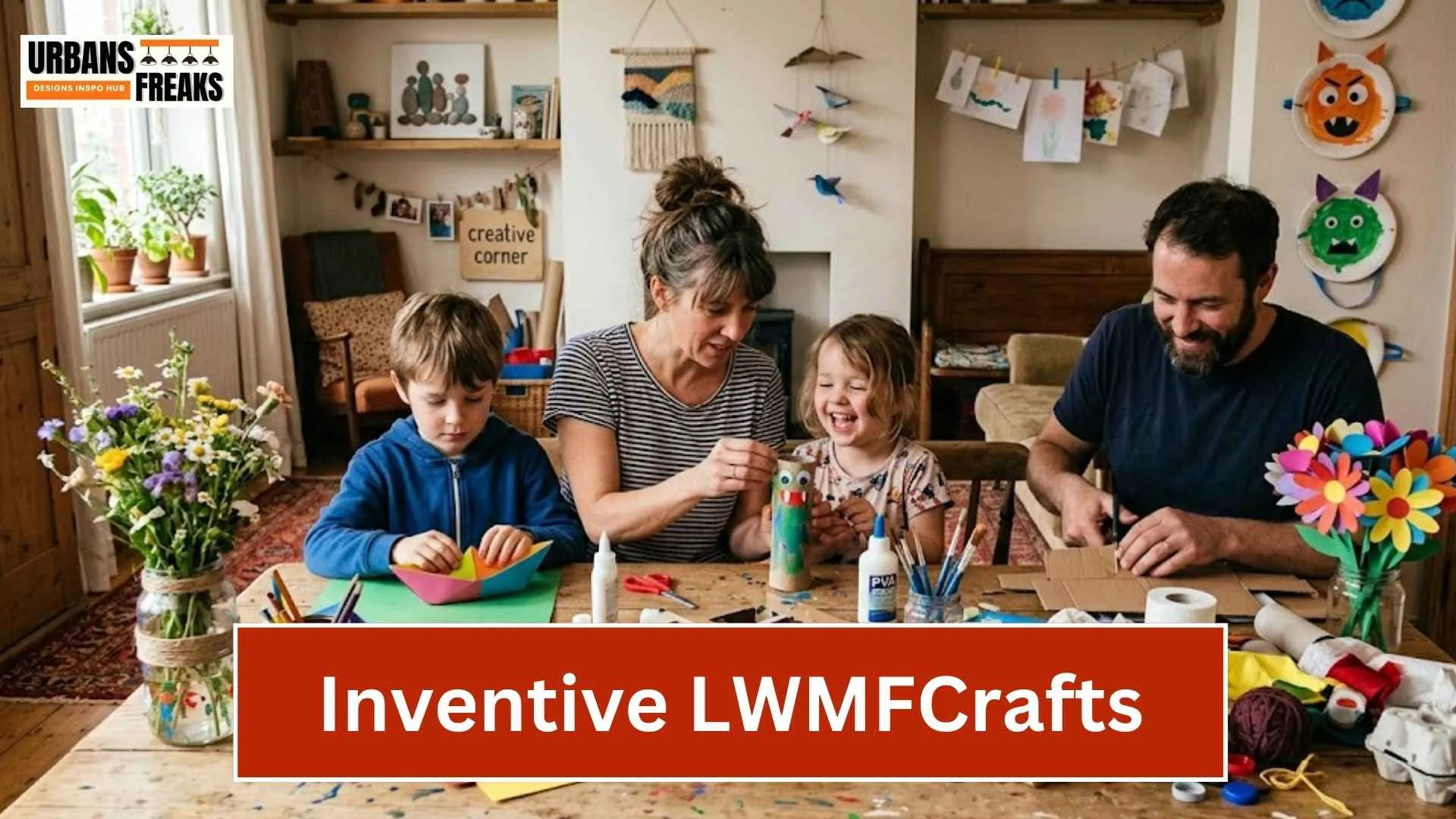
I’ve spent years designing homes where families actually live — not just look good in photographs. And one thing I’ve learned from working in real spaces is that the most alive, most personal rooms always have something handmade in them. That’s what drew me to the world of Inventive LWMFCrafts.
Documentation workflow note: when documentation workflow matters, this Snagit scrolling capture is a practical reference.
At UrbanSFreaks, we think about how spaces shape daily life. Craft activities are part of that picture — they change how families use their homes, how children grow inside them, and how connected everyone feels at the end of the day.
This guide covers every important angle: what LWMFCrafts is, why it matters in 2026, the best project categories, step-by-step methods, essential supplies, tips for making sessions work, and how handmade crafts connect directly to better home environments.
What Is Inventive LWMFCrafts?
Inventive LWMFCrafts is a creative crafting concept built around one simple idea: use what you have at home to make something meaningful. No expensive kits, no complicated instructions — just imagination, basic materials, and a bit of time together.
The LWMFCrafts approach originated from the LookWhatMomFound community, which has long championed family-friendly, accessible creativity. The “inventive” element takes it further — encouraging original thinking, recycling waste material, and turning everyday objects into handmade crafts with real purpose.
What sets it apart from generic craft guides is the focus on three things at once: developing children’s skills, reducing screen time, and building parent-child bonds in a natural, pressure-free way.
Why Creative Indoor Activities Need to Happen More in 2026
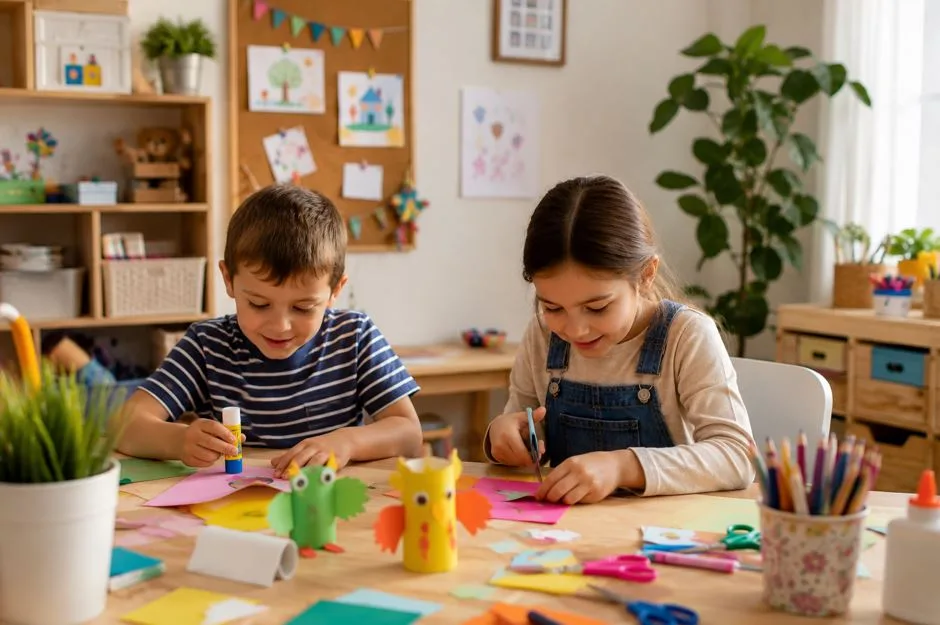
Screen time has become one of the most talked-about concerns among parents today — and for good reason. Children who spend extended hours on devices often show reduced attention spans, lower creativity, and fewer social skills. Easy crafts LWMFCrafts offer a simple, enjoyable alternative.
From my work in sustainable design and home environments, I’ve observed how the physical spaces around us affect how we behave in them. A home with a dedicated creative corner — even a small one — naturally invites hands-on activity. That corner becomes a magnet for imagination.
Craft activities support children’s mental development, physical development, and emotional growth all at once. They build hand-eye coordination through cutting and folding, problem-solving skills through figuring out how to assemble things, and confidence through completing something they made themselves.
Core Benefits of LWMFCrafts at a Glance
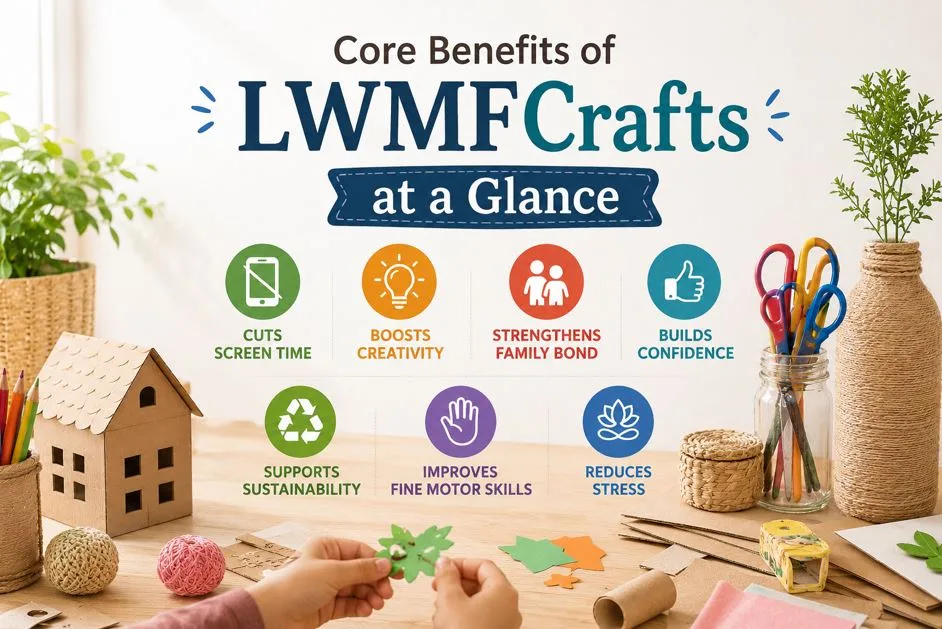
| Benefit | What It Builds | Who Benefits Most |
| Cuts screen time | Focus and self-direction | Children and teens |
| Boosts creativity | Original thinking and imagination | Kids aged 3–14 |
| Strengthens family bond | Trust, communication, shared memory | Parents and children |
| Builds confidence | Pride in completed work | All ages |
| Supports sustainability | Recycling habits and resourcefulness | Families and schools |
| Improves fine motor skills | Hand-eye coordination, dexterity | Toddlers through age 10 |
| Reduces stress | Calm focus and emotional regulation | Adults and children |
Turning Waste Material into Creativity
One of the most powerful aspects of Inventive LWMFCrafts is its relationship with recycling and reuse. Old cardboard boxes become photo frames. Glass jars become decorated vases. Newspaper becomes papier-mâché. Fabric scraps become wall hangings. Nothing needs to be bought before creativity can start.
This approach teaches children something more valuable than any single craft project: that resourcefulness is a skill. Working within limits — using only what’s available — is exactly how the best design thinking works. It trains the brain to look at an object and ask “what else could this be?” rather than “what can I buy?”
In a time when sustainability is no longer optional but essential, teaching children to reuse and repurpose waste material at home is one of the most practical lessons a family can pass on.
Essential Supplies Checklist for LWMFCrafts Sessions
You don’t need much. The whole point is to use what’s already around. That said, keeping a small collection of basics makes sessions smoother and more likely to happen spontaneously.
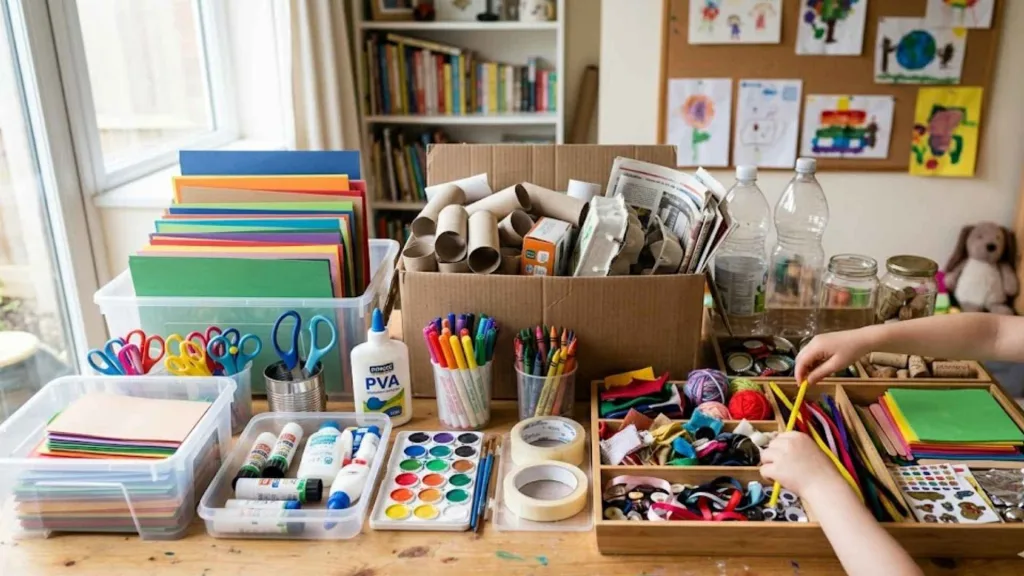
Basic craft supplies to keep on hand:
- Construction paper and cardstock in mixed colours
- Child-safe scissors and one pair of adult scissors
- Glue sticks and PVA glue
- Washable markers, crayons, and basic paint
- Tape — both clear and masking
Collected recyclables (start a box for these):
- Cardboard tubes and boxes
- Old magazines and newspapers
- Glass jars and plastic bottles
- Fabric scraps, old buttons, and ribbons
- Bottle caps, corks, and egg cartons
Optional extras that elevate projects:
- Googly eyes and pipe cleaners
- Felt pieces and yarn scraps
- Foam sheets and craft sticks
- Small bells, stickers, and foil
Store everything visible. Clear containers or open trays work better than closed boxes — children create more when they can see what’s available.
Popular Categories of Inventive LWMFCrafts Projects
The range of what counts as an LWMFCrafts project is wider than most people expect. It’s not limited to paper crafts for small children. It covers home décor, educational activities, seasonal projects, and more — all built around the same accessible, inventive approach.
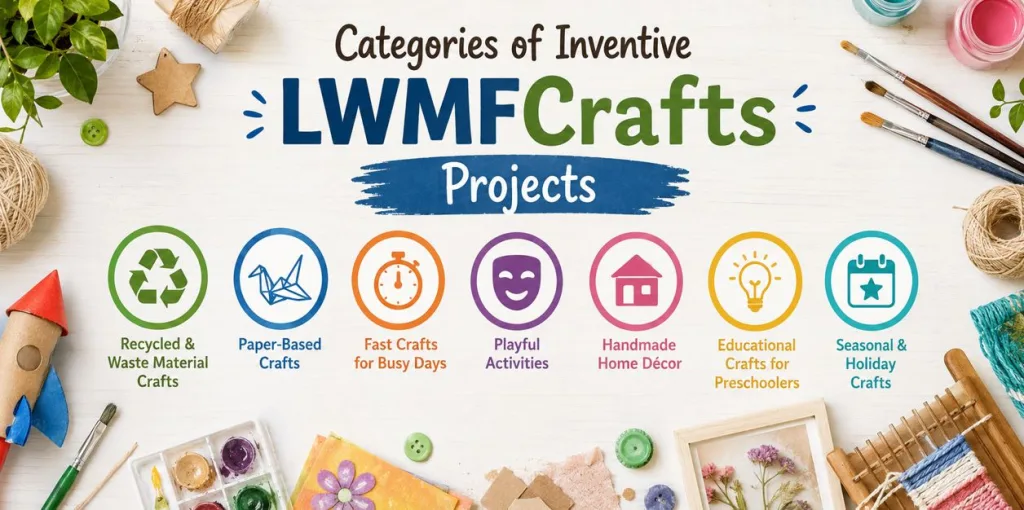
1. Recycled and Waste Material Crafts
This is the category that defines the inventive side of LWMFCrafts most clearly. Nothing is bought specifically for the project — everything comes from what would otherwise be thrown away. Cardboard becomes photo frames. Jars become candle holders. Tin cans become pencil holders or planters.
The appeal isn’t just environmental. Working with found materials forces creative thinking in a way that blank, perfect craft sheets don’t. Children learn to adapt, to problem-solve, and to see value where others see rubbish.
- Cardboard photo frames — cut, paint, and personalise
- Decorated glass jars — wrapped with twine, painted, or mosaic-tiled
- Paper flowers — layered tissue, magazine pages, or newspaper
- Tin can organisers — painted and labelled for desk or kitchen use
- Recycled showpieces — wine corks, egg cartons, and bottle caps combined into sculptures
2. Paper-Based Crafts for All Ages
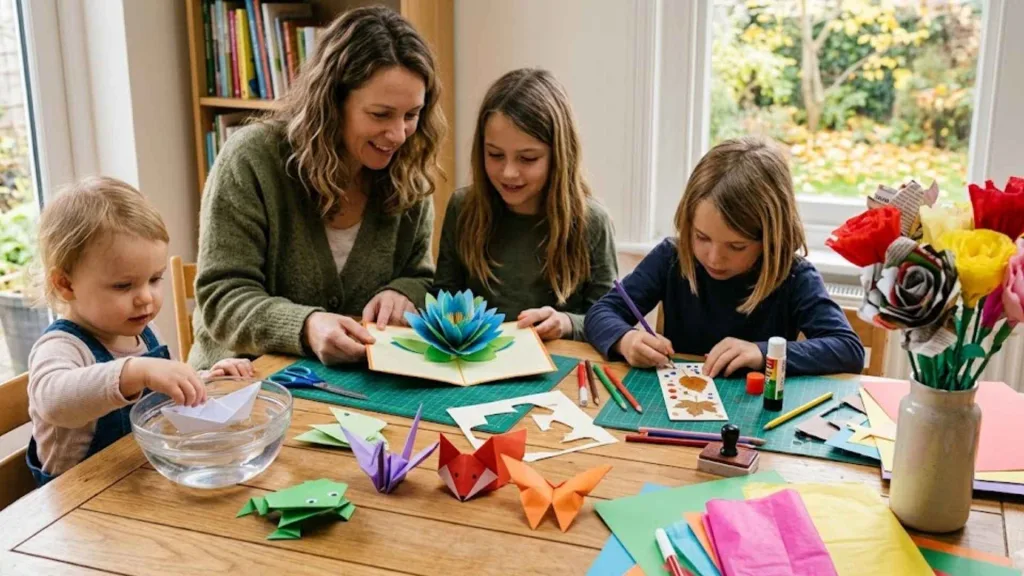
Paper is the most accessible material in any home, and the LWMFCrafts approach uses it at every level — from simple tearing and sticking for toddlers to origami animals and intricate paper boats for older children.
- Origami animals — cranes, frogs, foxes, and butterflies
- Paper boats — fold and test in a shallow bowl of water
- Pop-up greeting cards for birthdays and family occasions
- DIY bookmarks with pressed leaves, doodles, or stamps
- Paper flower bouquets from tissue, crepe, or magazine pages
3. Fast Crafts LWMFCrafts for Busy Days
Not every session has time to breathe. Fast crafts LWMFCrafts are specifically designed for 10–20 minute windows — after school, on a Tuesday evening, or when a child announces they’re bored with ten minutes before dinner.
- Sock puppets — a sock, two googly eyes, a felt mouth
- Vegetable stamping — cut a potato or celery base, dip in paint
- Handprint greeting cards — press, dry, write a message
- Simple friendship bracelets from yarn or embroidery thread
- Collage tiles from magazine cut-outs on small card squares
4. Playful Activities LWMFCrafts — Crafts That Become Games
This is the angle that TheMasterCraft and LookWhatMomFound have championed most effectively, and it’s worth taking seriously. Playful activities LWMFCrafts aren’t just things children make — they’re things children make and then use as part of play.
- Monster emotion masks — paper plates, paint, and elastic; then use them to act out and guess feelings
- Treasure hunt maps — hand-drawn on aged paper bags; hide real small prizes where the X marks go
- Magic wand workshop — dowel sticks, ribbon, and a foam star; then perform a family magic show
- Story stones — smooth pebbles painted with simple images; roll them and build a spontaneous story
- Superhero capes — fabric offcuts with velcro closures; design the symbol and complete “heroic missions”
The playful twist matters. A craft that becomes a game holds a child’s attention for an hour instead of ten minutes.
5. Handmade Home Décor Crafts
This is where the Home Decor side of LWMFCrafts becomes genuinely exciting. Families can make pieces that belong in any well-designed room — not school-project quality, but things worth displaying.
- Painted mason jars as candle holders or vases
- Pebble art on small canvas boards for a gallery wall
- Handmade wall hangings with driftwood and yarn
- Pressed botanical frames — dried flowers or leaves behind glass
- Woven paper or fabric placemats in complementary tones
The key is guidance and intention. When children know the goal is something the family will actually keep and display, they put more care into the work.
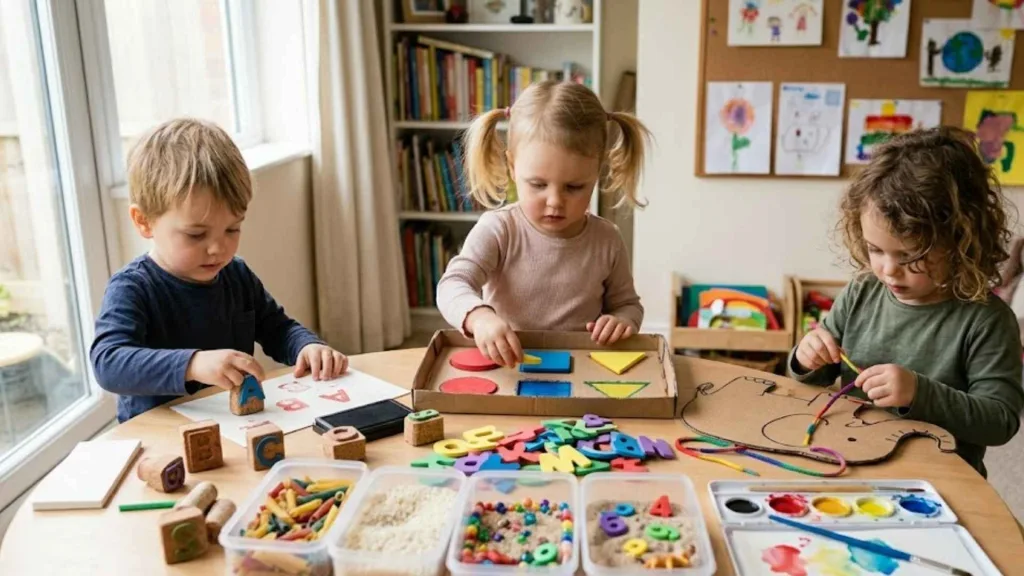
6. Educational Crafts for Preschoolers
Invention crafts for preschoolers look like pure fun from the outside. Inside, the learning is significant — shapes, colours, counting, cause and effect, textures, and early literacy all woven into activity.
- Shape sorting trays built from cardboard dividers
- Colour mixing experiments on watercolour paper
- Sensory bins — sand, dried pasta, or rice with small objects hidden inside
- Lacing cards cut from thick cardboard with holes punched around the edge
- Letter stamping with foam shapes glued to bottle corks
7. Seasonal and Holiday Crafts
Seasonal projects are among the most searched and most loved LWMFCrafts content because they give families a reason to create together at specific, memorable moments in the year.
- Spring: pressed flower frames, paper butterflies, painted pots
- Summer: tie-dye fabric, shell mobiles, outdoor nature prints
- Autumn: leaf rubbings, pumpkin painting, pinecone animals
- Winter/Christmas: handmade ornaments, advent calendar pouches, snow globe jars
Seasonal crafts also solve a common parenting problem: what to do with children during school holidays when everyone is home and no one has a plan.
How to Make Playful Activities LWMFCrafts Style: A Step-by-Step Approach
The method behind making any LWMFCrafts project work — especially the playful activities — follows a consistent pattern. It’s not complicated, but skipping steps is why most craft sessions fizzle out before they finish.
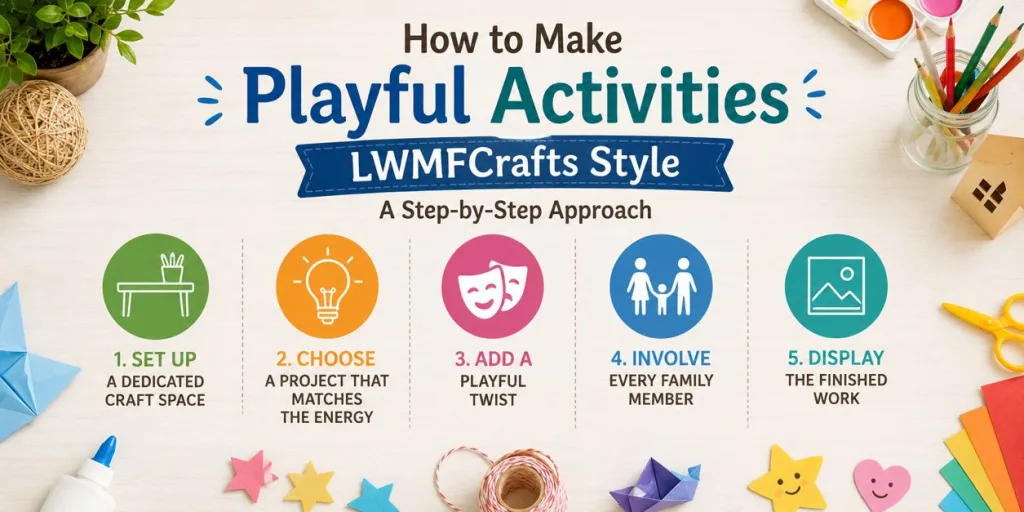
Step 1: Set Up a Dedicated Craft Space
It doesn’t have to be a full room. A tray, a corner of the kitchen table, or a low shelf with visible supplies is enough. The critical factor is visibility — children create spontaneously when materials are in sight, and rarely when they’re locked in a cupboard.
Cover the work surface before starting. Newspaper, an old tablecloth, or a silicone mat all work. Removing the anxiety about mess makes everyone more relaxed and more creative.
Step 2: Choose a Project That Matches the Energy
Read the room before choosing a project. On a high-energy afternoon, go physical — building, cutting, assembling. On a quieter day, choose something more focused like origami, pressed flowers, or story stones. Fast crafts LWMFCrafts fill short windows. Bigger builds work on unhurried weekend mornings.
Never force a single outcome. A child who goes off-script mid-project and invents something different is doing exactly what the inventive approach is designed to unlock.
Step 3: Add a Playful Twist
This is what separates LWMFCrafts from regular craft guides. Every project should have a “what happens after” built in. The mask becomes a game. The map leads to a real treasure. The cape means a mission. Adding this layer doubles the time children stay engaged and makes the whole experience feel more like play than art class.
Step 4: Involve Every Family Member
Family bonding through crafts works best when everyone has a real role, not when one person creates and others watch. Even a very small child can tear paper, choose colours, or hand over supplies. Adults who sit beside rather than hovering over change the whole atmosphere of the session.
The American Academy of Pediatrics has consistently noted that shared creative play between parents and children is one of the strongest contributors to healthy emotional development and secure attachment.
Step 5: Display the Finished Work
This step is underrated. When a child’s finished craft goes on the wall, a shelf, or the fridge door, it sends a clear signal: your work has value. In my years of interior design work, I’ve found that the most emotionally resonant objects in any home are almost always handmade.
A simple rotating display — a string with clips, a small pinboard, or a shelf dedicated to rotating pieces — keeps the motivation alive and gives every project a purpose beyond the making of it.
Bonding Between Parents and Children Through Crafts
This is the dimension that all competitors touch on but rarely go deep enough with. Crafting together isn’t just a pleasant afternoon activity — it creates the kind of low-pressure, side-by-side time where children actually open up.
When a child is focused on cutting or painting, the conversation that happens alongside it is unguarded. Parents hear things they wouldn’t hear at the dinner table or during a structured check-in. The shared project gives both people something to focus on other than each other, which paradoxically makes the connection easier and more genuine.
In 2026, with family schedules more fragmented than ever, these small pockets of intentional creative time matter more than most families realise until they start making them a habit.
Mental and Physical Development Through Craft Activities
Every craft activity develops multiple skills simultaneously, which is why child development specialists recommend them so consistently.
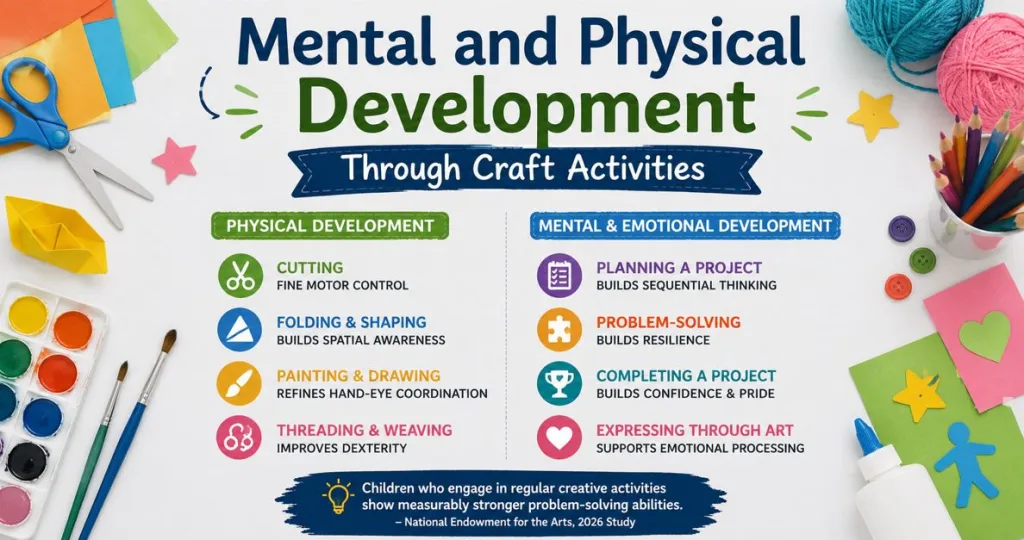
Physical development:
- Cutting develops fine motor control and hand strength
- Folding and shaping builds spatial awareness
- Painting and drawing refines hand-eye coordination
- Threading and weaving improves dexterity
Mental and emotional development:
- Planning a project builds sequential thinking
- Problem-solving when something doesn’t work builds resilience
- Completing a project builds confidence and pride
- Expressing through art supports emotional processing
Children who engage in regular creative activities show measurably stronger problem-solving abilities than those who don’t, according to a 2026 study from the National Endowment for the Arts.
Adding Beauty to the Home with Handmade Crafts
The crafts children make don’t have to stay in a drawer. Properly framed, displayed, or incorporated into a room, handmade crafts home décor adds more warmth and personality to a space than most purchased décor items can.
A cluster of painted jars on a windowsill catches light beautifully. A small gallery wall of a child’s best work makes any hallway feel personal. A handmade wall hanging in the living room tells a story no furniture store item ever could.
From an architectural standpoint, the most enduring interior spaces I’ve worked on are always the ones where handmade and personal elements are integrated thoughtfully. Handmade crafts home décor isn’t a compromise — it’s often the most distinctive thing in the room.
Practical Tips to Make Every Craft Session Work
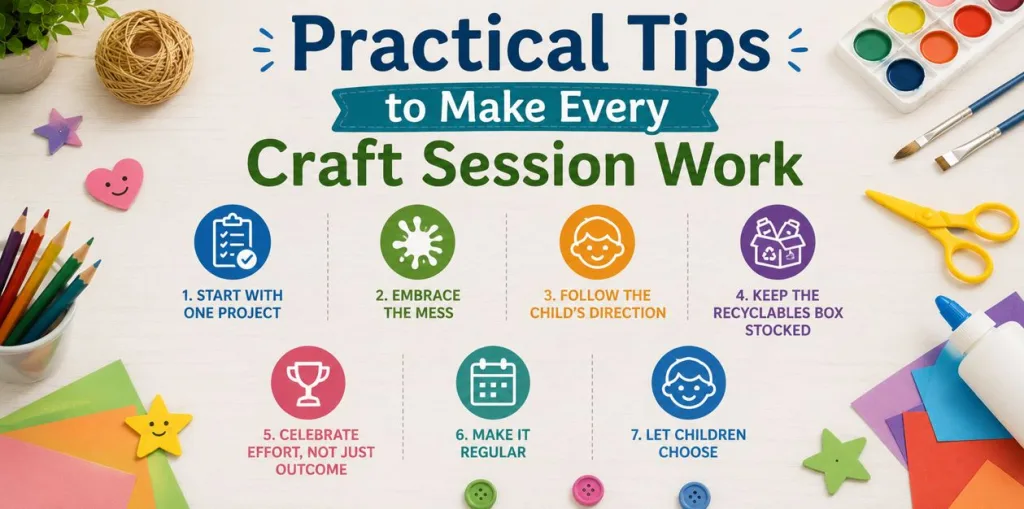
- Start with one project. Over-planning kills momentum before it starts.
- Embrace the mess. Pre-covered surfaces make cleanup easy and remove creative anxiety.
- Follow the child’s direction. If they deviate from the plan, follow them — that’s inventive thinking happening in real time.
- Keep the recyclables box stocked. A full box of collected materials is better than any craft kit.
- Celebrate effort, not just outcome. “I love how you figured out that part” builds more confidence than “that looks pretty.”
- Make it regular. Even one session a week compounds into real creative habit over a school term.
- Let children choose. Giving children ownership over which project they do increases engagement every time.
How Inventive LWMFCrafts Connects to Sustainable Home Design
As an architect who has spent years working on sustainable design projects, I think about materials differently than most people. And the LWMFCrafts approach to repurposing waste material is genuinely aligned with good design principles.
Using reclaimed materials — even at the small scale of a craft project — teaches children that resources have ongoing value. It builds the mental habit of looking for second uses before reaching for new purchases. That habit, formed early and reinforced regularly through playful activities, becomes part of how a person thinks about their environment for life.
Inventive LWMFCrafts isn’t just a creative platform. In a small but meaningful way, it’s a sustainability education programme that happens to be genuinely enjoyable.
Final Thoughts
Inventive LWMFCrafts does something that very few parenting or home design frameworks manage at the same time: it’s genuinely practical, genuinely enjoyable, and genuinely beneficial — for children’s development, for family connection, and for the look and feel of the home itself.
The homes I’ve designed that feel the most alive are always the ones where people actually make things inside them. Handmade objects carry a story. A recycled jar turned into a vase, a child’s paper boat mounted in a frame, a woven wall hanging made on a Sunday afternoon — these things give a house its character in a way nothing purchased ever quite can.
Start with what you have. Pick one project. Let the process go where it wants to go. That’s the whole philosophy — and it’s a habit worth building for the long term.