People love to say the starter home is dead. It isn’t. It just got older, a little scruffier, and in Fort Worth it never wandered very far from the middle of town.
Prices jumped across North Texas over the last several years, and a lot of first-time buyers quit before they ever stepped inside a house. That’s disappointing. Fort Worth actually has spots where normal income and good credit still get you a house with a yard, instead of a townhome with noisy neighbors. It just comes down to knowing the right neighborhood and deciding what trade-offs you can live with.
Why Fort Worth Still Works for First-Time Buyers
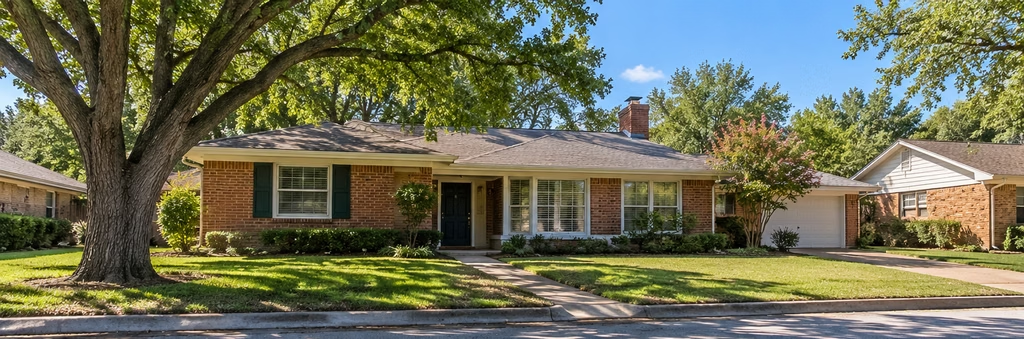
Image file: https://drive.google.com/file/d/1kVHzWqr1zK8BlOj5y_hzYTSiznEvmeDu/view?usp=drivesdk
Dallas gets the headlines. Fort Worth gets the better deals, at least by comparison.
The city held on to a deep supply of single-family homes built in the decades after World War II, and much of that housing never got scraped for oversized new builds. That matters more than any market forecast. Modest brick ranches on modest lots are the backbone of entry-level buying here, and there are still thousands of them.
There’s also a cultural piece. Fort Worth doesn’t chase trends as fast as its neighbor to the east, so some areas stay affordable longer than anyone expects. Curious what the other end of the Metroplex looks like? The Mark Cuban house in Preston Hollow is a fun scroll. Not exactly a starter, though.
Neighborhoods Worth a Weekend Drive
Listing photos only tell half the story. The rest shows up when you park on the curb, roll the windows down, and watch how a street actually lives on a Saturday. These are the parts of Fort Worth where starter homes still turn up with some regularity, each with its own quirks and its own reasons to keep driving past the open house sign for one more look.
South Hills
Quiet streets. Brick ranch homes. Old trees that actually throw shade in August, which anyone who has survived a Texas summer knows is worth real money.
South Hills sits on the south side of the city with quick access to I-20, and most of the houses went up in the 1950s and 1960s. Some still have original tile and wood paneling, while others have been fully redone, so the range in condition is wide. Prices have stayed friendlier than the blocks closer to TCU. Anyone weighing the area seriously should read this guide to South Hills living, which gets into the day-to-day feel of the place better than a listing ever could.
Wedgwood
Wedgwood comes up first in almost every conversation about affordable Fort Worth, and there’s a good reason. It’s huge. With thousands of mid-century homes across the southwest side, new options pop up constantly so you won’t wait months. Most offer three bedrooms, a garage, and a closed kitchen that practically begs you to tear down a wall for open space. The bathrooms are often dated. Fair complaint. But dated bathrooms are exactly why the price hasn’t run off without you.
Riverside
Riverside sits northeast of downtown along the Trinity River, and it’s changing quickly. Small bungalows and cottages from the early and middle 1900s now share blocks with brand-new infill houses. That mix can feel odd at first. It also means the window for cheaper entry is closing, so buyers drawn to Riverside probably shouldn’t sit on the fence for long. Check flood maps here before falling in love with any particular street.
Polytechnic Heights
Poly gets overlooked, and that seems unfair. Tucked around Texas Wesleyan University in southeast Fort Worth, it offers some of the lowest entry prices inside Loop 820. Some blocks need work, no sugarcoating it. Others have been quietly fixed up by owners who spotted the value early. Buyers willing to research street by street, and to visit at different hours, can find solid houses here for far less than the city average.
Diamond Hill and the Northside
North of the Stockyards, older and smaller homes sit in neighborhoods with a strong sense of identity and long family roots. The commute downtown is short. Prices have historically run below much of the city, though that’s slowly shifting as people discover how close it all is.
The West Side
Out west, past the older streets near Camp Bowie, neighborhoods built in the 1960s and 1970s tend to offer bigger floor plans for the money. I-30 makes the drive into downtown painless most mornings. It’s not flashy. It doesn’t need to be.
What Young Buyers Should Expect to Trade
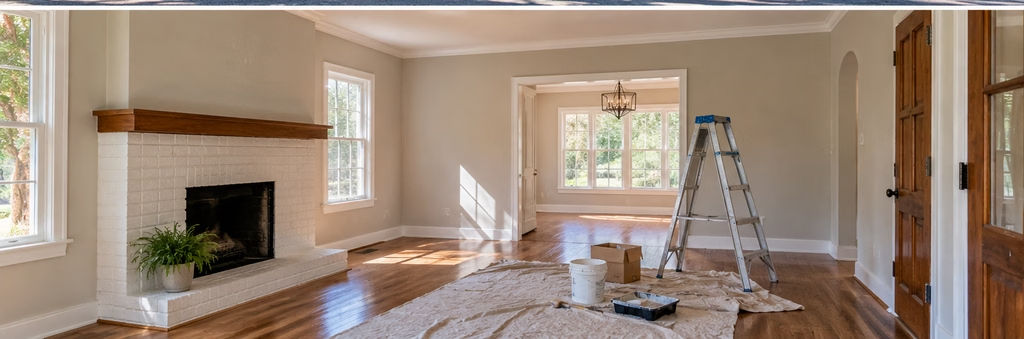
Image file: https://drive.google.com/file/d/15PtNCsEuE1fELF-Lf8RxD6DAGUpvUg-b/view?usp=drivesdk
Here’s the honest part. Starter homes in these areas almost always come with a catch. The HVAC might be older than the buyer. The kitchen might not have been touched since disco was on the radio. The back fence might face a busier road than anyone would choose.
None of that is a dealbreaker on its own. A house with good bones and an ugly interior beats a pretty house with foundation trouble every single time, and North Texas clay soil makes a careful foundation inspection non-negotiable. Pay for a thorough inspector. If anything looks off, pay a little more for a structural specialist.
Cosmetic fixes are the cheap part. Paint, light fixtures, and cabinet hardware won’t win any awards, yet they can change how a room feels in a single weekend. Urbansfreaks has a solid roundup of practical home ideas for anyone trying to stretch a small budget across a whole house.
Older Homes Need a Different Mindset
New construction out in the far suburbs promises zero surprises. Older Fort Worth homes promise plenty of them. That’s the deal, and it’s a decent one when the older house sits ten minutes from work instead of forty.
Character counts, too. Small houses carry their own weight, something the Selena Quintanilla house in Corpus Christi shows better than any glossy mansion tour. Even the Jerry Jones estate started life as somebody’s house on a street. Everybody begins somewhere.
Small Moves Before Making an Offer
Get preapproved before touring, not after. Sellers in the busier pockets won’t wait around while a lender sorts out paperwork, and a preapproval letter signals that a buyer is serious.
Look into assistance programs too. The Texas Department of Housing and Community Affairs runs first-time buyer options, and the City of Fort Worth has offered its own homebuyer assistance over the years. Rules and funding change, so it pays to check current details directly with each office rather than trusting an old forum post.
Then drive the street. Go on a weekday morning and again on a Friday night, because a block can feel like two different places depending on the hour.
The Starter Home Isn’t Gone, Just Older
Fort Worth hasn’t priced out young buyers completely. It has just pushed them toward houses that need some patience and maybe a paint roller. That’s not a downgrade. Plenty of Texas legends began in modest homes before landing somewhere grander, and the road from a small Abbott upbringing to Willie Nelson’s ranch is proof enough. A starter home is supposed to be a start. In this city, that start is still within reach.